Introduction
If you have ever stared at a tracking app, cycle after cycle, wondering when your period will actually show up, you know exactly how disorienting irregular periods can be. And if you are trying to conceive, the uncertainty gets heavier. The question that most women in this position quietly carry is this: can I get pregnant with irregular periods? The answer is yes. But there is nuance worth understanding, because how you approach conception with an irregular cycle matters enormously.
This article gives you the science-based, practical answer to can I get pregnant with irregular periods? It covers why cycles become irregular, what it means for ovulation, and what steps are most likely to improve your odds.
What Counts as an Irregular Period?
A typical menstrual cycle runs between 21 and 35 days. It does so consistently, give or take a day or two. Irregular periods are cycles that fall consistently outside this range, vary by more than seven days from cycle to cycle, or stop altogether for months at a time.
Occasional variation is normal. A single late period after a stressful month does not define irregularity. But when the pattern repeats across three or more consecutive cycles, it warrants attention, especially for women actively trying to conceive.
Can I Get Pregnant with Irregular Periods? Understanding the Fertility Link
The core fertility concern with irregular cycles is ovulation. Pregnancy requires ovulation. If your cycles are irregular, ovulation may be infrequent, delayed, or unpredictable. That makes timing intercourse significantly harder. But infrequent does not mean absent.
Many women with irregular periods do ovulate. They just do so less predictably. Research in Fertility and Sterility confirms that ovulatory dysfunction is the primary mechanism connecting irregular cycles to reduced fertility. However, the same research notes that ovulation induction and lifestyle correction frequently restore fertility in these women.
So when someone asks can I get pregnant with irregular periods, the honest clinical answer is: yes, but your window of fertility each cycle may be narrower and harder to identify. That is the practical challenge to solve.
What Causes Irregular Periods?
Treating irregular cycles without understanding the cause is like turning off a fire alarm instead of finding the fire. The most common underlying causes include:
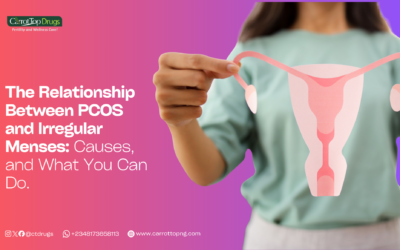
Polycystic Ovary Syndrome (PCOS)
PCOS is the leading cause of irregular cycles and ovulatory infertility worldwide. It involves elevated androgens, insulin resistance, and disrupted follicle development. A landmark study in the Journal of Clinical Endocrinology and Metabolism found that up to 70% of PCOS cases are undiagnosed. Women with PCOS can and do conceive, particularly with targeted intervention.
Thyroid Dysfunction
Both hypothyroidism and hyperthyroidism disrupt the hypothalamic-pituitary-ovarian axis. This axis controls ovulation. An underactive thyroid is especially common in women of reproductive age. Published data in Nutrients links iodine deficiency and thyroid disruption to cycle irregularity and impaired fertility.
Stress and Cortisol Dysregulation
Chronic stress elevates cortisol. Cortisol suppresses gonadotropin-releasing hormone (GnRH), which is the upstream signal that triggers ovulation. A study in Fertility and Sterility documented a statistically significant association between high perceived stress and anovulatory cycles.
Body Weight Extremes
Both excess body fat and insufficient body fat disrupt estrogen production. Fat tissue converts androgens to estrogen. Too much or too little adipose tissue throws this conversion out of balance. Research in Human Reproduction confirmed that BMI at either extreme was independently associated with longer, more irregular cycles and lower conception rates.
Hyperprolactinemia
Elevated prolactin levels, sometimes caused by pituitary microadenomas or certain medications, suppress ovulation. This condition is diagnosable through a simple blood test and is highly treatable.
How to Track Ovulation When Your Cycle Is Unpredictable
For anyone asking can I get pregnant with irregular periods, the next practical question is: how do I know when I am ovulating? Standard cycle-day calculations fail when the cycle length varies. Better methods include:
- Basal body temperature (BBT) charting: A sustained temperature rise of 0.2 degrees Celsius after ovulation confirms it has occurred. Charting over several months reveals your personal pattern.
- LH surge testing: Ovulation predictor kits (OPKs) detect the luteinising hormone surge that precedes ovulation by 24 to 48 hours. With irregular cycles, begin testing from cycle day 10 and continue until the surge is detected.
- Cervical mucus monitoring: Fertile-quality mucus (clear, stretchy, egg-white consistency) appears in the days before ovulation. This is a reliable low-cost sign for timing intercourse.
- Follicle tracking ultrasound: A gynaecologist can use transvaginal ultrasound to monitor follicle growth and confirm when ovulation is approaching. This is the most accurate method available.
Combining at least two of these methods significantly improves the accuracy of ovulation detection for women with irregular cycles.
Medical Treatments That Help You Conceive with Irregular Periods
If lifestyle measures alone are insufficient, several medical options have a strong evidence base. The question can I get pregnant with irregular periods is one that reproductive medicine has developed effective answers for.
Letrozole (Femara)
Letrozole is now the first-line ovulation induction agent for women with PCOS and irregular cycles. A landmark New England Journal of Medicine trial found letrozole produced significantly higher live birth rates than clomiphene in women with PCOS. It works by temporarily blocking estrogen production, triggering a surge in FSH that stimulates follicle development.
Clomiphene Citrate
Clomiphene has decades of clinical use for ovulation induction. It remains widely prescribed and effective, particularly for women with mild to moderate ovulatory dysfunction. It is taken orally for five days in the early follicular phase.
Metformin for Insulin Resistance
For women whose irregular cycles are driven by insulin resistance and PCOS, metformin improves insulin sensitivity, lowers androgen levels, and can restore ovulatory cycles. It is often used alongside letrozole for improved results.
Gonadotropin Injections
For cases where oral medications are insufficient, injectable FSH or LH preparations directly stimulate follicular development. These are used under close monitoring to reduce the risk of multiple pregnancies.
Lifestyle Changes That Restore Cycle Regularity
Before reaching for prescriptions, lifestyle modification deserves serious attention. A Human Reproduction study found that dietary and activity interventions significantly improved ovulatory frequency in women with irregular cycles, independent of weight loss.
Diet
A low glycaemic, anti-inflammatory diet reduces insulin resistance, the driver of many PCOS-related cycle disruptions. Prioritise whole grains, legumes, vegetables, lean proteins, and healthy fats. Reduce refined carbohydrates, added sugars, and ultra-processed foods.
Exercise
Moderate-intensity exercise, 30 minutes on most days, improves insulin sensitivity and reduces cortisol. Excessive high-intensity training can itself suppress ovulation, so balance is key.
Stress Reduction
Chronic psychological stress dysregulates the HPA axis, which in turn suppresses the HPO axis. Practices such as mindfulness, yoga, breathwork, and adequate sleep are not optional extras. They are reproductive health interventions with a measurable impact on cycle regularity.
Nutritional Support for Fertility with Irregular Cycles
Micronutrient status has a direct bearing on hormonal function and fertility outcomes. A Nutrients review confirmed that multiple deficiencies often coexist in women with irregular cycles and that targeted supplementation produced measurable improvements in hormonal markers.
Key nutrients with strong evidence include:
- Folic acid: Essential for DNA synthesis and critical before and during early pregnancy. Research confirms its role in reducing neural tube defect risk by up to 70%.
- Vitamin D3: Vitamin D receptors exist throughout the reproductive system. Deficiency is associated with PCOS and poor ovarian response. A 2020 Nutrients study linked supplementation to improved hormonal profiles.
- Zinc: Critical for follicle maturation and ovulation. Frontiers in Nutrition (2020) documented zinc deficiency as significantly associated with poor reproductive outcomes.
- Antioxidants (Vitamins C and E): Protect eggs from oxidative damage. Published data in Reproductive BioMedicine Online found combined antioxidant supplementation improved fertility markers beyond single-agent use.
For women who want a broad-spectrum nutritional foundation while working on their fertility, a well-formulated supplement can bridge the dietary gaps that a busy life often creates. Evergreen Formula for Women contains a carefully selected blend of vitamins, minerals, and herbal extracts, including folic acid, Vitamins C, D3, and E, zinc, selenium, and iron, designed to support overall female reproductive health. While it is not specifically a treatment for irregular periods, ensuring your body is nutritionally equipped is a meaningful step when you are trying to conceive.
When to See a Doctor
Anyone asking can I get pregnant with irregular periods should know that seeing a doctor is not a last resort. It is a smart early step. Seek medical evaluation if:
- Your cycles vary by more than seven days consistently
- You have gone more than 90 days without a period
- You have been trying to conceive for 12 months without success (or six months if over 35)
- You have known conditions such as PCOS, thyroid disease, or endometriosis
- You experience significant pain, heavy bleeding, or other symptoms alongside irregular cycles
A reproductive endocrinologist can order blood tests, a pelvic ultrasound, and a semen analysis for your partner, giving you a full picture before deciding on next steps.
The Emotional Weight of Irregular Cycles and Fertility Uncertainty
It is worth acknowledging directly: the uncertainty of irregular cycles takes a real emotional toll. Not knowing when your next period will arrive, let alone when you are fertile, creates anxiety that compounds the challenge. Research consistently shows that psychological stress worsens hormonal disruption. Breaking this cycle, literally, often begins with information and a clear action plan.
The answer to can I get pregnant with irregular periods is not just biological. It is also about equipping yourself with knowledge, building a support system, and giving your body the nutritional and hormonal environment it needs to function well. Women conceive with irregular cycles every day. The odds improve significantly with the right approach.
FAQs: Can I Get Pregnant with Irregular Periods?
Can I get pregnant with irregular periods if I have PCOS?
Yes. PCOS is the most common cause of irregular cycles and is also one of the most treatable causes of ovulatory infertility. With the right medical support and lifestyle adjustments, many women with PCOS conceive successfully.
Can I get pregnant with irregular periods naturally, without medication?
Many women do. Diet, exercise, stress management, and targeted nutritional support restore regular ovulation for a meaningful proportion of women. Medical intervention becomes necessary when natural measures do not produce improvement within three to six months of consistent effort.
Can I get pregnant with irregular periods if I only ovulate occasionally?
Yes. Even occasional ovulation means the opportunity for conception exists. The challenge is identifying those cycles. Basal body temperature charting and LH testing can help detect sporadic ovulation and time intercourse effectively.
Does having irregular periods mean something is seriously wrong?
Not necessarily. Many causes of irregular cycles are very treatable. However, irregular cycles always warrant investigation, because the underlying cause matters both for fertility and for long-term health.
Final Thoughts
Can I get pregnant with irregular periods? Yes, and the odds in your favour are better than you may think. Irregular cycles are a signal worth listening to, not a verdict on your fertility. They point toward a hormonal or nutritional imbalance that, once identified and addressed, can often be corrected.
The path forward involves understanding your cycle, addressing the root cause, supporting your body nutritionally, and partnering with a knowledgeable healthcare provider when needed. Conception with irregular periods is not the exception. For women who take the right steps, it is the expected outcome.
You deserve clarity, not confusion. Start with the facts, take action where you can, and get professional support where you need it. The answer to can I get pregnant with irregular periods is yes, and your journey toward that yes is one worth pursuing with confidence.