Introduction
What you should know before starting fertility supplements is more than a checklist. It is the difference between wasting months on the wrong products and giving your body exactly what it needs.
Walk into any pharmacy today and you will find shelves lined with fertility supplements, each one promising faster conception, better egg quality, and improved hormonal balance. The claims are loud. The science behind many of them is quieter.
Before you spend a single naira or dollar on any supplement, understand one foundational truth. CCRM Fertility confirms that not all supplements are for everyone, and no single supplement works as a miracle solution for every person trying to conceive.
This guide covers everything you need to know before starting fertility supplements, from regulation and safety to timing, dosage, and the products that carry real clinical evidence behind them.
Fertility Supplements Are Not Regulated Like Medications
This is the first and most important thing to know before taking fertility supplements. Supplements do not require approval from regulatory bodies before they reach store shelves.
According to Medical News Today, the FDA does not require most supplements to prove their effectiveness in clinical studies before going on sale. Manufacturers are responsible for ensuring their products are safe, but independent verification is not mandatory.
That means a product can legally carry bold fertility claims without a single human study to back them up. This does not mean all supplements are useless. It means you carry the responsibility of choosing wisely.
Look for supplements that list their clinical evidence on the label or manufacturer’s website. Products backed by peer-reviewed research and third-party testing give you a far stronger foundation than those that rely on marketing language alone.
Your Diagnosis Should Drive Your Supplement Choice
One of the biggest mistakes women make before starting preconception supplements is buying what is popular rather than what is appropriate for their specific situation.
Fertility Centers of Illinois recommend that women with underlying conditions like PCOS, thyroid disease, or a history of infertility work with their doctor to personalize their supplement plan. Fertility Centers of Illinois state that supplements can interact with prescribed medications in unpredictable ways, which makes individual guidance critical.
A woman with PCOS has different nutritional needs than a woman with unexplained infertility. A woman with low ovarian reserve needs targeted support that a standard prenatal vitamin cannot fully provide. Your diagnosis, your bloodwork, and your doctor’s input should determine what goes into your preconception routine.
If you have not yet had a fertility evaluation, consider starting there before investing in supplements. Knowing your exact gaps makes every supplement decision more precise and more effective.
Timing Matters More Than Most People Realize
Many women start taking fertility supplements the month they decide to conceive. Most experts recommend starting much earlier than that.
A nutritionist writing for the Nutritionist Resource advises starting supplementation at least three months before actively trying to conceive. This aligns with the natural timeline of egg maturation, which takes roughly 90 days from follicle recruitment to ovulation.
Folic acid is the clearest example of why timing matters. Neural tube defects develop within the first four weeks of pregnancy, often before a woman knows she is pregnant. Starting folic acid at conception is already too late to offer full protection.
Starting three months early allows key nutrients to build up in your system and begin improving egg quality at the cellular level. Supplements that support ovarian function, hormonal balance, and uterine lining health need time to work. Give them that time before conception attempts begin.
Dosage Can Work Against You
More is not better when it comes to fertility supplements. Over-supplementation is a real risk and one that many women overlook when they stack multiple products at once.
Reproductive endocrinologist Dr. Michael Guarnaccia, quoted by Bustle, warns that megavitamins should be avoided when trying to conceive. Excess levels of certain nutrients can disrupt hormonal balance rather than supporting it.
Vitamin A is one of the clearest examples. In normal food-based amounts, it supports reproductive health. In supplement form at high doses, it becomes toxic to a developing embryo. This is why pure retinol supplements should be avoided when trying to conceive.
Iron, zinc, and selenium can also cause problems at high doses. If you take a fertility multivitamin and then add individual supplements on top of it, you may unknowingly push certain nutrients into ranges that harm rather than help your fertility.
Read labels carefully. Calculate your total daily intake across all products before adding anything new to your routine.
Supplements Can Interact with Fertility Medications
If you are currently undergoing fertility treatment, this section is critical. Some supplements interfere directly with the medications your doctor prescribes.
As Rescripted reports, herbs like chasteberry and maca root can influence hormone levels and potentially clash with hormone therapies used in IUI or IVF cycles.
Folic acid, though essential, has known interactions with certain medications. Herbal supplements like ginseng and saw palmetto can interfere with blood thinners and blood pressure medications. If you take any of these, your doctor needs to know before your treatment cycle begins.
The safest approach is to provide your fertility specialist with a complete list of every supplement you take, including dosages. Do this at your first appointment and update it at every visit. Never add or remove supplements during an active treatment cycle without your doctor’s knowledge.
Herbal Supplements Deserve Extra Caution
Not all fertility supplements carry the same risk profile. Herbal products deserve special attention before you start them.
Unlike vitamins and minerals, plant-based compounds act on the body in ways that are harder to predict and study. Some herbs influence estrogen levels. Others affect thyroid function. A few have direct effects on the uterus that can be problematic during early pregnancy.
The Pacific NW Fertility team notes that Pacific NW Fertility the supplement aisle contains many unregulated and untested products. Herbal blends in particular often carry claims that outpace their scientific backing.
This does not mean herbal supplements are useless. Some plant-based compounds have genuine research supporting their role in fertility. The point is to verify the evidence before you start, not after you have been taking something for three months.
Talk to your doctor about any herbal supplement before you take it. Ask specifically whether it interacts with your current medications or diagnosis.
The Supplements with the Strongest Evidence
Among the many products on the market, a handful of nutrients carry consistent, peer-reviewed support for their role in reproductive health. These are the ones worth discussing with your doctor.
- Folic Acid or Folate: Essential before and during early pregnancy. It prevents neural tube defects and supports healthy cell division. The standard recommendation is 400 micrograms daily, with higher doses for women with certain genetic variants.
- Myo-Inositol: Strongly supported for women with PCOS. It improves insulin sensitivity, supports ovulation, and enhances egg quality. Research points to a dose of 2,000 to 4,000 mg daily as effective.
- Vitamin D: Low vitamin D levels are linked to reduced fertility in both men and women. A simple blood test tells you whether you need to supplement and at what dose.
- Coenzyme Q10 (CoQ10): Supports mitochondrial function in eggs. Most relevant for women over 35 or those with diminished ovarian reserve.
- Zinc and Selenium: Both support hormonal regulation and protect reproductive cells from oxidative damage.
- Vitamin E: Supports uterine lining health and reduces oxidative stress in follicular fluid.
- Iron: Important for ovulatory function, but only supplement if bloodwork confirms deficiency. Excess iron causes problems.
Large-scale studies cited by Progyny show that women who start prenatal vitamins at least one month before conception have significantly shorter time to pregnancy and higher confirmed pregnancy rates compared to those who wait until after conception.
What You Should Know Before Starting Fertility Supplements: Red Flags to Watch For
The supplement market is crowded with products that promise more than they can deliver. Before you buy anything, watch for these warning signs.
- Claims that guarantee pregnancy. No supplement can guarantee conception. Any product making this claim is overpromising.
- No ingredient transparency. Avoid any product that hides behind a proprietary blend without disclosing exact ingredient amounts.
- No third-party testing. Reputable supplements carry seals from independent testing organizations that verify purity and potency.
- Very low prices. Quality raw ingredients cost money. A fertility supplement priced below market rate is almost certainly cutting corners on ingredient quality or dosage.
- Aggressive social media marketing. Many of the most heavily promoted fertility supplements have the least clinical backing. Popularity is not evidence.
Two Supplements Built for the Nigerian Woman Trying to Conceive
Two evidence-informed supplements stand out for women who want preconception support grounded in clinical rationale rather than marketing.
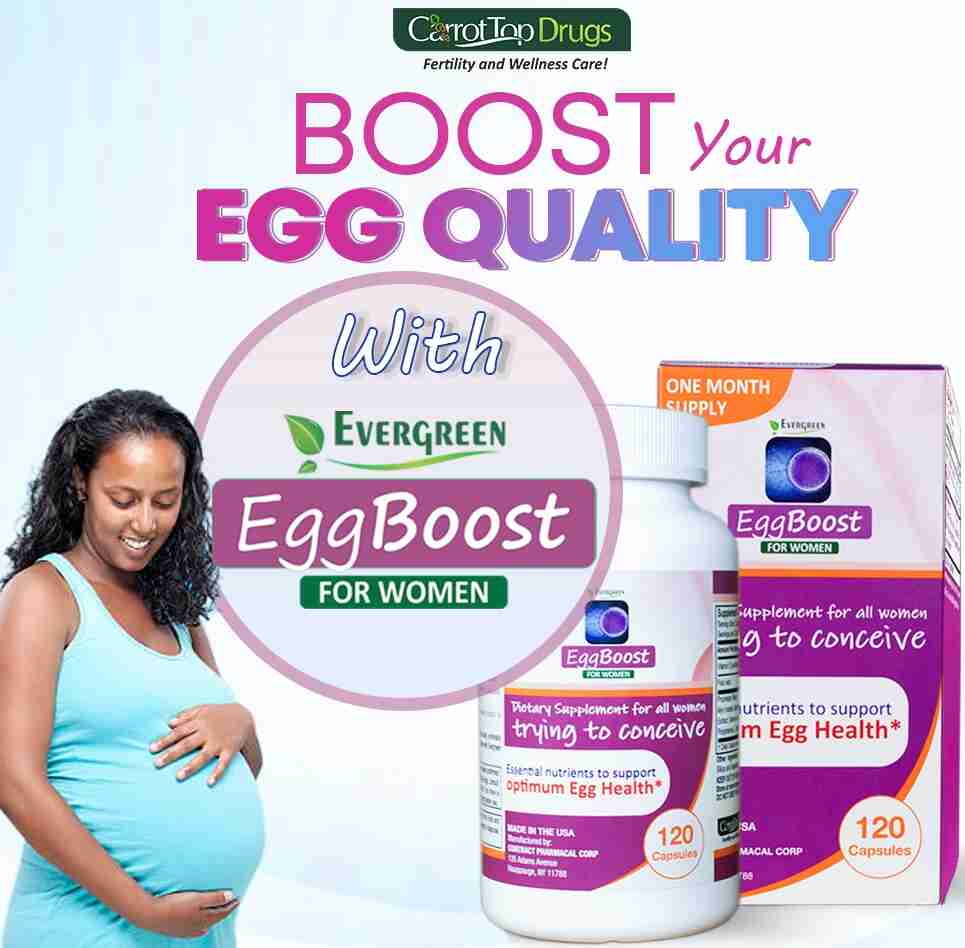
Evergreen Eggboost
Evergreen Eggboost promotes oocyte quality and supports healthy ovarian function in women actively trying to conceive.
Key ingredients: Myo-Inositol, Folic Acid, Melatonin, Vitamin E, Grape Seed Extract.
Evergreen Eggboost targets the quality of the egg itself, not just general reproductive health. Myo-Inositol addresses the hormonal disruption at the root of PCOS-related infertility. Melatonin reduces oxidative damage in follicular fluid. Grape Seed Extract adds a further layer of antioxidant protection to developing oocytes.
For women with PCOS, irregular ovulation, or age-related egg quality concerns, Eggboost directly addresses the biological mechanisms that affect conception. Start it three months before you begin trying to conceive for best results.
Evergreen Formula for Women
Evergreen Formula for Women is a fertility adjuvant for the dietary management of idiopathic infertility in women.
Key ingredients: Vitamins A, C, D3, E, B1, B2, B3, B6, Folic Acid, B12, Pantothenic Acid, Iron, Iodine, Magnesium, Zinc, Selenium, Copper.
Evergreen Formula for Women addresses the full micronutrient landscape of female fertility. Where a standard prenatal vitamin covers the basics, this formula targets the complete hormonal, cellular, and structural environment that a conception-ready body requires.
It is particularly valuable for women with unexplained infertility, where no single cause has been identified. Comprehensive micronutrient support closes gaps that standard testing does not catch. Use it alongside Eggboost and under your doctor’s guidance for a complete preconception strategy.
Both products are available through the office of Carrot Top Drugs, where the team can help you determine which combination fits your specific situation.
How to Start Fertility Supplements Safely
Follow these steps before you take your first dose of any fertility supplement.
- Get a baseline blood panel. Know your vitamin D, iron, folate, and thyroid levels before supplementing. This prevents over-correction and identifies genuine deficiencies.
- Tell your doctor everything you plan to take. List every supplement, including herbal products, and confirm that none interact with your current medications or treatment plan.
- Start one supplement at a time. If you introduce several products at once and experience side effects, you will not know which one caused them.
- Choose products with transparent labeling. Every ingredient and its dosage should be clearly stated on the label.
- Give supplements time. Most fertility supplements require at least 90 days of consistent use before meaningful changes occur at the cellular level.
- Reassess every three months. What you need in month one may differ from what you need at month six. Regular check-ins with your doctor keep your plan current.
Frequently Asked Questions
What is the most important thing to know before starting fertility supplements?
Supplements are not regulated the same way medications are. Manufacturers do not need to prove effectiveness before selling a product. Choose supplements backed by peer-reviewed research and third-party testing, and always review your plan with your doctor before starting.
When should I start taking fertility supplements?
Start at least three months before you begin trying to conceive. Egg maturation takes around 90 days. Starting early allows nutrients to build up in your system and support oocyte quality during the critical development window.
Can fertility supplements interact with my medications?
Yes. Some herbs and vitamins interact directly with fertility drugs, blood thinners, thyroid medications, and hormone therapies. Give your doctor a complete list of every supplement you take, including dosage, before starting any fertility treatment.
Do I need a diagnosis before starting fertility supplements?
You do not need a diagnosis to start a basic prenatal vitamin or folic acid. For anything beyond that, a diagnosis helps enormously. Knowing your specific hormonal or structural challenges allows you to choose supplements that address your actual needs rather than a generic fertility profile.
Are herbal fertility supplements safe?
Some are supported by good evidence. Many are not. Herbal products act on the body in complex ways and can interfere with hormone levels and certain medications. Verify the evidence for any herbal supplement with your doctor before starting it.
Can I take too many fertility supplements?
Yes. Over-supplementation is a real risk. Taking multiple products at once can push certain nutrients like vitamin A, iron, and zinc into ranges that are harmful rather than helpful. Always calculate your total daily intake across all products before adding something new.
What fertility supplements have the most scientific support?
Folic acid, myo-inositol, vitamin D, CoQ10, vitamin E, zinc, and selenium carry the most consistent clinical evidence. The right combination for you depends on your diagnosis, bloodwork, and personal health history.
Where can I get help choosing the right fertility supplements in Nigeria?
The office of Carrot Top Drugs offers guidance on preconception supplementation. The team can help you match the right products to your specific fertility situation and connect you with the appropriate specialist if needed.
Final Thoughts
What you should know before starting fertility supplements comes down to one principle: precision beats enthusiasm. Buying every product on the shelf because it claims to support fertility is not a strategy. It is expensive guesswork.
Start with a blood panel. Talk to your doctor. Choose supplements matched to your diagnosis and backed by real evidence. Begin three months before you start trying. And reassess regularly as your body changes.
Evergreen Eggboost and Evergreen Formula for Women offer a clinically grounded starting point for women who want preconception support they can trust. Visit the office of Carrot Top Drugs to find out which combination is right for you, and begin your fertility journey with clarity rather than confusion.