
Introduction
The best questions to ask your fertility specialist can shape your entire treatment journey. A rushed first appointment often leaves couples with more confusion than clarity.
You walk in hopeful. You walk out holding a stack of lab forms and a head full of unanswered questions. That gap between hope and clarity is exactly what good preparation closes.
According to the American Society for Reproductive Medicine, women under 35 should see a specialist after one year of trying, while women over 35 should go after six months.
This guide lists the exact questions to bring to your appointment. It covers testing, diagnosis, treatment options, costs, and emotional support so nothing catches you off guard.
Signs You Need a Fertility Specialist
Not everyone needs to wait a full year before booking an appointment. Certain signs call for an earlier visit.
- You are over 35 and have tried to conceive for six months without success.
- You are over 40 and have tried for three months or more.
- You have irregular or absent periods.
- You have a history of pelvic infections, endometriosis, or fibroids.
- You have experienced two or more miscarriages.
- Your partner has a known sperm or hormonal issue.
The Shady Grove Fertility team notes that being proactive about early evaluation often leads to better treatment outcomes.
Questions to Ask About Diagnosis and Testing
Your first visit should give you a clear picture of what tests you need and why. Ask these questions before any treatment begins.
- What tests do you recommend for me and my partner?
- Based on my history, what do you think may be causing this?
- How long will it take to get a full diagnosis?
- What do these specific results mean for someone in my situation?
- Will I need imaging tests like an ultrasound or HSG?
A thoughtful fertility doctor interprets your numbers rather than simply handing them over. Pozitivf explains that context around your age, cycle history, and clinical factors matters more than a reference range alone.
Many couples never receive one clear diagnosis. In those cases, ask your doctor to explain unexplained infertility and what the next steps look like.
Questions to Ask About Treatment Options
Once testing is complete, your specialist will recommend a treatment path. These are the questions to ask fertility doctor about PCOS, low sperm count, or other diagnoses.
- What treatments do you recommend for my diagnosis, and why?
- What are the alternatives to the treatment you are suggesting?
- Do you have experience treating my specific condition?
- What lifestyle changes might improve my chances?
- How many embryos or eggs will you transfer at once?
The Illume Fertility team notes that transferring more than one embryo rarely boosts success meaningfully. It mainly raises the chance of twins or triplets.
Ask whether your clinic practices elective single embryo transfer. This approach is now standard at reputable fertility centers and reduces health risks tied to multiple pregnancies.
Questions to Ask About Success Rates and Timelines
Success rates vary widely between clinics and patient profiles. Do not accept a generic percentage without context.
- What is your success rate for patients with my age and diagnosis?
- How many cycles do most patients need before conceiving?
- What happens if the first cycle does not work?
- How long does each stage of treatment usually take?
Understanding the real timeline reduces anxiety considerably. CCRM Fertility recommends asking directly what additional testing might refine your diagnosis before starting treatment.
A clinic’s overall success rate differs from your personal odds. Always ask for numbers specific to your age group and diagnosis, not the clinic’s average across all patients.
Questions to Ask About Male Fertility Testing
Infertility is a shared journey. Male factors contribute to a significant share of cases, so these questions matter just as much as the ones about egg quality.
- Does my partner need a semen analysis, and when should we do it?
- What do the sperm count, motility, and shape results mean?
- Can lifestyle changes improve sperm quality before treatment starts?
- Would a urologist referral help in our case?
Male infertility accounts for roughly a third of all cases, according to Healthline. A specialist can determine whether male factors, female factors, or both are contributing to your difficulty conceiving.
Questions to Ask About Cost and Financial Planning
Fertility treatment carries real financial weight. Clarity upfront prevents painful surprises later.
- What is included in the quoted price, and what is billed separately?
- Does the clinic offer payment plans or financing options?
- What would a second cycle cost if the first is unsuccessful?
- Can we speak with a financial counselor about insurance coverage?
Transparency around pricing is not a favor your clinic does for you. Pozitivf stresses that full cost breakdowns, including medication and repeat cycles, should be explained clearly from the start.
In Nigeria, costs vary widely by clinic and city. The Bridge Clinic reports that couples can expect to spend between four million and five million naira per cycle, depending on the treatment plan chosen.
Ask for a written, itemized estimate before you commit to any plan. This should include consultation fees, medication, monitoring, and the procedure itself.
Questions to Ask When Choosing a Fertility Doctor
The right clinic fit affects your comfort and your outcomes. These questions help you evaluate whether a specialist is the right match.
- How many years of experience do you have with my specific diagnosis?
- Will I see the same doctor throughout my treatment?
- What is your typical communication process between visits?
- Do you participate in clinical trials I may qualify for?
Ask about the clinic’s monitoring schedule and locations early. Illume Fertility notes that some practices operate multiple sites with different capabilities, which can affect your appointment logistics.
Consistency in care matters. Ask directly whether you will work with one doctor or rotate between several specialists during your treatment cycle.
Questions to Ask About Emotional and Practical Support
Fertility treatment is not only physical. The emotional weight deserves just as much attention during your consultation.
- What emotional or mental health support do you recommend during treatment?
- Do you offer or refer to a support group for patients like me?
- How do most patients cope with the waiting periods between steps?
Fertility care touches every part of life, not just the physical. Reproductive Partners Medical Group encourages patients to ask about mental health resources so they do not navigate treatment alone.
Do not treat these questions as optional. A clinic that takes your emotional wellbeing seriously is better equipped to support you through setbacks.
Questions to Ask a Fertility Specialist in Nigeria
Patients in Nigeria face some unique considerations, from clinic accreditation to drug availability. Add these questions to your list.
- Is this clinic accredited, and how many cycles do you perform yearly?
- Are fertility drugs available locally, or will I need to source them abroad?
- What installment or loan partnerships do you offer for payment?
- What is your clinic’s experience with diaspora patients returning for treatment?
Nigeria now has over 170 fertility clinics performing close to 18,850 IVF cycles yearly, according to Cryo Medical Logistics. This makes Nigeria one of the busiest fertility markets in Africa, so comparing clinics carefully is worthwhile.
Ask whether the clinic supports installment payments. Several Lagos and Abuja clinics now partner with banks to ease the financial burden of treatment.
If you are looking for a trusted place to start this conversation, the office of Carrot Top Drugs welcomes patients who want guidance on seeing a fertility specialist and getting the right preconception support.
Ask About Nutritional Support Before You Begin Treatment
A strong fertility specialist will discuss nutrition alongside medical treatment. Ask whether targeted supplementation could support your specific diagnosis.
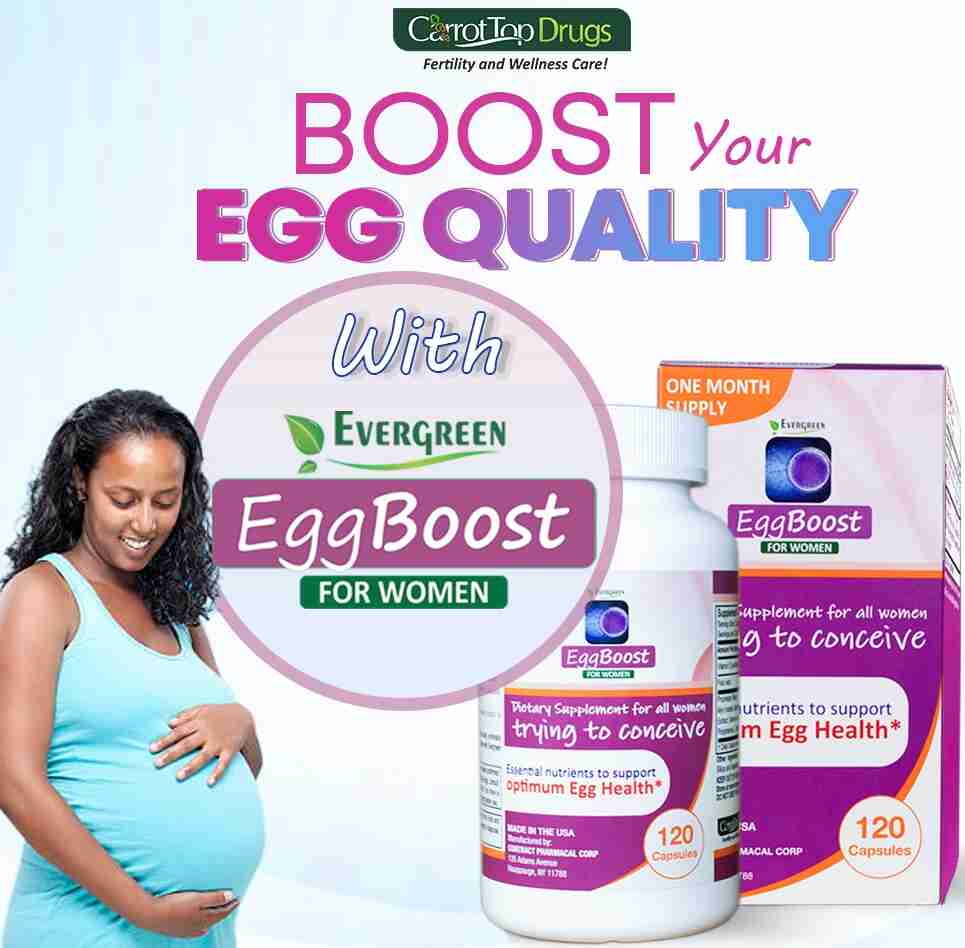
Ask About Evergreen Eggboost
Evergreen Eggboost promotes oocyte quality and supports healthy ovarian function in women actively trying to conceive.
It contains Myo-Inositol, Folic Acid, Melatonin, Vitamin E, and Grape Seed Extract.
If your diagnosis involves PCOS, diminished ovarian reserve, or age-related egg quality decline, ask your specialist whether Evergreen Eggboost fits into your preconception plan.
Ask About Evergreen Formula for Women
Evergreen Formula for Women is a fertility adjuvant for the dietary management of idiopathic infertility in women.
It contains Vitamins A, C, D3, E, B1, B2, B3, B6, Folic Acid, B12, Pantothenic Acid, Iron, Iodine, Magnesium, Zinc, Selenium, and Copper.
If your tests come back without a clear cause, ask your specialist whether comprehensive micronutrient support, like Evergreen Formula for Women, could help close that gap while you continue trying to conceive.
How to Prepare for Your First Fertility Appointment
Walking in prepared helps you make the most of limited consultation time. Bring the following before your visit.
- A written timeline of how long you have been trying to conceive.
- Copies of any previous test results, scans, or treatment records.
- A list of medications and supplements you currently take.
- Your menstrual cycle history, including length and regularity.
- Your written list of questions, organized by category.
Bring your partner to every appointment if possible. Fertility evaluation works best as a shared process between both people.
Frequently Asked Questions
What is the most important question to ask a fertility specialist?
Ask what tests they recommend and what those results will tell you. This question sets the foundation for every decision that follows. Without a clear diagnostic picture, treatment recommendations are difficult to evaluate properly.
How do I know if I need a fertility specialist?
See a specialist if you are under 35 and have tried for 12 months, or over 35 and tried for six months. Irregular periods, repeated miscarriages, or a known reproductive condition are also reasons to book sooner.
What should I ask about IVF before starting treatment?
Ask about your personal success rate, how many embryos will be transferred, what a failed cycle means financially, and what the full treatment timeline looks like. These questions prevent confusion once treatment begins.
Should I ask about my partner’s fertility too?
Yes, always. Male factors contribute to about a third of infertility cases. Ask whether a semen analysis is needed and what the results mean before assuming the cause is female-related.
What questions should I ask about fertility treatment costs?
Ask for a full itemized estimate, including medication, monitoring, and the procedure itself. Also ask what a second cycle would cost and whether payment plans or financing are available.
How do I choose the right fertility doctor?
Ask about their experience with your specific diagnosis, their communication process, and whether you will see the same doctor throughout treatment. Comfort and consistency both affect your overall experience.
What should I ask if my test results show no clear cause?
Ask your doctor to explain what unexplained infertility means for your case and what treatment options exist despite the uncertainty. Many couples with unexplained infertility still conceive with the right support plan.
Is it normal to feel nervous about asking my doctor questions?
Yes, it is completely normal. Bring a written list so nerves do not cause you to forget anything. A good specialist welcomes questions and treats them as part of thorough, collaborative care.
Where can I get guidance on finding a fertility specialist?
The office of Carrot Top Drugs welcomes patients who want help starting this conversation, including guidance on preconception support and connecting with a fertility specialist.
Final Thoughts
The best questions to ask your fertility specialist turn a stressful appointment into a clear plan of action. Preparation is not about pressure. It is about advocacy.
Bring your written questions. Bring your partner. Ask about testing, treatment, cost, and emotional support in the same visit. Nothing is too small to raise.
Pair your medical plan with strong nutritional support, including supplements like Evergreen Eggboost and Evergreen Formula for Women, under your doctor’s guidance. Visit the office of Carrot Top Drugs to start that conversation, and walk into every appointment ready to advocate for yourself.