Introduction
Getting pregnant after 30 is absolutely possible for Nigerian women. Many women across Nigeria and the world now choose to start families in their 30s. Career goals, late marriages, and personal readiness are among the top reasons. The good news is that your body can still carry a healthy pregnancy at this stage.
However, your fertility does shift as you get older. Understanding those changes puts you in control. This guide covers everything you need to know, from tracking ovulation to tackling fibroids, irregular periods, and choosing the right fertility supplements.
What Happens to Your Fertility After 30?
Your fertility starts declining gradually after age 30. The American College of Obstetricians and Gynecologists (ACOG) confirms this. The decline accelerates around age 35.
Women are born with a fixed number of eggs. Over time, that reserve shrinks in both quantity and quality. At 30, your chance of conceiving in any given cycle sits around 20%. By 40, that number drops to below 5%.
Ovulation may also become less consistent. Some months, your body may not release an egg at all. Hormonal shifts, stress, and underlying conditions all play a role.
None of this means getting pregnant is out of reach. Thousands of Nigerian women over 30 conceive every year. The key is understanding your window and protecting your egg health actively.
How to Get Pregnant Fast After 30 in Nigeria
Speed comes from strategy, not luck. The most powerful thing you can do is track your ovulation accurately.
Track Your Fertile Window
Your fertile window spans five days before ovulation and one day after it. Sperm can survive up to 5 days inside the body, but your egg lasts only 24 hours. Missing this window means missing the month entirely.
Use an ovulation predictor kit (OPK) to detect the LH surge. These kits are available in pharmacies across Nigeria. You can also track basal body temperature or watch for clear, stretchy cervical mucus, which signals that ovulation is near.
Have Sex at the Right Time
Aim to have sex every other day during your fertile window. Daily sex during peak fertility also works well. Do not wait until you think ovulation has passed.
Start Prenatal Supplements Early
Begin taking folic acid at least three months before you start trying. Folic acid protects the baby’s neural tube from the earliest days of development. The World Health Organization recommends at least 400mcg daily.
Natural Ways to Boost Fertility After 30 for Nigerian Women
You can actively improve your fertility through daily habits. These changes do not require expensive treatments. They build the hormonal foundation for conception.
Eat Fertility-Boosting Nigerian Foods
A strong fertility diet does not have to be foreign or expensive. Nigeria’s own food culture holds powerful nutrients for conception.
- Ugu (fluted pumpkin leaves): Rich in iron, folate, and zinc. These nutrients support ovulation and healthy egg development.
- Ofada rice and other whole grains: Provide complex carbohydrates that stabilize insulin, which directly impacts egg quality.
- Oily fish like mackerel and sardines: Packed with omega-3 fatty acids that reduce inflammation and support hormone production.
- Beans, lentils, and cowpea: Excellent plant protein sources associated with better ovulation outcomes.
- Tiger nuts (aya): Contain magnesium, vitamin E, and healthy fats that support hormonal balance.
- Avocado pear: Delivers monounsaturated fats and folate essential for embryo development.
- Sesame seeds (beni-seed): A dense source of zinc and selenium, both critical for egg quality.
Reduce your intake of processed foods, white rice, and sugar-sweetened drinks. High insulin levels disrupt ovarian function and reduce egg quality significantly.
Maintain a Healthy Weight
Both underweight and overweight status lower your chances of conception. Excess body fat drives up estrogen levels. This disrupts the hormonal signals your ovaries need to function properly. Aim for a healthy BMI through balanced eating and regular moderate exercise.
Manage Stress Actively
Chronic stress raises cortisol, which interferes with the hormones that trigger ovulation. Nigerian women often juggle work, family, and social expectations simultaneously. That pressure is real. Build in daily stress relief through prayer, rest, light walks, or community support.
Limit Alcohol and Avoid Smoking
Alcohol disrupts estrogen metabolism. Research shows even moderate drinking can reduce your chance of conceiving per cycle. Cigarette chemicals actively destroy eggs and age the ovaries faster than your calendar years.
Sleep Well
Your body releases reproductive hormones during deep sleep. Poor sleep disrupts the hypothalamic-pituitary-ovarian axis. Aim for 7 to 8 hours of uninterrupted sleep nightly.
Getting Pregnant After 30 with Irregular Periods in Nigeria
Irregular periods make it harder to pinpoint ovulation. They do not make pregnancy impossible.
Irregular cycles in Nigerian women are often linked to polycystic ovary syndrome (PCOS), thyroid disorders, stress, or significant weight changes. Getting a diagnosis first is essential. Your doctor can run hormone panels to identify the cause.
Once the cause is known, targeted treatment improves cycle regularity. For women with PCOS, managing insulin resistance through diet and supplementation often restores ovulation. Consistent ovulation tracking matters even more when your cycles vary.
Using a basal body temperature chart alongside OPKs gives you the most complete picture. Apps like Flo or Clue also help detect patterns over several months.
Getting Pregnant After 30 with Fibroids in Nigeria
Uterine fibroids are extremely common among Nigerian women. Research indicates that African women develop fibroids at higher rates and at younger ages than other populations. Fibroids are benign growths that form in or around the uterus.
Most fibroids do not affect fertility at all. The type and location determine whether they create a problem. Submucosal fibroids, which grow into the uterine cavity, are the most likely to interfere with implantation. Subserosal and intramural fibroids rarely affect conception directly.
According to UPMC Health, up to 80% of women develop fibroids by age 50. Many of these women conceive and deliver without complications.
If you have fibroids and want to get pregnant, see a gynaecologist first. A pelvic ultrasound maps the size, number, and position of your fibroids. This information guides whether treatment is needed before you start trying.
For submucosal fibroids that distort the uterine cavity, a myomectomy often improves fertility outcomes. Research shows women who remove these fibroids double their chances of conception compared to those who do not.
Signs of Low Fertility in Women Over 30 in Nigeria
Recognizing warning signs early gives you time to act. These signs do not confirm infertility, but they warrant a medical evaluation:
- Irregular or absent periods for three months or more
- Very short cycles of less than 24 days or very long cycles over 35 days
- Heavy or painful periods that worsen over time, which may suggest fibroids or endometriosis
- Recurrent miscarriages (two or more losses)
- A history of pelvic inflammatory disease or untreated STIs
- Difficulty conceiving after 12 months of regular unprotected sex (or 6 months if you are over 35)
If you notice any of these patterns, act without delay. Time is a real factor in fertility after 30.
What Are the Risks of Getting Pregnant After 35?
Age 35 marks a medical milestone in obstetric care. Doctors call pregnancies at this age or later ‘advanced maternal age.’ The risks are real but manageable with the right care.
- Chromosomal abnormalities: The chance of conditions like Down syndrome rises as egg quality declines. Genetic screening during antenatal care provides early information.
- Miscarriage: The risk increases from about 10% in your 20s to around 20% at age 35 and higher. Most women still carry to term successfully.
- Gestational diabetes: Older mothers face a higher risk. Monitoring blood sugar throughout pregnancy manages this well.
- Preeclampsia: High blood pressure during pregnancy becomes more likely after 35. Regular antenatal visits catch this early.
- Caesarean delivery: The likelihood of a C-section increases with age due to labour complications and fibroid presence.
- Preterm birth: Babies born to older mothers face a slightly higher preterm risk.
These risks do not mean you should avoid pregnancy after 35. They mean you should start antenatal care early and choose an experienced hospital.
Should You See a Fertility Doctor If You Are Over 30 and Trying to Conceive?
The answer depends on your age and how long you have been trying. Here is a clear guide:
- If you are under 35: See a fertility specialist after 12 months of regular unprotected sex without success.
- If you are 35 to 39: See a specialist after 6 months of trying.
- If you are 40 or older: Book a fertility consultation before you even start trying.
- At any age: See a doctor sooner if you have irregular periods, fibroids, a history of STIs, or recurrent miscarriages.
A fertility specialist runs tests including a hormone panel, anti-Mullerian hormone (AMH) test, pelvic ultrasound, and semen analysis for your partner. This assessment identifies what, if anything, needs addressing.
Do not let stigma or embarrassment delay you. Fertility care is standard medical care. Seeking it early increases your options significantly.
The Best Supplements for Getting Pregnant After 30
Targeted supplementation supports your reproductive system at a cellular level. Two science-backed options stand out for Nigerian women actively trying to conceive.
Evergreen Eggboost
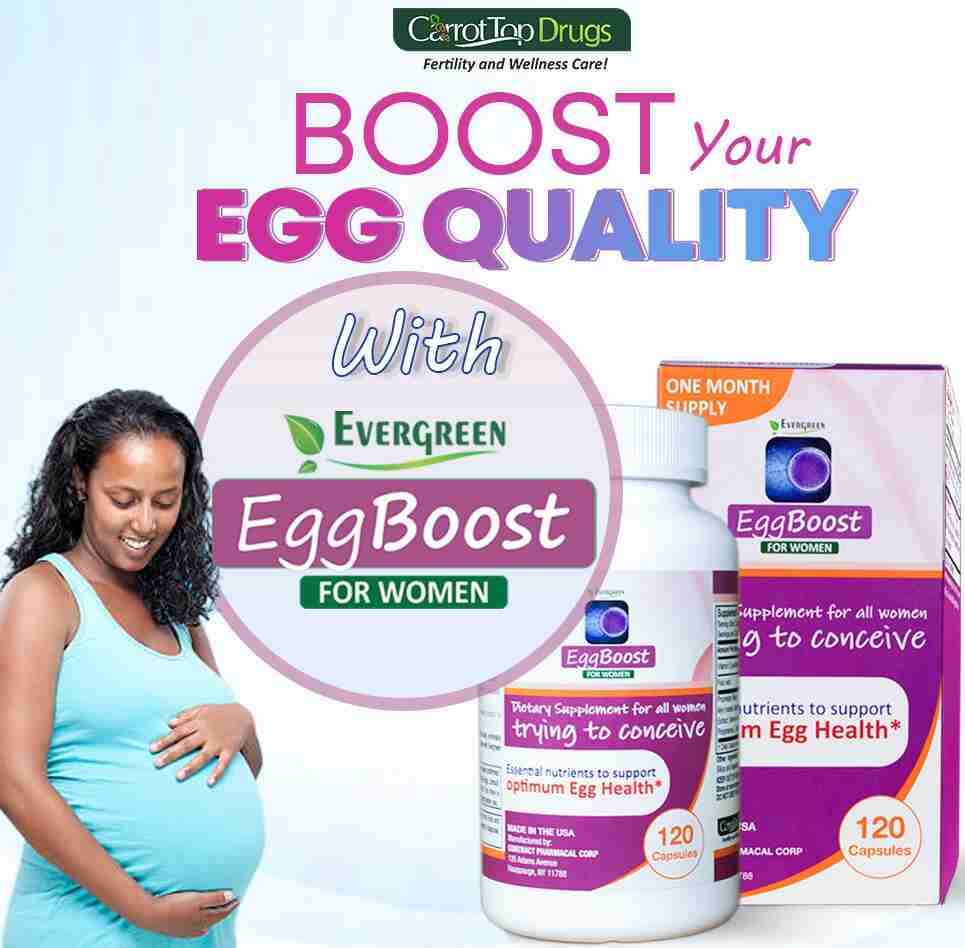
Evergreen Eggboost is a specially formulated supplement that supports oocyte quality and ovarian function. It targets women who are actively trying to conceive.
Its key ingredients include myo-inositol, melatonin, vitamin E, folic acid, and grape seed extract. Each ingredient plays a distinct role:
- Myo-inositol: Improves insulin signalling within the ovary, which directly supports follicle development and egg maturation. Research published in the journal Reproductive Biology and Endocrinology shows it significantly improves fertilization rates and oocyte quality.
- Melatonin: Acts as a powerful antioxidant inside the follicle. It reduces oxidative stress that damages eggs. Oxidative damage is a key driver of age-related egg quality decline.
- Vitamin E: Protects cell membranes from oxidative damage and supports healthy implantation.
- Folic acid: Essential for DNA synthesis and early embryo development. Reduces the risk of neural tube defects from conception.
- Grape seed extract: A potent antioxidant that further shields eggs from oxidative damage and supports overall ovarian health.
It is an excellent daily companion for women over 30 who want to protect and improve their egg quality while trying to conceive.
Evergreen Formula for Women
Evergreen Formula for Women is a comprehensive fertility adjuvant designed for the dietetic management of idiopathic infertility in women. Idiopathic infertility means no specific cause has been found, yet conception remains elusive.
It provides a full-spectrum micronutrient profile:
- Vitamins A, C, D3, E: Support immune function, hormone production, and embryo development.
- B-vitamins (B1, B2, B3, B6, B12, pantothenic acid, folic acid): Drive cellular energy, DNA replication, and hormonal balance throughout your cycle.
- Iron: Prevents anaemia and supports healthy ovulation. Iron deficiency is extremely common among Nigerian women.
- Iodine: Critical for thyroid function, which directly governs your menstrual cycle and early pregnancy hormone production.
- Magnesium: Regulates over 300 enzyme reactions including those controlling reproductive hormones.
- Zinc: Supports egg maturation, cell division after fertilization, and early embryonic growth.
- Selenium: Works as an antioxidant that protects eggs from free radical damage.
- Copper: Supports iron absorption and collagen synthesis in the uterine lining.
For women whose diets do not consistently deliver all these nutrients, and that includes most Nigerian women balancing busy lives, Evergreen Formula for Women fills critical nutritional gaps. It works well alongside Evergreen Eggboost for a complete preconception support strategy.
Is It Safe to Get Pregnant After 30 in Nigeria?
Yes, it is safe to get pregnant after 30 in Nigeria. Many Nigerian women give birth healthy babies in their 30s and beyond every day. The key factors that determine safety are your overall health, access to good antenatal care, and early identification of any complications.
Nigeria’s healthcare system has skilled obstetricians, specialist hospitals, and fertility clinics in most major cities. Book a preconception consultation with a gynaecologist before you start trying. This visit lets your doctor review your health, check for fibroids or hormonal issues, and guide you appropriately.
Early and consistent antenatal care remains the single most powerful safety tool. The American College of Obstetricians and Gynecologists confirms that early prenatal care substantially improves outcomes for mothers over 35.
Frequently Asked Questions
How long does it take to get pregnant after 30?
At age 30, about 75% of women conceive within the first year of trying. This drops to 66% by age 35. If you have been trying for 12 months without success under 35, or 6 months if you are 35 or older, see a fertility specialist.
Can I get pregnant naturally with fibroids at 32?
Most women with fibroids conceive naturally without any intervention. The type of fibroid matters most. Submucosal fibroids are the ones most likely to interfere. See a gynaecologist for an ultrasound to assess your specific situation.
What is the best time to get pregnant after 30 years old?
The best time to conceive is the five days before ovulation and the day of ovulation itself. Track your cycle monthly using OPKs or a fertility app. The middle of your cycle, roughly days 11 to 14 in a 28-day cycle, is typically peak fertility.
Do irregular periods mean I cannot get pregnant after 30?
Irregular periods do not mean infertility. They signal that ovulation may be unpredictable. A doctor can diagnose the underlying cause, whether PCOS, thyroid issues, or stress, and treat it. Many women with irregular cycles go on to conceive successfully.
What Nigerian foods help fertility for women over 30?
Ugu leaves, oily fish, beans, tiger nuts, avocado pear, sesame seeds, and whole grains like ofada rice all support fertility. These foods deliver zinc, folate, iron, omega-3s, and plant protein, all of which are essential for healthy ovulation and egg quality.
Can stress stop me from getting pregnant after 30?
Yes, chronic stress raises cortisol. High cortisol suppresses the reproductive hormones LH and FSH, which are needed for ovulation. Manage stress deliberately and do not underestimate its impact on conception.
Is IVF the only option if I cannot conceive after 30?
IVF is not the only option. Depending on the cause, your doctor may recommend ovulation induction with oral medication, intrauterine insemination (IUI), or lifestyle and supplement-based interventions. IVF is usually the next step when simpler approaches have not worked.
How do supplements like Evergreen Eggboost help getting pregnant after 30?
Evergreen Eggboost targets oocyte quality directly through myo-inositol, melatonin, and grape seed extract. As egg quality naturally declines with age, this antioxidant-rich formula helps protect and improve the eggs available each cycle. It is designed specifically for women actively trying to conceive.
Final Thoughts on Getting Pregnant After 30
Getting pregnant after 30 is not a race against time. It is a strategic journey. Nigerian women over 30 conceive healthy babies every day with the right information, habits, and support.
Track your ovulation. Eat fertility-rich Nigerian foods. Address underlying conditions like fibroids or irregular periods early. Choose targeted supplements like Evergreen Eggboost and Evergreen Formula for Women to give your body the nutritional foundation it needs.
Most importantly, do not wait. Seek medical guidance early, stay consistent, and trust the process. Your 30s can absolutely be the decade you welcome your child.of conception.