Introduction
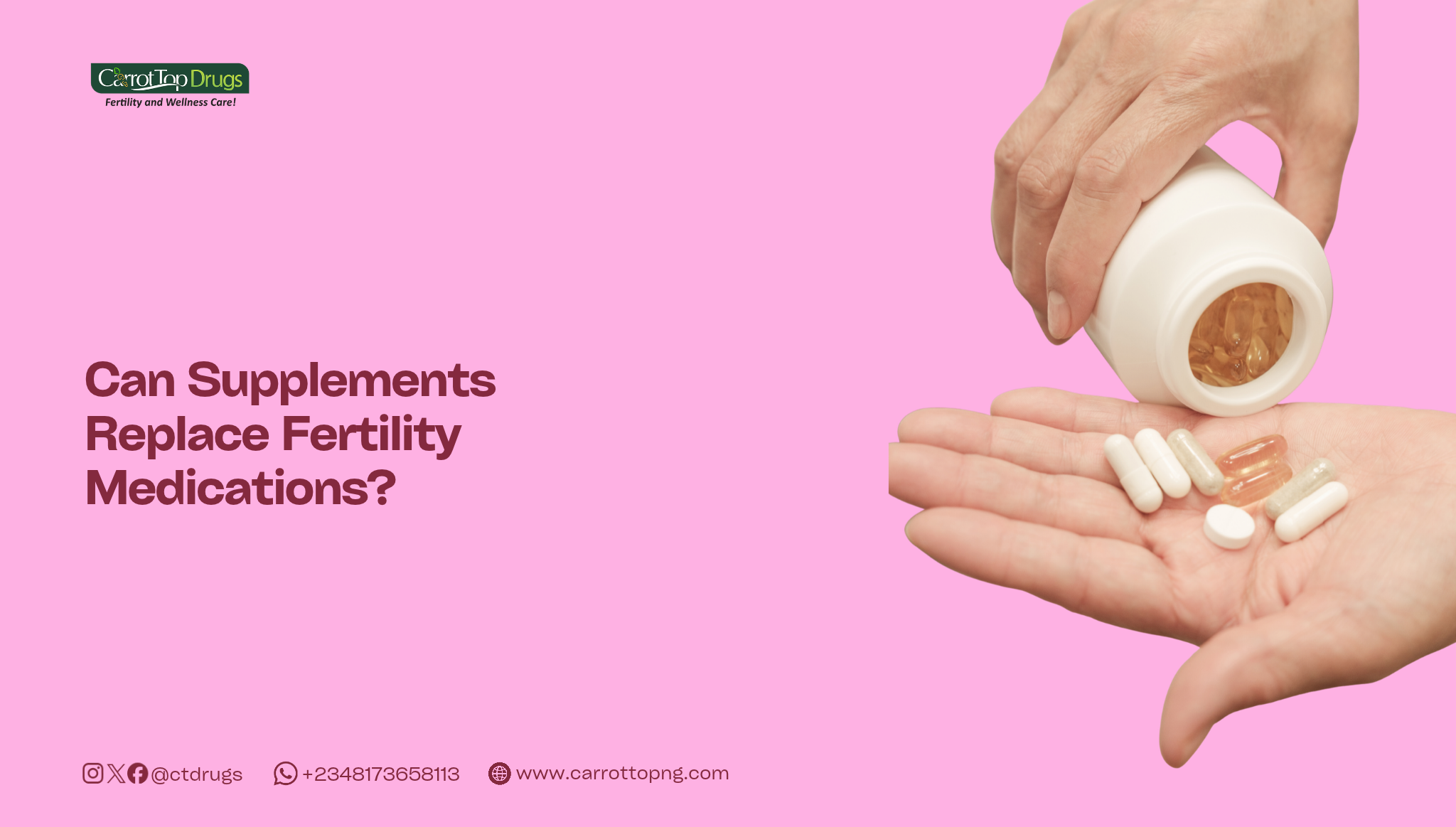
The fertility supplement industry will tell you yes. The IVF clinic will tell you no. The real answer is more specific than either of them is likely to give you: it depends on why you are having trouble conceiving, and in a way that can be worked out with some basic diagnostic information. This article does not argue for supplements over medications or medications over supplements. It answers the question can supplements replace fertility medications honestly, case by case, with the clinical evidence on the table. Some diagnoses are nutritional in origin and respond to nutritional correction. Others require pharmacological intervention that no supplement can replicate. Knowing which category you are in is the most useful thing you can take from this.
What Fertility Medications Are Actually Doing
To answer whether can supplements replace fertility medications is even the right question to ask, it helps to understand the mechanisms fertility drugs work through. They are not all doing the same thing.
Letrozole and clomiphene work by inducing ovulation. They temporarily suppress estrogen signalling at the hypothalamus, which causes a compensatory surge in FSH, which forces follicle development and ovulation in women who are not ovulating on their own.
Metformin reduces hepatic glucose production and improves insulin sensitivity at the cellular level. In PCOS, where insulin resistance drives androgen excess and follicle arrest, metformin restores the metabolic environment that ovulation depends on.
Gonadotropin injections (FSH, LH, or combined) directly substitute for the hormones that the pituitary is not producing in sufficient amounts. Progesterone supplements during the luteal phase provide hormonal support when the corpus luteum is not producing enough on its own.
Each of these works on a specific, quantifiable hormonal mechanism. The question of whether a supplement can substitute depends on whether that mechanism is pharmacological in nature, or whether it is a nutritional deficit that a drug has been used to compensate for.
Where Supplements Have Real Clinical Evidence
There are specific situations where addressing nutritional deficiency has produced fertility outcomes comparable to or augmenting medication. These are not hypothetical. They are documented in peer-reviewed trials.
Vitamin D Deficiency and Ovulation
A 2020 Nutrients review found that Vitamin D deficiency was independently associated with worsened insulin resistance, elevated androgens, and reduced ovulatory frequency in women with PCOS. Correcting the deficiency improved hormonal profiles and cycle regularity. For a woman with PCOS whose irregular cycles are partly driven by Vitamin D deficiency, addressing that deficiency is not supplementary to treatment. In that context, it is treatment.
Inositol and Ovulation Induction in PCOS
A 2022 meta-analysis in BMC Medicine found that myo-inositol produced clinically meaningful improvements in menstrual regularity, androgen levels, and ovulatory function in women with PCOS. The effect sizes were comparable to metformin in several subgroup analyses. For women with mild to moderate PCOS and primarily insulin-driven cycle disruption, inositol is a documented alternative to pharmaceutical insulin sensitisers. Several European reproductive medicine societies now list it as first-line nutritional support for PCOS before escalating to medication.
Antioxidants and Sperm DNA Fragmentation
A Human Reproduction Update review confirmed that elevated sperm DNA fragmentation is a treatable cause of male factor infertility and recurrent miscarriage. Antioxidant supplementation, specifically combinations of Vitamins C and E, selenium, and CoQ10, reduces oxidative damage to sperm DNA. There is no fertility medication that addresses sperm DNA fragmentation. Antioxidants are the primary evidence-based intervention for this specific problem.
Research in Reproductive BioMedicine Online confirmed that combined antioxidant protocols improved sperm parameters and embryo quality in IVF cycles. In the context of male factor infertility driven by oxidative stress, the answer to can supplements replace fertility medications is not just yes. It is that no medication exists to replace them.
Folate and Early Embryo Development
Published data in Biochemistry and Molecular Biology Education confirms folate’s role in DNA synthesis during rapid early embryonic cell division. Adequate periconceptional folate reduces neural tube defect risk by up to 70% and supports embryo quality in ways that no ovulation-induction drug addresses. This is supplementation that fills a gap prescriptions were never designed for.
Where Supplements Cannot Substitute for Medication
Honest answers to can supplements replace fertility medications require this section to exist. Several fertility conditions require pharmacological intervention that nutritional supplements cannot replicate, and women who delay that intervention while trying supplement-only approaches lose time that matters.
Anovulation in PCOS with Severe Insulin Resistance
Data from the Journal of Clinical Endocrinology and Metabolism found that up to 70% of women with PCOS remain undiagnosed and that a significant proportion have severe insulin resistance that does not respond adequately to dietary or nutritional correction alone. The landmark NEJM letrozole trial established that letrozole produces live birth rates significantly higher than other interventions in PCOS. For women with moderate to severe anovulatory PCOS, letrozole is not replaceable by inositol or diet change. Both may improve the context, but they do not replace the pharmacological ovulation trigger.
Hypothyroidism
A review in Reviews in Endocrine and Metabolic Disorders confirmed that even subclinical hypothyroidism reduces endometrial receptivity, suppresses ovulation, and worsens pregnancy outcomes. Thyroid hormone replacement with levothyroxine is a prescription medication that corrects thyroid function when the gland cannot produce adequate T3 and T4. Iodine supplementation supports thyroid hormone synthesis but cannot compensate for a thyroid gland with impaired function. If the TSH is elevated, the thyroid needs treatment, not nutrition.
Tubal Factor and Structural Causes
Blocked fallopian tubes, uterine fibroids in the cavity, severe endometriosis affecting tubal anatomy, and uterine septum are structural problems. No supplement improves tubal patency or corrects uterine anatomy. These conditions require surgical evaluation and, where relevant, intervention. Nutritional support may help the ovarian and uterine environment around a procedure, but it is not a substitute for the procedure.
Premature Ovarian Insufficiency
Premature ovarian insufficiency (POI), where the ovaries deplete their follicular reserve before age 40, is not a nutritional deficiency condition. Supplementation cannot restore an oocyte pool that has been exhausted. Women with POI exploring fertility options need specialist evaluation covering egg donation, remaining natural cycle monitoring, and hormone replacement for overall health. Supplements play a supportive role in this population but do not address the core pathology.
Hyperprolactinaemia
Elevated prolactin levels suppress ovulation by inhibiting GnRH pulsatility. When hyperprolactinaemia is caused by a pituitary microadenoma or medication side effect, it requires treatment with dopamine agonists like cabergoline or bromocriptine. These drugs are highly effective and work within weeks. There is no nutritional equivalent to a dopamine agonist for a prolactin-secreting adenoma.
The Grey Zone: Where Supplements and Medications Work Best Together
For most people, the question of whether can supplements replace fertility medications has a third answer: they are not in competition. They address different parts of the problem.
A BMJ study on shared decision-making in reproductive care found that patients who understood their treatment options, including adjunctive options, had better outcomes and better satisfaction with care. Knowing that inositol supports insulin signalling while letrozole triggers ovulation allows a woman to use both strategically rather than choosing between them.
The combination approach makes most sense in the following scenarios:
- PCOS: Inositol and Vitamin D address the metabolic environment; letrozole or metformin addresses the ovulation trigger. Together they improve both the hormonal context and the pharmacological response.
- IVF preparation: CoQ10, antioxidants, and folate improve egg and sperm quality before retrieval. They do not replace the gonadotropin protocol. They improve what the protocol works with.
- Male factor: Antioxidants, zinc, L-carnitine, and selenium address sperm quality in ways that have no pharmacological equivalent. In couples pursuing IVF or ICSI, male supplementation alongside the female’s medication protocol addresses both sides of the equation.
- Thyroid-managed patients: Adequate iodine and selenium alongside prescribed levothyroxine supports the biochemistry of thyroid hormone synthesis and conversion, even when the gland itself needs pharmaceutical support.
In each of these, supplements are not replacing medications. They are doing work that medications were not designed to do.
How Your Specific Diagnosis Determines the Answer
The most useful reframe of can supplements replace fertility medications is this: the question is not about supplements versus medications. It is about what is causing the infertility and what intervention addresses that cause at the level it operates.
A simplified decision framework:
- Nutritional deficiency is the primary driver: supplementation is the intervention. Examples: Vitamin D deficiency worsening PCOS, iron deficiency suppressing ovulation, zinc deficiency impairing sperm formation.
- Pharmacological ovulation induction is needed: medication is necessary. Supplements can support the environment but do not replace the trigger. Examples: anovulatory PCOS requiring letrozole, hyperprolactinaemia requiring cabergoline.
- Oxidative stress is the primary driver: antioxidant supplementation is the primary intervention. No medication exists for this. Examples: sperm DNA fragmentation, poor egg quality linked to oxidative damage.
- Structural pathology is present: surgery or assisted reproduction is needed. Supplements play a peripheral role. Examples: blocked tubes, fibroids in the uterine cavity, severe endometriosis.
- The cause is unknown: investigation is the first step. Starting supplements and medication simultaneously without knowing the cause makes it difficult to assess what is working.
A Human Reproduction study on lifestyle and fertility confirmed that identifying the specific cause and targeting it directly produced better outcomes than generic fertility treatment across all patient groups. The same principle applies to the supplement versus medication question.
What a Rational Approach to Both Looks Like in Practice
The most effective fertility care combines investigation, targeted medical treatment where indicated, and nutritional support where the evidence supports it. That combination is not commonly presented to patients as a coherent picture, which is why the question of whether can supplements replace fertility medications comes up so often.
A woman diagnosed with PCOS and mild insulin resistance who is not yet trying to conceive has a reasonable evidence base for starting with inositol, Vitamin D correction, dietary change, and resistance exercise. If those measures restore regular ovulation within three to four months, she may not need pharmacological ovulation induction.
A woman with the same diagnosis who is 37, has been trying to conceive for ten months, and has a partner with borderline sperm parameters does not have the same timeline. For her, starting with supplements and revisiting medication in three months is a clinically costly delay. Both approaches can run simultaneously.
The decision depends on age, duration of trying, specific diagnosis, and the degree of urgency the clinical picture creates. These are conversations worth having with your treating clinician explicitly, not assumptions to make based on a supplement label or a clinic brochure.
Frequently Asked Questions
Can supplements replace fertility medications for PCOS specifically?
For mild PCOS driven primarily by insulin resistance with preserved ovulation, inositol and dietary intervention have documented efficacy comparable to metformin. For moderate to severe PCOS with consistent anovulation, pharmacological ovulation induction remains necessary. Most women with PCOS fall somewhere between those two scenarios. A baseline hormone panel, fasting insulin, and an ultrasound give you the information needed to know which category you are in.
My doctor recommended Clomid. Should I try supplements first?
That depends entirely on why Clomid was recommended and how long you have been trying. If you have been trying for over a year and have documented anovulation, delaying pharmacological treatment for a supplement trial has a real cost. If you have been trying for three months and your doctor is being proactive rather than responding to a specific failure, asking about a brief nutritional trial first is a reasonable conversation to have. Bring the question back to your doctor with that framing.
Are there supplements that enhance the effect of fertility medications?
Yes. CoQ10 before IVF improves the quality of eggs that the gonadotropin protocol stimulates. Inositol alongside metformin shows additive effects on insulin sensitivity in PCOS beyond either alone. Antioxidant supplementation in the male partner alongside a female IVF cycle addresses sperm DNA fragmentation without interfering with the IVF protocol. These are additive uses, not replacements.
Can supplements replace fertility medications if I cannot afford treatment?
Cost is a real barrier to fertility care globally. Supplements are less expensive than most fertility medications and are accessible without a prescription. For someone who cannot access or afford pharmacological treatment, nutritional optimisation is a legitimate step. It will not correct every diagnosis, but for conditions like nutritional deficiency, insulin resistance, and oxidative stress-driven infertility, it addresses real mechanisms at a fraction of the cost of ART. That is worth knowing even if it is not the complete answer.
The Straight Answer
Can supplements replace fertility medications? Sometimes yes, sometimes no, and often they were never meant to compete in the first place.
For nutritional deficiency driving hormonal disruption: supplements are the intervention. Anovulation requiring a pharmacological trigger: medication is necessary and supplements support it. For oxidative stress impairing egg and sperm quality: supplements are the primary evidence-based tool because no medication addresses that mechanism. In structural pathology: neither supplements nor medications replace surgical evaluation.
The answer to can supplements replace fertility medications is written in your diagnosis, not in a general rule. Get the diagnosis right and the question mostly answers itself.