Introduction
The impact of prolactin on male fertility is one of the most underdiagnosed hormonal problems affecting men today. A single hormone, produced quietly in the brain, can shut down testosterone production, reduce sperm count, and destroy sexual function. Yet most men, and even many doctors, never test for it. In Nigeria, where male infertility carries deep social weight, this gap costs couples years and real heartbreak. This article explains exactly what prolactin does in the male body. It shows what happens when levels rise too high. And it gives you a clear, actionable plan for protecting your fertility.
What Is Prolactin? Understanding the Hormone Behind the Problem
Prolactin is a peptide hormone produced by the pituitary gland, a small structure at the base of the brain. Most people associate prolactin with breastfeeding in women. That association is accurate but incomplete. Men also produce prolactin, and it plays important roles throughout the male reproductive system. According to the American Society for Reproductive Medicine, prolactin receptors exist on Leydig cells, Sertoli cells, and epithelial cells of the efferent ducts in men. This means prolactin touches every major cell type involved in testosterone production and spermatogenesis.
Under normal conditions, prolactin helps regulate sexual satisfaction and maintain sperm function. The problem starts when prolactin climbs above its normal range. The normal prolactin level for men is below 20 nanograms per milliliter (ng/mL). Any level above 25 ng/mL meets the clinical definition of hyperprolactinemia, or high prolactin. When it stays elevated for weeks or months, the reproductive consequences become severe.
The Role of Prolactin in Male Reproductive Health
You need to understand the impact of prolactin on male fertility. It does not act in isolation in the male body. It works inside a critical hormonal chain called the hypothalamic-pituitary-gonadal (HPG) axis. Here is how that chain normally functions.
The hypothalamus releases gonadotropin-releasing hormone (GnRH) in regular pulses. GnRH signals the pituitary to release luteinizing hormone (LH) and follicle-stimulating hormone (FSH). LH travels to the testes and tells the Leydig cells to produce testosterone. FSH works with testosterone inside the Sertoli cells to drive sperm production. This entire system depends on GnRH pulses remaining regular and uninterrupted.
Prolactin sits at the top of this system and controls it through a feedback loop. At normal levels, prolactin supports the process. At elevated levels, it suppresses GnRH secretion directly. That suppression causes LH and FSH to fall. Without LH stimulation, testosterone production collapses. Without FSH support, sperm production slows or stops entirely. A single hormone out of balance disrupts the entire reproductive axis simultaneously.
How Hyperprolactinemia Affects Testosterone Levels in Men
The relationship between prolactin and testosterone is direct and measurable. Elevated prolactin suppresses GnRH pulsatility in the hypothalamus. This reduces LH production by the pituitary gland. Less LH means less stimulation to Leydig cells in the testes. Testosterone output falls as a result. Additionally, prolactin causes the liver to reduce its production of sex hormone-binding globulin (SHBG). While lower SHBG initially sounds helpful, the combined effect of reduced total testosterone produces hypogonadism.
A retrospective review of over 3,000 men by Male Fertility Specialist Dr. Eric Seaman found that men with hyperprolactinemia showed significantly lower median testosterone levels than men with normal prolactin. Importantly, a 2024 study published in PubMed Central revealed that some men with elevated prolactin present with normal testosterone levels but still suffer clinical hypogonadism. This means prolactin causes reproductive harm through pathways beyond simple testosterone suppression. Standard hormone panels can miss these men entirely.
High Prolactin in Men: Recognizing the Symptoms
High prolactin is sometimes completely silent. Many men carry elevated prolactin for months or years without connecting their symptoms to a hormonal cause. Recognizing the signs early changes outcomes dramatically.
Low libido and reduced sexual desire.
This is often the first symptom men notice. Elevated prolactin suppresses both testosterone and central dopamine signaling, both of which drive sexual motivation. A man may lose interest in sex progressively, sometimes explaining it away as stress or aging.
Erectile dysfunction.
Prolactin causes erectile dysfunction through two mechanisms. First, it reduces testosterone, which is essential for achieving and sustaining erections. Second, it interferes with dopaminergic neurotransmission in the brain. According to Cleveland Clinic, erectile dysfunction is one of the most common presenting complaints in men with hyperprolactinemia.
Low or absent sperm count.
The American Society for Reproductive Medicine confirms that untreated hyperprolactinemia can reduce sperm production to zero. Men with oligospermia or azoospermia who also have low testosterone should always have their prolactin tested.
Gynecomastia.
High prolactin stimulates breast tissue development in men. This symptom causes significant emotional distress but also serves as a visible clinical clue.
Galactorrhea.
Some men with severely elevated prolactin develop nipple discharge. This symptom strongly suggests a prolactinoma and requires immediate investigation.
Headaches and visual changes.
A growing pituitary tumor presses on the optic chiasm. This causes temporal visual field defects and persistent headaches. These symptoms signal a macroadenoma and require urgent MRI imaging.
Bone loss.
Chronic hyperprolactinemia reduces bone mineral density over time. Men may develop osteoporosis silently, increasing fracture risk in later life.
Can High Prolactin Levels Cause Low Sperm Count in Men?
Yes, elevated prolactin directly causes low sperm count and poor sperm quality. The mechanism works through the HPG axis disruption described above. When FSH falls due to prolactin-induced GnRH suppression, Sertoli cells lose their main signal to produce sperm. Sperm production slows, and the sperm that do form show abnormal motility and morphology.
A study published in the National Library of Medicine measured hormone levels in 220 infertile men versus 220 fertile controls. Infertile men showed significantly higher prolactin levels alongside lower testosterone. Prolactin elevation appeared across all sperm abnormality groups: azoospermic, oligozoospermic, and asthenozoospermic men. Furthermore, research published by the European Society of Endocrinology confirmed that high prolactin arrests sperm differentiation at the round spermatid stage. Spermatids fail to develop into fully elongated, functional spermatozoa. The sperm that exist cannot fertilize an egg effectively.
What Prolactin Level Is Too High for Male Fertility?
Understanding the numbers helps men make informed decisions about testing and treatment.
A prolactin level below 20 ng/mL is considered normal for men. Technically, any level above 25 ng/mL meets the clinical definition of hyperprolactinemia. However, mild elevations between 25 and 30 ng/mL do not always cause significant fertility impairment. Clinicians at Male Infertility Guide recommend pituitary MRI imaging for any man whose prolactin exceeds 30 ng/mL. A level between 25 and 100 ng/mL may indicate drug-induced hyperprolactinemia, a microadenoma, or stalk compression. While, a level above 250 ng/mL strongly suggests a prolactinoma. A level above 500 ng/mL is diagnostic for a macroadenoma, which requires specialist evaluation. The higher the prolactin level, the more severe the impact on testosterone and spermatogenesis.
Causes of High Prolactin in Men: Why Levels Rise
Prolactin rises for many reasons, and identifying the cause shapes the treatment strategy. Here are the most important causes.
Prolactinoma.
This is a benign tumor of the pituitary gland that secretes prolactin autonomously. Prolactinomas are the most common pituitary adenoma. Microadenomas are smaller than 10 mm and are the most frequent type. Macroadenomas exceed 10 mm and cause more severe hormonal disruption.
Medications.
This is the single most common cause of elevated prolactin in men. Antipsychotic drugs, antidepressants, opioids, and some antihypertensives block dopamine receptors. Since dopamine normally suppresses prolactin release, dopamine antagonists cause prolactin to rise. Men taking these medications long term are at significant risk.
Hypothyroidism.
An underactive thyroid increases thyrotropin-releasing hormone (TRH). TRH stimulates prolactin release from the pituitary. Every man with high prolactin should also have his thyroid function tested. Treating hypothyroidism often normalizes prolactin without additional medication.
Chronic stress.
Stress elevates cortisol, which alters hypothalamic signaling and raises prolactin output. In Nigerian men dealing with economic pressure, relationship strain, and workplace stress, this pathway matters clinically.
Liver and kidney disease.
Both conditions impair prolactin clearance from the blood. Men with chronic renal or hepatic disease should include prolactin in their hormonal workup.
Idiopathic hyperprolactinemia.
In approximately one third of cases, no cause is ever identified. Some of these cases resolve spontaneously, but all require monitoring.
Prolactin Test for Male Infertility: When and How to Test
Testing prolactin is simple, inexpensive, and informative. A single blood draw measures serum prolactin concentration. However, timing and preparation matter greatly for accurate results. Prolactin levels fluctuate throughout the day. They rise with stress, recent eating, strenuous exercise, and sexual activity. For the most reliable result, test in the morning after fasting overnight and resting quietly for at least 30 minutes before the blood draw.
The American Urological Association recommends testing prolactin in men who present with low testosterone and signs of secondary hypogonadism. If the first result is elevated, confirm it with a second fasting sample before proceeding to treatment. If the confirmed level exceeds 30 ng/mL, request an MRI of the pituitary gland with gadolinium contrast. In Nigeria, prolactin tests are widely available at private diagnostic labs and most teaching hospitals. Men presenting with low sperm count, erectile dysfunction, or unexplained infertility should insist on including prolactin in their hormonal panel alongside FSH, LH, testosterone, and TSH.
Hyperprolactinemia Male Fertility Treatment: Medical Options
Effective treatment exists for virtually every cause of elevated prolactin. The treatment approach depends on the underlying cause and the severity of the elevation.
Dopamine agonists.
Cabergoline is now the first-line treatment for hyperprolactinemia worldwide. It works by stimulating dopamine receptors in the pituitary, which suppresses prolactin secretion directly. According to Male Infertility Guide, cabergoline normalizes prolactin levels in most men within two months. It causes tumor shrinkage in 80 to 90 percent of prolactinoma cases. Fertility returns in approximately 50 percent of treated men. Bromocriptine is an older alternative with more side effects but remains effective and is more widely available in Nigeria.
Treating the underlying cause.
When a medication causes high prolactin, switching to a lower-risk alternative often resolves the problem. When hypothyroidism is the driver, thyroid hormone replacement normalizes prolactin without additional drugs. Reducing chronic stress through structured lifestyle changes also reduces prolactin in men with stress-driven elevations.
Surgery.
Transsphenoidal surgery removes the tumor through the nose and is reserved for macroadenomas that fail to respond to medication. Surgery achieves prolactin normalization in most early cases but carries surgical risks that medication avoids. Radiation therapy is used only in rare cases that resist both medication and surgery.
Natural Ways to Reduce Prolactin and Boost Male Fertility in Nigeria
Natural strategies reduce prolactin most effectively when levels are mildly elevated. They also strengthen the response to medical treatment in men with more significant hyperprolactinemia. The following approaches carry strong evidence.
Increase zinc intake.
Zinc deficiency directly causes elevated prolactin. Zinc supports dopamine synthesis in the hypothalamus, which suppresses prolactin release. Foods rich in zinc include pumpkin seeds, oysters, beef, lentils, and groundnuts, all widely available in Nigeria. A zinc supplement that delivers clinically meaningful doses accelerates this effect.
Prioritize vitamin B6.
Vitamin B6, or pyridoxine, acts as a cofactor for the enzyme that converts amino acids into dopamine. More dopamine means stronger inhibition of prolactin secretion from the pituitary. Research published by Repose Healthcare confirms that B6 supplementation effectively reduces prolactin in men with mild elevations. Rich food sources include salmon, chicken, bananas, avocados, and potatoes.
Optimize vitamin E intake.
Vitamin E has demonstrated direct prolactin-lowering effects in clinical studies. It also reduces oxidative stress in testicular tissue, supporting both testosterone production and sperm quality independently.
Manage stress actively.
Chronic stress raises cortisol, which in turn elevates prolactin. Structured relaxation practices, adequate sleep of seven to eight hours per night, and regular moderate exercise all reduce cortisol. Avoid overtraining, since intense prolonged exercise paradoxically raises prolactin.
Eliminate alcohol and sugar.
Alcohol disrupts dopamine production and raises prolactin directly. Sugar spikes insulin, which reduces dopamine signaling, further releasing the brake on prolactin secretion. Both must be reduced or eliminated during fertility treatment.
Support thyroid health.
Iodine deficiency is prevalent in parts of Nigeria and leads to hypothyroidism. Hypothyroidism raises prolactin. Ensuring adequate iodine through diet or supplementation protects both thyroid and prolactin levels.
Evergreen Formula for Men: Nutritional Support for Prolactin-Related Male Infertility
Managing elevated prolactin medically addresses the hormonal disruption. But the sperm damage that accumulates during a period of hyperprolactinemia requires nutritional repair. Oxidative stress, impaired spermatogenesis, low sperm motility, and DNA fragmentation do not resolve automatically when prolactin normalizes. They need targeted nutritional intervention.
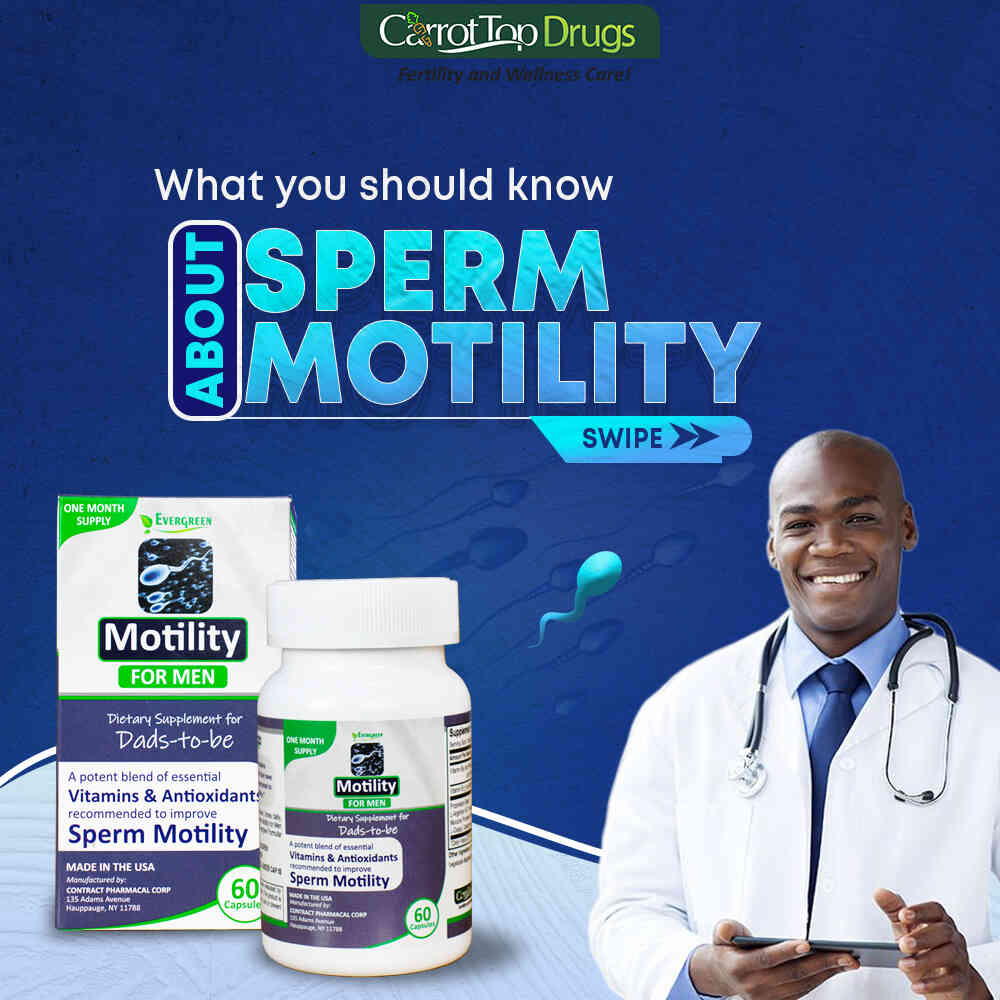
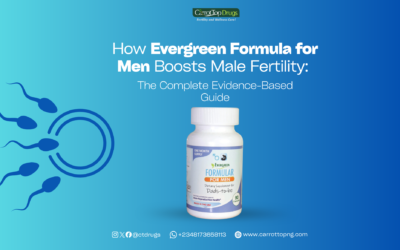
Evergreen Formula for Men is a precision fertility adjuvant for the dietetic management of idiopathic oligoasthenoteratozoospermia. Its formula addresses the exact mechanisms through which hyperprolactinemia damages male fertility. It contains a comprehensive antioxidant complex that neutralizes the reactive oxygen species (ROS) that elevated prolactin and its downstream hormonal disruptions generate. These ROS reduce sperm motility, cause DNA fragmentation in sperm cells, impair sperm hyperactivation, and block oocyte fusion, preventing fertilization entirely.
The zinc and selenium in Evergreen Formula for Men directly support dopamine synthesis, which helps maintain healthy prolactin regulation. Vitamin B6 provides the cofactor that dopamine production requires, reinforcing the natural prolactin-inhibiting pathway.
Magnesium supports testosterone synthesis at the testicular level. Chromium improves insulin sensitivity and glucose regulation, reducing the indirect prolactin-raising effect of poor metabolic health. Iodine supports thyroid function, eliminating one of the most common secondary causes of elevated prolactin in Nigerian men.
Vitamins A, C, D3, E, and K provide broad antioxidant coverage across the entire male reproductive tract. The complete B-vitamin complex, including B1, B2, B3, B6, B9, B12, and pantothenic acid, restores the hormonal signaling that hyperprolactinemia suppresses.
Copper and manganese round out the formula with enzymatic antioxidant support that commercial fertility supplements rarely include.
Evergreen Formula for Men does not treat hyperprolactinemia directly. It repairs the fertility damage that elevated prolactin leaves behind and creates the strongest possible nutritional foundation for conception once prolactin is controlled.
Prolactin and Male Infertility in Nigeria: A Problem Hiding in Plain Sight
Nigerian men face a unique set of circumstances that raise prolactin risk. Economic stress and social pressure drive chronic cortisol elevation in millions of men. Antipsychotic and antidepressant medications are increasingly prescribed in Nigerian hospitals, and many carry prolactin-raising side effects. Hypothyroidism from iodine deficiency remains underdiagnosed in several northern and inland communities. Liver disease, which impairs prolactin clearance, carries a meaningful burden in the country.
Despite all of this, prolactin testing remains absent from most male fertility workups in Nigeria. Most laboratories test only testosterone, FSH, and LH. Prolactin is ordered only when gynecomastia or galactorrhea is present, which means the majority of affected men are never identified. Every Nigerian man who presents with unexplained infertility, low sperm count, or erectile dysfunction deserves a complete hormonal evaluation that includes prolactin.
Frequently Asked Questions
What is the role of prolactin in male fertility?
Prolactin regulates the HPG axis, supports steroidogenesis in Leydig cells, and sustains spermatogenesis through Sertoli cells. At normal levels it supports fertility. When elevated, it suppresses GnRH, drops LH and FSH, collapses testosterone, and halts sperm production.
Can high prolactin levels cause infertility in men?
Yes. High prolactin suppresses the hormonal chain that drives sperm production and testosterone synthesis. Men with untreated hyperprolactinemia can develop complete azoospermia. The American Society for Reproductive Medicine confirms this directly.
What are the symptoms of high prolactin in Nigerian men?
The most common signs include low sex drive, erectile dysfunction, low or zero sperm count, breast tissue enlargement (gynecomastia), nipple discharge, persistent headaches, and visual changes. Many men also report fatigue and mood changes. Symptoms often develop gradually and go unrecognized for years.
How does hyperprolactinemia affect testosterone levels in men?
Elevated prolactin suppresses GnRH pulse frequency. This reduces LH and FSH secretion. Without LH stimulation, testicular Leydig cells reduce testosterone output. The result is secondary hypogonadism with low testosterone, poor libido, and impaired sperm production.
Can prolactin imbalance cause erectile dysfunction?
Yes. Prolactin causes erectile dysfunction through two pathways. First, it reduces testosterone, which drives erection physiology. Second, it disrupts central dopamine signaling in the brain, which is required for sexual arousal and erection. Treatment with cabergoline or bromocriptine resolves this in most men.
How can Nigerian men treat high prolactin levels naturally?
Increase zinc and vitamin B6 through diet and supplementation. Eliminate alcohol and sugar. Practice stress management and get seven to eight hours of sleep. Support thyroid health with adequate iodine. Avoid overtraining. Use a targeted supplement like Evergreen Formula for Men to repair sperm quality while addressing the underlying cause medically.
What prolactin level is too high for male fertility?
Any level above 25 ng/mL meets the clinical definition of hyperprolactinemia. Levels above 30 ng/mL warrant pituitary MRI. While levels above 100 ng/mL are almost always pathological and produce significant fertility impairment. Levels above 500 ng/mL indicate macroadenoma.
How does high prolactin affect sperm production in men?
Elevated prolactin suppresses FSH, which is essential for activating Sertoli cells. Without Sertoli cell stimulation, sperm cannot develop past the round spermatid stage. Sperm motility, morphology, and DNA integrity all deteriorate with sustained hyperprolactinemia.
What is the relationship between prolactin and testosterone in male infertility?
Prolactin and testosterone have an inverse relationship. When prolactin rises, LH falls, and testosterone follows. Low testosterone then worsens erectile function, libido, sperm quality, and energy. Normalizing prolactin restores LH signaling and allows testosterone to recover.
Can a man have high prolactin with normal testosterone?
Yes, though it is rare. A 2024 study in PMC found a subset of men with elevated prolactin who still showed normal testosterone but suffered clear hypogonadism symptoms. Standard hormone panels can miss these cases. Prolactin must be tested independently.
How long does treatment take to restore fertility after high prolactin?
With cabergoline, prolactin normalizes in most men within two months. Sperm production recovery takes longer, typically three to six months, since a full spermatogenesis cycle lasts approximately 74 days. Fertility returns in roughly 50 percent of treated men.
The Bottom Line on Prolactin and Male Fertility
The impact of prolactin on male fertility is real, measurable, and treatable. A single blood test changes the entire course of a man’s fertility journey. Yet most men never get that test. High prolactin suppresses testosterone, destroys sperm production, causes erectile dysfunction, and silently depletes male reproductive health over months and years. If you are a Nigerian man dealing with low sperm count, unexplained infertility, or declining sexual function, do not accept a diagnosis of idiopathic infertility until you have tested your prolactin. Request a fasting morning sample. Test FSH, LH, testosterone, TSH, and prolactin together. If prolactin is elevated, treat the cause, rebuild your hormonal foundation, and support your sperm with proven nutritional tools like Evergreen Formula for Men. The path to conception starts with the right information.