Introduction
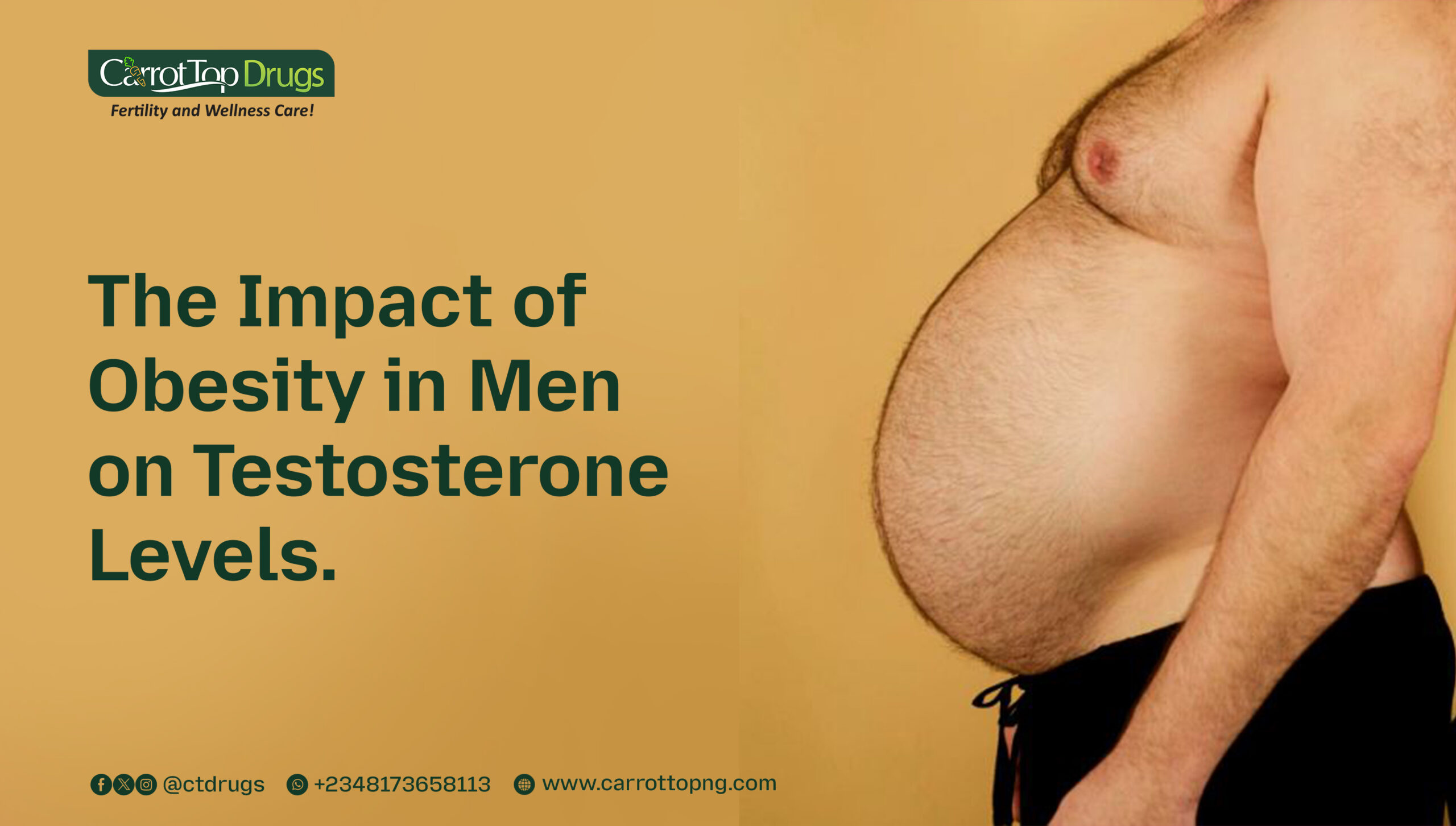
Obesity in men is a complex metabolic disorder characterized by excessive adipose tissue accumulation, often measured by a body mass index (BMI) ≥30 kg/m². Beyond its visible effects, obesity disrupts endocrine function, particularly testosterone production, which plays a pivotal role in male physiology. Testosterone, the primary androgen, regulates muscle mass, bone density, libido, and metabolic processes. Emerging evidence suggests that obesity in men contributes to a bidirectional relationship with hypogonadism, where excess adiposity suppresses testosterone synthesis, while low testosterone exacerbates fat deposition, creating a self-perpetuating cycle.
Relevant Statistics: Obesity in Men and Its Effect on Testosterone
Globally, obesity in men has surged, with projections indicating that 1.13 billion adults will be affected by 2030, a 115% increase from 2010. In the U.S., 35% of adult men are obese, while regions like Southeast Asia and Africa report rapid rises, with obesity rates in Nigerian men increasing by 25% over the past decade. Notably, obesity in men correlates strongly with hypotestosteronemia; studies reveal that 40–57% of obese men exhibit subnormal testosterone levels, compared to 12% in lean counterparts. In Africa, research from South Africa highlights that 35.8% of men with type 2 diabetes—a condition often comorbid with obesity—have low total testosterone, with central adiposity being a key predictor.
Risk Factors for Obesity in Men
1. Sedentary Lifestyle: Physical inactivity, exacerbated by prolonged screen time, reduces energy expenditure, promoting fat accumulation.
2. Poor Dietary Habits: High intake of ultra-processed foods, saturated fats, and added sugars disrupts metabolic homeostasis.
3. Genetic Predisposition: Polymorphisms in genes like DGAT2 influence fat storage and androgen sensitivity.
4. Chronic Stress: Elevated cortisol levels stimulate visceral fat deposition and suppress gonadotropin-releasing hormone (GnRH) secretion.
5. Sleep Deprivation: Inadequate sleep alters leptin and ghrelin levels, increasing hunger and insulin resistance.
6. Socioeconomic Factors: Limited access to healthy foods and safe exercise spaces disproportionately affects low-income populations.
Causes of Obesity in Men
1. Energy Imbalance and Hypercaloric Diets
The fundamental cause of obesity in men lies in chronic energy surplus, where caloric intake exceeds expenditure. Modern diets rich in refined carbohydrates and trans fats dysregulate satiety signals, leading to overconsumption. For instance, sugary beverages contribute ~150 excess kcal/day, which can result in a 10-pound annual weight gain. This energy imbalance triggers lipogenesis, wherein adipocytes hypertrophy and secrete pro-inflammatory cytokines like TNF-α, further impairing testosterone synthesis.
Moreover, high-fat diets reduce sex hormone-binding globulin (SHBG), lowering total testosterone bioavailability. Insulin resistance, a hallmark of obesity in men, exacerbates this by inhibiting hypothalamic-pituitary-testicular (HPT) axis signaling. Studies note that each 1-unit BMI increase corresponds to a 2% decline in testosterone, illustrating the metabolic-hormonal feedback loop.
2. Endocrine Disruption and Hypogonadism
Obesity in men induces functional hypogonadism, primarily through aromatase overexpression in adipose tissue. This enzyme converts testosterone to estradiol, elevating estrogen levels that negatively feed back on GnRH secretion. Consequently, luteinizing hormone (LH) production declines, impairing Leydig cell stimulation.
Additionally, leptin resistance—common in obesity—blunts GnRH pulsatility, while inflammatory cytokines (e.g., IL-6) directly inhibit steroidogenesis. Notably, visceral fat is more metabolically active than subcutaneous fat, releasing free fatty acids that further suppress testosterone production. This endocrine dysfunction underscores why obesity in men is both a cause and consequence of low testosterone.
Symptoms of Low Testosterone Due to Obesity in Men
- Low sex drive – Less interest in sex or fewer erections.
- Erectile dysfunction – Trouble getting or keeping an erection.
- Fatigue – Feeling tired all the time, even after rest.
- Loss of muscle mass – Weaker muscles despite exercise.
- Increased body fat – More belly fat, even with dieting.
- Mood swings – Feeling irritable, depressed, or anxious.
- Poor concentration – Trouble focusing or memory issues.
- Reduced beard/body hair growth – Slower or thinner hair growth.
- Hot flashes – Sudden sweating or overheating.
- Sleep problems – Insomnia or poor sleep quality
Complications of Obesity on Men’s Testosterone
1. Metabolic Syndrome and Insulin Resistance
Obesity in men drives metabolic syndrome, a cluster of conditions including hypertension, dyslipidemia, and hyperglycemia. Low testosterone exacerbates insulin resistance by reducing GLUT4 transporter expression in muscles, impairing glucose uptake. Conversely, hyperinsulinemia suppresses SHBG, creating a vicious cycle.
Clinical data reveal that obese men with testosterone deficiency face a 3-fold higher risk of type 2 diabetes. Testosterone therapy in hypogonadal men improves insulin sensitivity, though its use remains controversial in eugonadal obesity. This tension highlights the need for personalized approaches in managing obesity-related metabolic dysfunction.
2. Reproductive Dysfunction and Infertility
Hypotestosteronemia in obese men manifests as reduced libido, erectile dysfunction, and oligospermia. Adipose-derived estrogens inhibit gonadotropin release, while oxidative stress damages sperm DNA integrity. For instance, a waist circumference >40 inches increases ED risk by 75%, compared to 32 inches.
Interventions like weight loss restore gonadal function; a 10% weight reduction can normalize testosterone levels in 77% of men. However, the reversibility of reproductive impairments depends on the duration and severity of obesity, emphasizing early intervention.
Management Strategies
1. Lifestyle Modifications:
– Diet: Mediterranean or DASH diets improve SHBG and free testosterone.
– Exercise: Resistance training enhances androgen receptor sensitivity and muscle anabolism.
2. Pharmacotherapy:
– GLP-1 agonists (e.g., semaglutide) induce 10% weight loss and increase testosterone by 24%.
3. Surgical Options:
Bariatric surgery elevates testosterone by 50% in morbidly obese men.
Conclusion
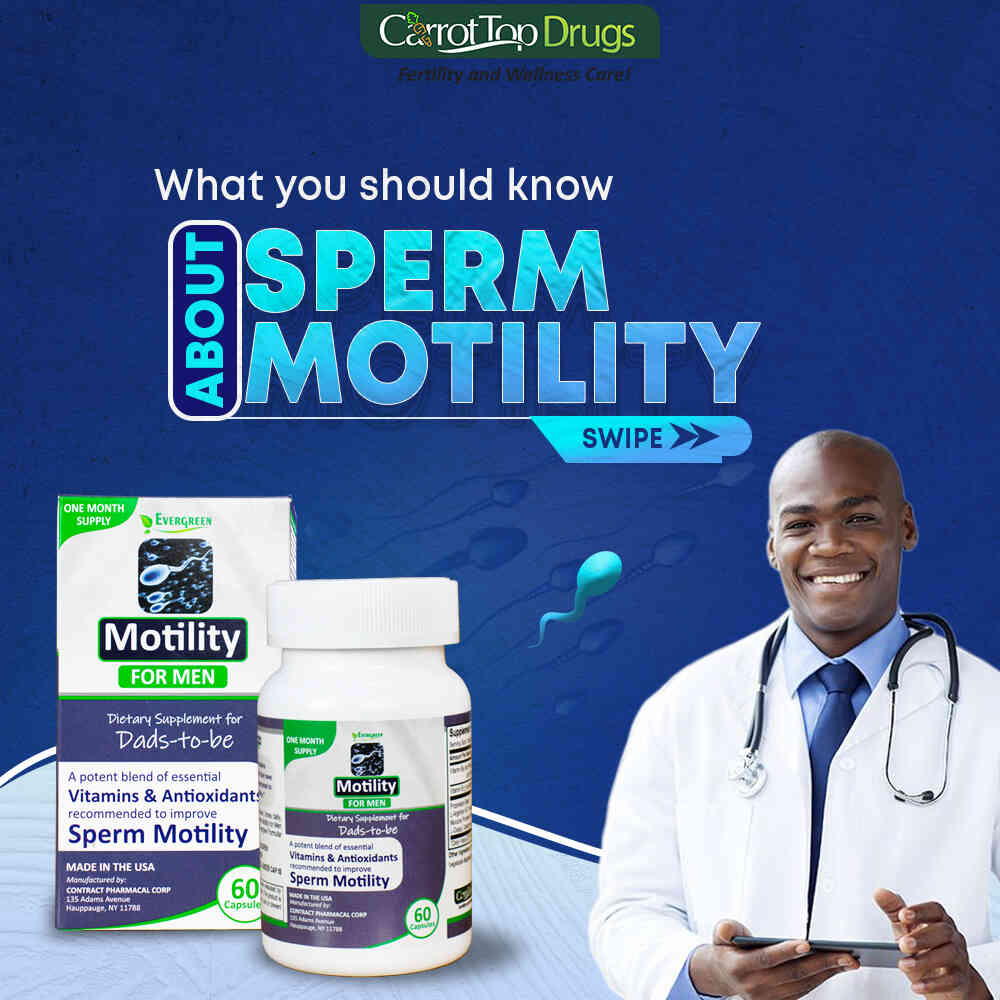
Obesity in men profoundly disrupts testosterone homeostasis, with cascading effects on metabolic, reproductive, and psychological health. While weight loss remains a cornerstone therapy, emerging pharmacotherapies offer promise in breaking the hypogonadal-obesity cycle. We also advise that men take Evergreen Action in Men, Evergreen Formular for Men to boost fertility. Future research should explore ethnic-specific thresholds for testosterone deficiency and long-term outcomes of TRT in obese populations.
FAQs
1. How does obesity lower testosterone in men?
Obesity increases aromatase activity, converting testosterone to estrogen, and induces leptin resistance, suppressing GnRH secretion.
2. Can weight loss improve testosterone levels?
Yes, a 5–10% weight loss can normalize testosterone in 77% of obese men.
3. What BMI is most associated with low testosterone?
Men with BMI >35 kg/m² have 50% lower testosterone than lean men.
4. Does testosterone therapy aid weight loss?
TRT may reduce fat mass by 3–4%, but lifestyle changes are primary.
5. Are obese men at higher risk for infertility?
Yes, obesity reduces sperm count and motility due to hormonal and oxidative stress.
6. Which diets boost testosterone in obese men?
Diets rich in zinc (e.g., shellfish) and omega-3s (e.g., flaxseeds) support steroidogenesis.
7. How quickly can testosterone levels recover after weight loss?
Significant improvements are seen within 6–12 months of sustained weight loss.
Obesity in men lowers testosterone, causing low libido, fatigue, weight gain & mood swings. Learn symptoms & solutions.