ttttf
Introduction
You just found out you are pregnant. Joy floods your heart. Then comes the worry. Am I eating enough? Will my baby get everything needed? What supplements should I take?
These questions plague every expectant mother. The choices can feel overwhelming. Two products sit on the shelf. Both promise excellent support. Both come from trusted Carrot Top Drugs. But which one truly fits your journey?
Welcome to the complete guide comparing Evergreen Natal Care and Evergreen Natal Care Plus. We break down everything you need. You will understand exactly what each offers. More importantly, you will know which supplement matches your unique pregnancy needs.
Let us begin this journey together.
Alarming Statistics of Nutritional Deficiencies During Pregnancy
The numbers tell a sobering story. Nutritional deficiencies during pregnancy affect millions worldwide. They threaten both mother and child.
A 2025 study published in PubMed reveals stark figures. Among first-trimester pregnant women, anemia prevalence reached 46.5%. Anemic women showed significantly lower levels of multiple nutrients. Iron deficiency affected 51.1%. Vitamin B12 deficiency impacted a staggering 71.3%. Folate deficiency appeared in 46.4% of cases. Zinc deficiency affected 41.9% of these women.
The World Health Organization reports even broader numbers. Anaemia affects an estimated 500 million women of reproductive age. This includes 37% of pregnant women globally. The consequences extend far beyond fatigue. Maternal anaemia significantly increases risks of pre-eclampsia and prenatal depression. Newborns face higher probabilities of low birth weight and stillbirth.
A comprehensive NIH background document confirms these findings. Approximately 38.2% of pregnant women worldwide are anaemic. That represents 32 million mothers-to-be. Iron deficiency alone accounts for 18% of maternal mortality. It also associates strongly with premature delivery and low birth weight.
The situation in Nigeria demands particular attention. A 2025 systematic review and meta-analysis examined Nigerian pregnant women. The pooled prevalence of anaemia reached 54%. Other deficiencies proved even more alarming. Zinc deficiency affected 86.4% in certain regions. Magnesium deficiency impacted 94% of the studied populations. Vitamin D deficiency reached 73.3% in specific areas.
These statistics are not just numbers. They represent real mothers and babies. They reflect missed opportunities for healthy development. They highlight why proper supplementation matters enormously.
What Is Maternal Depletion of Micronutrient Stores?
Maternal depletion describes a serious condition. It occurs when pregnancy and lactation drain the mother’s nutrient reserves. The body cannot keep up with demands.
The concept first gained attention in 1964. Researchers studying women in Papua New Guinea noticed a pattern. These women endured enormous physical burdens. They worked hard physically. They experienced frequent pregnancies. They breastfed for extended periods. Their nutrient intake remained chronically low. The result was progressive nutritional decline.
Think of your body as a bank account. Pregnancy makes constant withdrawals. Your growing baby takes what it needs. If you do not make sufficient deposits through diet and supplements, your balance drops. Over multiple pregnancies without adequate recovery time, the account can become overdrawn.
This depletion manifests through various symptoms. Mothers may feel exhausted constantly. Their immune function suffers. Their bones may lose density. Their future pregnancies face higher risks.
The most critical period involves overlapping reproductive stresses. When women become pregnant while still breastfeeding, the demands multiply dramatically. The recuperative interval disappears entirely. There is simply no time for nutrient stores to rebuild between pregnancies.
Predisposing Factors to Maternal Depletion of Micronutrient Stores
Several factors increase your risk of depletion. Understanding them helps you take protective action.
- Short birth intervals top the list. Consecutive pregnancies with less than adequate spacing prevent recovery. The body never fully replenishes before the next demands begin .
- Poor dietary diversity creates vulnerability. Women who consume limited food varieties miss essential nutrients. Traditional diets may lack iron-rich foods or sufficient calcium sources.
- High parity increases cumulative stress. Each additional pregnancy draws further on maternal reserves. The effects compound over time.
- Early or late childbearing presents additional challenges. Teenage mothers still grow themselves while supporting fetal development. Mothers over 40 face different metabolic stresses.
- Heavy physical labor during pregnancy increases nutrient demands. Women who work hard physically need more energy and nutrients. Those in physically demanding roles face higher depletion risks.
- Infections and parasitic diseases compound the problem. Malaria, intestinal parasites, and other infections increase nutrient losses. They also reduce absorption of whatever nutrients are consumed .
- Low socioeconomic status limits access to nutrient-rich foods. Financial constraints force difficult choices. Families may prioritize calories over micronutrient quality.
Impact of Maternal Depletion on Mother and Child
The consequences reach both generations. They extend far beyond pregnancy itself.
For mothers,
Anemia: Depletion increases anemia risk significantly. This causes persistent fatigue and weakness. It reduces work capacity and quality of life. Severe anemia during pregnancy raises mortality risk.
Increased Future Osteoporosis Risk: Maternal bones may suffer permanently. Calcium drawn for fetal skeleton development must come from somewhere. Without adequate intake, maternal bone density declines. This increases future osteoporosis risk.
Thyroid Dysfunction: Thyroid function depends on sufficient iodine. Maternal depletion impairs this essential gland. Thyroid dysfunction affects metabolism, energy, and mood regulation.
Increased Susceptibility to Infections: Immune system function declines with nutrient shortfalls. Mothers become more susceptible to infections. Recovery from illness takes longer.
For babies,
The impacts begin before birth.
Neural tube defects relate directly to folate deficiency. Adequate folic acid prevents these devastating malformations. Without it, brain and spinal cord development suffer permanent damage.
Low birth weight associates strongly with maternal depletion. Babies arrive smaller than they should be. This increases immediate health risks. It also predicts long-term health challenges.
Brain development depends on multiple nutrients. Iron deficiency during pregnancy affects cognitive development permanently. Iodine deficiency remains the leading preventable cause of brain damage worldwide. Even mild deficiency increases miscarriage and fetal growth restriction risks.
Vitamin A deficiency in mothers reduces infant reserves. This affects lung development and survival chances during the first year. Approximately 19 million pregnant women worldwide face vitamin A deficiency.
Can Nutritional Supplements Help Prevent Micronutrient Deficiency?
Yes, absolutely. The evidence supporting supplementation is overwhelming.
A comprehensive 2025 systematic review and meta-analysis examined this question thoroughly. Researchers analyzed 76 randomized controlled trials. The results confirmed significant benefits.
Maternal vitamin B12 supplementation during pregnancy increased serum concentrations significantly. It reduced deficiency rates substantially. It also improved B12 concentrations in breast milk. This directly benefits nursing infants.
Vitamin A supplementation during pregnancy or postpartum improved maternal serum concentrations. It reduced deficiency at critical thresholds. Postpartum supplementation particularly improved milk vitamin A concentrations. This proves especially valuable with single high-dose regimens.
Vitamin D supplementation during pregnancy increased maternal serum concentrations dramatically. It reduced deficiency at standard thresholds. It also increased vitamin D concentrations in both infant and cord serum. This provides direct protection to the developing baby.
The World Health Organisation strongly supports multiple micronutrient supplementation. Their guidelines recognize that pregnant women need additional iron, folate, and other nutrients. They recommend multiple micronutrient supplements as part of standard antenatal care.
For Nigerian women specifically, supplementation proves essential. With deficiency rates reaching 94% for some nutrients in certain regions, food alone cannot meet needs. Targeted supplementation bridges these critical gaps.
Essential Micronutrients Needed During and After Pregnancy
Your body and baby require specific nutrients at each stage. Understanding these needs helps you choose wisely.
Folate stands essential from before conception. It prevents neural tube defects. It supports overall fetal development. The first trimester demands adequate folate most critically.
Iron needs increase throughout pregnancy. It supports expanding blood volume. It builds fetal iron stores for the first months of life. The third trimester proves particularly demanding for iron.
Iodine supports thyroid function and brain development. The World Health Organization recommends 250 micrograms daily for pregnant and lactating women. This proves difficult to obtain from diet alone.
Calcium builds baby’s bones and teeth. It maintains maternal bone density. Requirements range from 800-1000 mg daily during pregnancy and breastfeeding.
Vitamin D ensures proper calcium absorption. It supports bone health and immune function. Most prenatal supplements provide 400 IU. This meets basic requirements when combined with some sun exposure .
Omega-3 fatty acids deserve special attention. DHA specifically supports brain and eye development. It accumulates rapidly during the third trimester. Maternal stores mobilize to meet fetal demands .
Zinc supports immune function and fetal development. It works alongside iron in many biological processes. Nigerian studies show alarmingly high deficiency rates.
Vitamin A supports vision and immune function. It aids cell differentiation throughout development. Excessive intake harms, but adequate intake protects.
B vitamins work together for energy metabolism. B12, B6, and others support numerous developmental processes. Deficiency rates for B12 reach 71.3% in some studies.
Best Nutritional Supplements During and After Pregnancy
Now we reach the heart of our discussion. Carrot Top Drugs developed two exceptional products. Both serve pregnant and nursing mothers. Both deliver evidence-based nutrition. The choice depends on your specific needs.
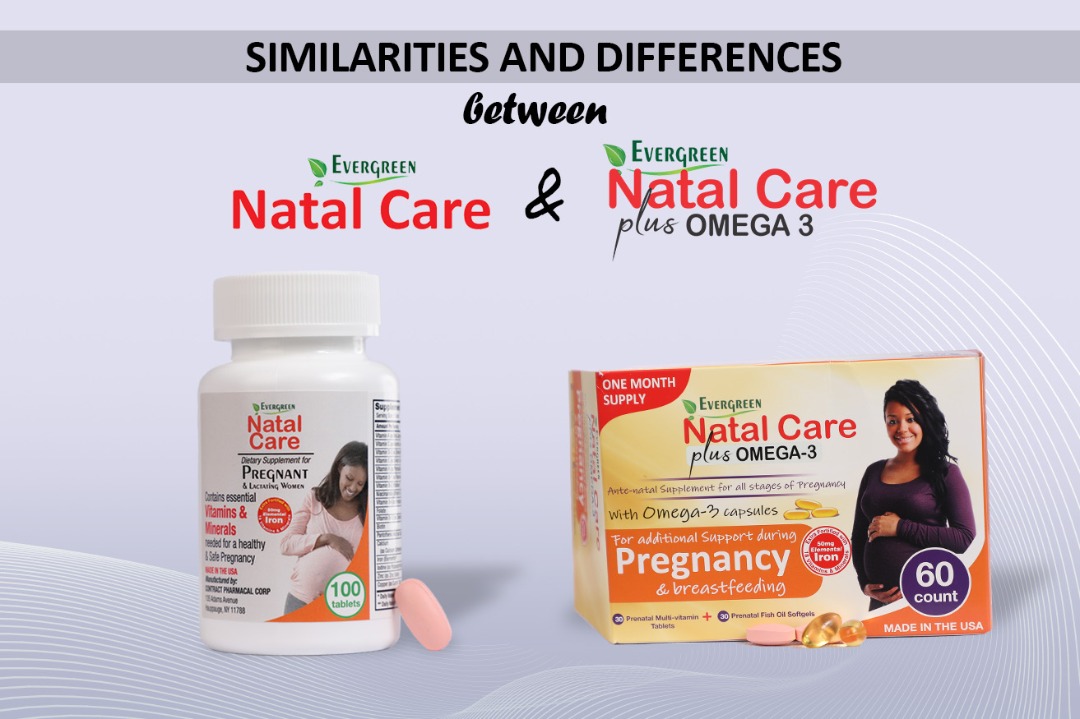
Evergreen Natal Care provides comprehensive daily nutrition. It contains 50mg iron, 800mcg folic acid, 200mg calcium, 140mcg iodine, and 400IU vitamin D. These core ingredients address the most critical pregnancy needs.
Additional nutrients include vitamins A, C, D3, E, K, B1, B2, B3, B12, biotin, pantothenic acid, zinc, and copper. This complete formula covers every essential base. It ensures nothing important gets missed.
Evergreen Natal Care Plus builds on this excellent foundation. It contains everything in Evergreen Natal Care. Then it adds something special: omega-3 fatty acids. Specifically, it provides 300mg DHA and 60mg EPA.
These omega-3s transform the supplement from excellent to extraordinary. Research shows high intake during pregnancy associates with multiple benefits. Reduced maternal depression rates. Lower rates of intrauterine growth restriction. Fewer allergies and asthma in children. Improved neurocognitive outcomes.
Maternal DHA stores mobilize during the third trimester. This redistribution ensures optimal fetal brain development. It supports eye development. It strengthens the immune system. It nurtures the entire nervous system.
How Evergreen Natal Care Supports Each Pregnancy Stage
The beauty of Evergreen Natal Care lies in stage-specific support. It meets changing needs throughout your journey.
During the first trimester, it lowers neural tube defect risks. Folic acid at 800mcg provides robust protection. It also reduces common maternal ailments during this period. Nausea, fatigue, and general discomfort may improve with adequate nutrition.
During the second trimester, it meets increasing demands. Your baby grows rapidly now. Micronutrient requirements rise substantially. Evergreen Natal Care provides these additional nutrients. It prevents drawing on your maternal reserves. Your body maintains its nutritional integrity.
During the third trimester, it prepares for delivery. Both you and your baby need optimal micronutrient status for birth. Iron stores prove particularly crucial now. Your baby builds reserves for the first months of life. Evergreen Natal Care ensures these stores are adequate.
During lactation, it enhances milk quality. Your breast milk provides everything your baby needs. Its nutrient content depends directly on your status. Evergreen Natal Care enriches your milk with essential vitamins and minerals. Your baby continues receiving excellent nutrition.
The Omega-3 Advantage in Evergreen Natal Care Plus
Why choose the Plus version? The answer lies in brain development. Your baby’s brain grows explosively during the third trimester. DHA accumulates rapidly in neural tissues. It forms the structural foundation for cognitive function.
Maternal DHA stores mobilize specifically for this purpose. Your body prioritizes your baby’s brain over your own reserves. Without adequate intake, your stores deplete significantly. With supplementation, both you and your baby maintain optimal levels.
The benefits extend beyond the womb. Research links higher DHA intake during pregnancy with improved cognitive outcomes. Children score better on developmental assessments. They may have fewer behavioral challenges. Their visual acuity often improves.
Maternal mental health also benefits. Postpartum depression affects many new mothers. Omega-3 supplementation during pregnancy may reduce this risk. It supports brain chemistry during this vulnerable transition.
Similarities Between Evergreen Natal Care and Evergreen Natal Care Plus
Both products share an excellent foundation. Understanding their common elements helps your decision.
Both contain the same core vitamin and mineral profile. Iron at 50mg meets pregnancy requirements. Folic acid at 800mcg exceeds minimum recommendations. Calcium at 200mg supports bone health. Iodine at 140mcg protects thyroid function. Vitamin D at 400IU ensures proper calcium absorption.
Both include the complete B vitamin complex. B1, B2, B3, B6, and B12 all appear in therapeutic amounts. Biotin and pantothenic acid complete the B-family support.
Both provide essential antioxidants. Vitamins A, C, and E protect against oxidative stress. This matters enormously during the high-metabolic demands of pregnancy.
Both contain critical trace minerals. Zinc supports immunity and development. Copper works alongside iron for blood formation. These details distinguish quality formulations from basic options.
Both come from Carrot Top Drugs. This means trusted quality and reliable sourcing. You know exactly what you give your body.
Both serve the same fundamental purpose: optimal nutrition for mother and baby throughout pregnancy and lactation.
Differences Between Evergreen Natal Care and Evergreen Natal Care Plus
The difference reduces to one word: omega-3. Evergreen Natal Care Plus contains these essential fatty acids. Evergreen Natal Care does not.
Evergreen Natal Care Plus provides 300mg DHA specifically. It also contains 60mg EPA. This ratio matches research-supported formulations.
The omega-3 source matters tremendously. Fish oil provides the most bioavailable DHA and EPA forms. Your body uses these efficiently. Plant sources require conversion that proves inefficient during pregnancy.
Timing considerations may influence your choice. DHA accumulation accelerates during the third trimester. If you start supplementation later, the Plus version offers greater benefit. If you plan to breastfeed extensively, the Plus version enriches your milk more completely.
Budget considerations also play a role. Evergreen Natal Care costs less while providing complete essential nutrition. Evergreen Natal Care Plus costs slightly more while adding the omega-3 advantage.
Where to Get Evergreen Natal Care and Evergreen Natal Care Plus
Both products are readily available. Carrot Top Drugs maintains physical stores for personal shopping. You can examine products directly. You can ask questions of knowledgeable staff. You can leave with your purchase immediately.
Online shopping offers convenience. The Carrot Top Drugs online shop delivers to your location. Order from home. Receive at your doorstep. Never run out between doses.
Choose whichever method suits your lifestyle. Both provide authentic Carrot Top Drugs products. Both guarantee the quality you deserve.
Conclusion
Your pregnancy journey deserves the best possible support. Nutritional deficiencies threaten both you and your baby. The statistics prove this risk is real and significant. But you can take action.
Evergreen Natal Care provides complete essential nutrition. It covers every vitamin and mineral your body needs. It supports each pregnancy stage appropriately. It enhances breast milk quality during lactation.
Evergreen Natal Care Plus adds the omega-3 advantage. It delivers DHA and EPA for optimal brain development. It reduces the risks of maternal depression. It supports your baby’s cognitive potential fully.
Your choice depends on your priorities. Both options serve well. Both come from trusted Carrot Top Drugs. Both represent the best nutritional support available.
Consult your healthcare provider. Discuss your specific needs. Then choose confidently, knowing you have made an informed decision for yourself and your precious baby.
FAQs
What is the main difference between Evergreen Natal Care and Evergreen Natal Care Plus?
Evergreen Natal Care Plus contains omega-3 fatty acids (DHA and EPA). Evergreen Natal Care does not. Both share the same comprehensive vitamin and mineral profile.
When should I start taking Evergreen Natal Care?
Start when you plan pregnancy or discover you are pregnant. First-trimester nutrition proves critical for preventing neural tube defects. Earlier supplementation provides better protection.
Can I take Evergreen Natal Care Plus while breastfeeding?
Yes, absolutely. Both products support lactation. The omega-3s in the Plus version enrich breast milk quality. This benefits your nursing baby directly.
Is the iron content sufficient for pregnancy needs?
Yes. The 50mg iron meets pregnancy requirements. It supports increased blood volume and fetal iron stores. It helps prevent the common problem of iron deficiency anaemia.
What is DHA and why does it matter?
DHA is docosahexaenoic acid, an omega-3 fatty acid. It forms essential structural components of brain and eye tissues. It accumulates rapidly during the third trimester and supports optimal neurodevelopment.
Can I get these nutrients from food alone?
Most women cannot. Nigerian studies show deficiency rates reaching 94% for some nutrients. Dietary diversity limitations make supplementation essential for optimal outcomes.
Are there side effects from these supplements?
Most women tolerate them well. Some may experience mild digestive adjustment initially. Taking with food often minimizes any discomfort. Iron may darken stools, which is harmless.
How do I choose between the two versions?
Consider your budget and priorities. If optimal brain development support matters most, choose Plus. If complete essential nutrition at excellent value matters most, choose original. Both serve well.
Where can I buy authentic Evergreen Natal Care products?
Visit Carrot Top Drugs physical stores or their official online shop. Both sources guarantee authentic products with proper storage and handling.