Introduction
Living with PCOS can feel overwhelming. The irregular cycles, weight struggles, acne, and mood swings can leave you frustrated. But here’s the good news: nutrition plays a powerful role in managing PCOS.That is why you have to get the best nutrition for PCOS.
Food is not just fuel. For women with PCOS, the right food choices can balance hormones, improve insulin sensitivity, and ease symptoms. In fact, studies show that diet and lifestyle changes often work better than medications alone.
So, what should you eat if you have PCOS? And what should you avoid? This guide will give you clear answers. We’ll cover the best foods, diet plans, supplements, and simple meal ideas to help you feel your best.
Let’s dive in.
Understanding PCOS and Its Link to Nutrition
PCOS stands for Polycystic Ovary Syndrome. It’s a common hormonal condition that affects about 1 in 10 women of reproductive age.
The main problems include:
- Irregular or missed periods.
- Cysts on the ovaries.
- Higher levels of male hormones (androgens).
- Symptoms like acne, hair loss, and weight gain.
At the heart of PCOS is insulin resistance. This means your body struggles to use insulin properly. As a result, blood sugar levels rise, and your pancreas produces even more insulin.
High insulin levels cause the ovaries to make more androgens. This disrupts ovulation and leads to many PCOS symptoms.
Here’s where nutrition comes in. Food directly affects insulin, blood sugar, and inflammation. By eating the right foods, you can control insulin spikes, reduce inflammation, and improve hormone balance.
Core Nutrition Principles for PCOS
If you have PCOS, eating well is about balance, not restriction. Here are the main principles:
1. Balance Blood Sugar
Avoid large spikes in blood sugar. Pair carbs with protein or fat to slow digestion. Choose low-GI foods like oats, quinoa, or berries.
2. Focus on Anti-Inflammatory Foods
PCOS is linked with low-grade inflammation. Foods like fatty fish, olive oil, and leafy greens reduce inflammation and improve health.
3. Choose Nutrient-Dense Foods
Fill your plate with whole, unprocessed foods rich in vitamins, minerals, and fiber. This supports metabolism and hormone function.
4. Watch Portions and Practice Mindful Eating
Overeating worsens insulin resistance. Eat slowly, listen to hunger cues, and stop before you feel stuffed.
These principles set the foundation for a PCOS-friendly diet.
Best Foods for PCOS
Now let’s look at the specific foods that work best for PCOS management.
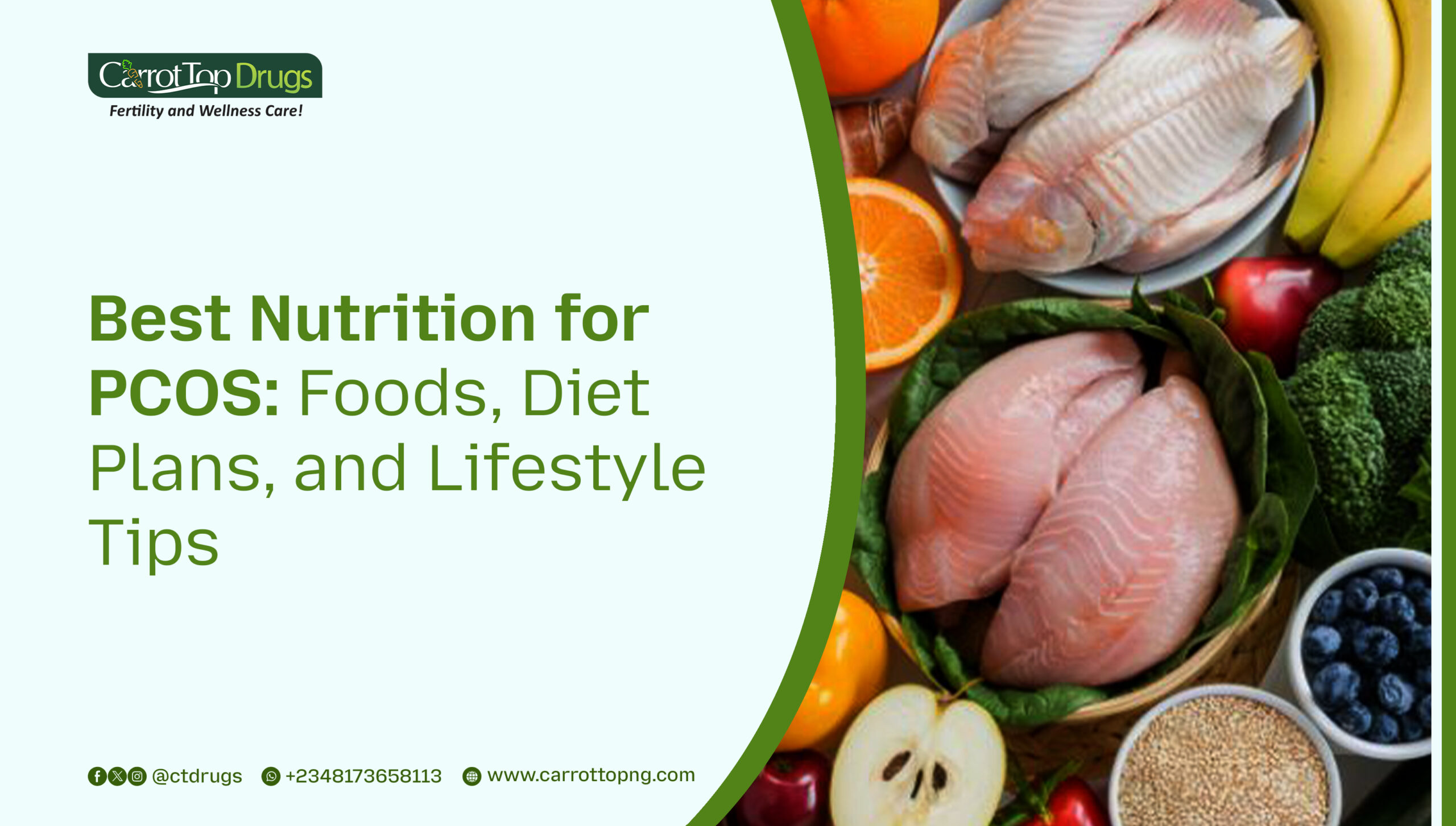
1. High-Fiber Foods
Fiber helps slow digestion, balance blood sugar, and improve gut health. Women with PCOS often need more fiber.
- Vegetables: Broccoli, spinach, kale, cauliflower, zucchini.
- Fruits: Berries, pears, apples, oranges.
- Whole Grains: Oats, barley, quinoa, brown rice.
- Legumes: Lentils, chickpeas, black beans.
2. Lean Protein Sources
Protein keeps you full and prevents sugar spikes. It also supports muscle growth and hormone balance.
- Animal protein: Chicken, turkey, eggs, fish.
- Plant protein: Tofu, tempeh, lentils, beans.
3. Healthy Fats
Good fats fight inflammation and support hormones.
- Avocados and olives.
- Nuts and seeds: Almonds, walnuts, chia, flaxseeds.
- Fatty fish: Salmon, sardines, mackerel.
- Oils: Extra virgin olive oil, coconut oil (in moderation).
4. Low-Glycemic Index Carbohydrates
Low-GI carbs release energy slowly, keeping blood sugar steady.
- Sweet potatoes.
- Whole wheat pasta.
- Brown rice.
- Quinoa.
5. Anti-Inflammatory Foods
Chronic inflammation worsens PCOS symptoms. Add foods that fight it.
- Turmeric and ginger.
- Green tea.
- Colorful vegetables like peppers and carrots.
- Dark chocolate (at least 70% cocoa).
Eating from these groups daily can reduce symptoms and improve energy levels.
Foods to Limit or Avoid with PCOS
Not all foods support hormone health. Some make insulin resistance and inflammation worse. Limit these whenever possible:
- Refined carbs: White bread, pastries, sugary cereals.
- Sugary drinks: Soda, fruit juice, energy drinks.
- Processed foods: Chips, cookies, fast food.
- Trans fats: Found in margarine, fried foods, and packaged snacks.
- Excess dairy: Some women find milk and cheese worsen acne and bloating.
- Excess caffeine and alcohol: Both can disrupt hormones if consumed in large amounts.
You don’t need to cut these out forever. But reducing them makes a big difference in PCOS management.
PCOS-Friendly Diet Approaches
Several eating patterns work well for PCOS. Here are the top choices:
1. Mediterranean Diet
Rich in vegetables, whole grains, fish, olive oil, and nuts. Proven to reduce inflammation and improve insulin sensitivity.
2. DASH Diet
Originally designed for blood pressure, but great for PCOS too. Focuses on whole foods, lean proteins, and reduced sodium.
3. Low-GI Diet
This plan focuses on foods that keep blood sugar stable. Great for women with insulin resistance.
4. Plant-Forward Diet
Adding more plant foods improves fiber intake and lowers inflammation. Doesn’t have to be 100% vegetarian.
5. Intermittent Fasting (With Care)
Some women with PCOS benefit from shorter eating windows. However, fasting is not suitable for everyone, especially with irregular cycles.
The best diet is the one you can follow long-term. Sustainability matters more than strict rules.
Supplements and Micronutrients for PCOS
Supplements are not magic, but some can support PCOS management. Always check with your doctor before starting.
- Inositol: Especially Myo-inositol and D-chiro-inositol. Improves insulin sensitivity and restores ovulation.
- Vitamin D: Many women with PCOS are deficient. Supports hormone balance and mood.
- Magnesium: Helps with insulin regulation and reduces anxiety.
- Omega-3 fatty acids: Reduce inflammation and improve menstrual cycles.
- Zinc: Supports hair, skin, and fertility.
- Chromium: May improve blood sugar control.
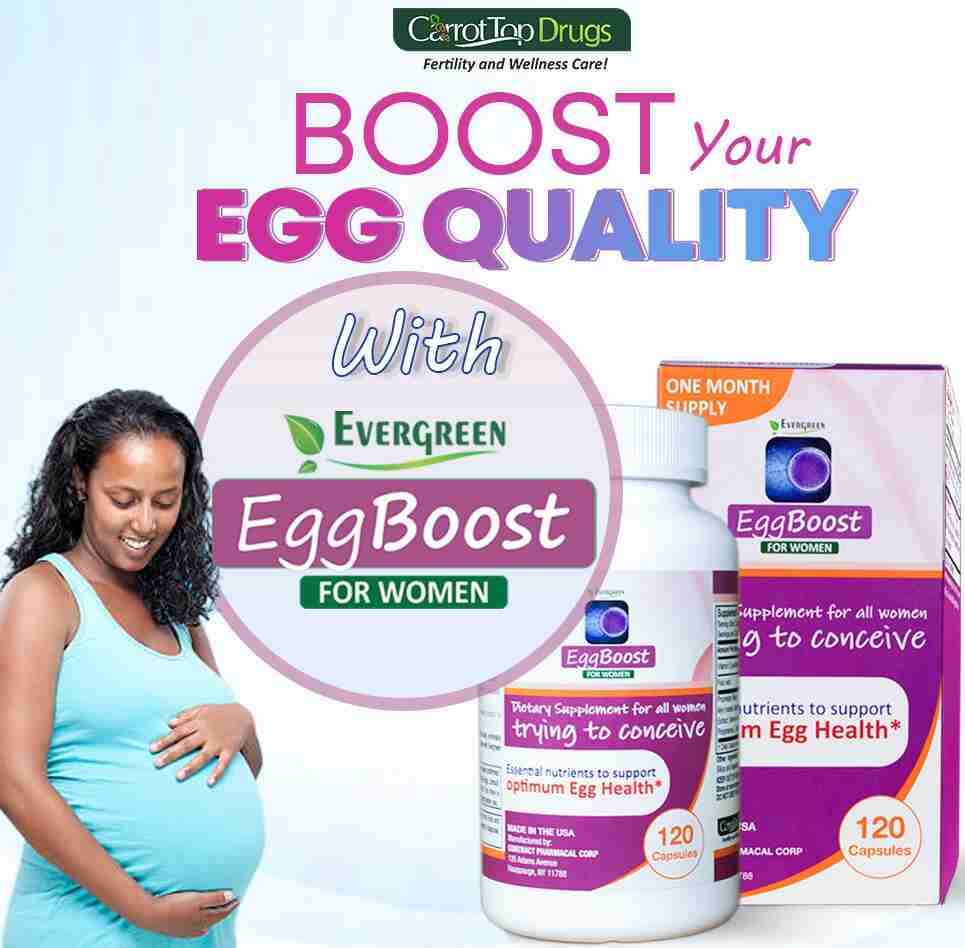
Supplements work best alongside a healthy diet, not as a replacement. We also recommend our Evergreen Formular for Women and Evergreen Eggboost because they not only contain these essential nutrients above but also improve the quality of the eggs.
Lifestyle Factors Beyond Nutrition
Food is powerful, but lifestyle matters too. Together, they create the best results.
- Exercise: Regular activity improves insulin sensitivity and helps with weight management. Aim for strength training plus cardio.
- Stress management: Stress raises cortisol, which worsens PCOS. Try yoga, meditation, or journaling.
- Sleep: Poor sleep disrupts hormones. Aim for 7–9 hours of quality sleep nightly.
Think of nutrition, exercise, stress, and sleep as a team. Each one supports the other.
Sample PCOS-Friendly Meal Plan
Here’s a simple one-day plan to show how nutrition for PCOS looks in action:
- Breakfast: Greek yogurt with chia seeds, blueberries, and a sprinkle of walnuts.
- Lunch: Grilled chicken with quinoa, steamed broccoli, and olive oil dressing.
- Snack: Apple slices with almond butter.
- Dinner: Baked salmon with roasted sweet potatoes and spinach.
- Dessert (optional): A square of dark chocolate and a handful of almonds.
Meals like these keep blood sugar steady, reduce cravings, and improve energy.
Conclusion
PCOS may feel challenging, but food gives you control. The best nutrition for PCOS focuses on blood sugar balance, anti-inflammatory foods, and nutrient-rich meals. By choosing whole foods, lean proteins, healthy fats, and fiber, you can ease symptoms and improve overall health.
Avoiding processed and sugary foods makes a big difference. Adding in supplements and lifestyle changes takes it further.
Remember, there’s no one perfect diet for PCOS. The key is consistency. Small, daily choices add up over time. With the right nutrition and habits, living well with PCOS is possible.
FAQs on Best Nutrition for PCOS
1. What is the best diet for PCOS?
The best diet for PCOS is one that balances blood sugar and reduces inflammation. A Mediterranean or low-GI diet works well for most women.
2. Which foods should I avoid with PCOS?
Limit refined carbs, sugary drinks, processed foods, trans fats, and excessive dairy. These foods worsen insulin resistance and inflammation.
3. Can diet alone manage PCOS?
For many women, diet and lifestyle changes can reduce symptoms. However, some may still need medical treatment.
4. Are carbs bad for PCOS?
Not all carbs are bad. Choose complex, low-GI carbs like quinoa, oats, and sweet potatoes instead of refined carbs.
5. Does dairy make PCOS worse?
Some women find dairy worsens acne or bloating. Others tolerate it well. Try low-fat or plant-based alternatives if needed.
6. What are the best snacks for PCOS?
Great snacks include nuts, seeds, boiled eggs, Greek yogurt with berries, apple slices with almond butter, or hummus with veggies.
7. Can weight loss improve PCOS symptoms?
Yes. Even a 5–10% weight loss can improve insulin sensitivity, regulate cycles, and reduce symptoms.
8. Are supplements helpful for PCOS?
Yes. Inositol, vitamin D, magnesium, and omega-3 fatty acids are often beneficial. Always consult your doctor before starting supplements.
9. How important is protein for PCOS?
Protein helps control hunger, balances blood sugar, and supports hormone health. Include lean protein in every meal.
10. Can I drink coffee if I have PCOS?
Moderate coffee is fine for most women. But too much caffeine may disrupt sleep and hormones. Keep it balanced.