Introduction
Planning a pregnancy is an exciting journey. It’s a time filled with hope, dreams, and important choices. One of the most powerful steps you can take before conceiving is making sure your body has the right nutrients. This is why we would be discussing the benefits of taking Folic acid before pregnancy.
Among these nutrients, folic acid stands out as a true game-changer. Doctors and health experts across the world recommend it for women who are trying to get pregnant. Why? Because folic acid can protect your baby from serious birth defects, improve your health, and even support fertility.
But the timing is crucial. Since many birth defects occur in the earliest weeks of pregnancy—often before you even know you are pregnant—starting folic acid early matters. That’s why taking it before conception is one of the smartest decisions you can make.
In this article, we’ll explore the many benefits of folic acid before pregnancy. You’ll learn what it is, why it matters, the right dosage, food sources, and answers to common questions. Let’s get started.
What is Folic Acid?
Folic acid is the synthetic form of folate, a B-vitamin (B9) that your body needs to grow and function. Folate occurs naturally in many foods, while folic acid is used in supplements and fortified foods.
This vitamin helps your body make DNA and new cells. It plays a major role in forming red blood cells and ensuring tissues grow properly. During pregnancy, folic acid is vital for your baby’s brain, spinal cord, and overall development.
The difference between folate and folic acid matters. Folate from food is good, but it breaks down quickly and may not meet your needs. Folic acid, on the other hand, is stable and absorbed more effectively. That’s why doctors recommend folic acid supplements in addition to a healthy diet.
What are the Benefits of Taking Folic Acid Before Pregnancy?
Many women believe vitamins are only important after pregnancy begins. The truth is very different.
The most critical stage of your baby’s development happens in the first month of pregnancy. By the time you realize you’re pregnant, your baby’s brain and spinal cord may already be forming. This is when folic acid is most needed.
Without enough folic acid, the neural tube—the structure that forms the brain and spinal cord—may not close properly. This can lead to neural tube defects (NTDs) such as spina bifida or anencephaly.
Studies show that taking folic acid before conception can reduce the risk of NTDs by up to 70%. That’s a powerful reason to start early.
So, think of folic acid as part of your pre-pregnancy preparation. Just like you’d plan your finances, home, and health check-ups, planning your nutrition matters too.
Key Benefits of Taking Folic Acid Before Pregnancy
Folic acid offers many benefits for both you and your baby. Let’s break them down.
1. Reduces the Risk of Neural Tube Defects
This is the most well-known benefit of taking Folic acid before pregnancy. Neural tube defects affect the brain, spine, or spinal cord. Spina bifida is one example where the spine doesn’t develop properly. Another is anencephaly, a fatal condition where parts of the brain are missing.
Taking folic acid before and during early pregnancy lowers this risk dramatically. This is why most health authorities urge women of childbearing age to take folic acid daily, even if they are not actively trying to conceive.
2. Supports Healthy Brain and Spinal Development
Beyond preventing defects, folic acid ensures the proper growth of your baby’s brain and spinal cord. It supports the formation of the central nervous system, which affects everything from movement to intelligence.
3. Promotes Healthy Cell Division and DNA Formation
Pregnancy is a time of rapid cell growth. Folic acid is essential for making DNA and supporting cell division. This helps not only your baby’s development but also your own body as it adapts to pregnancy.
4. Lowers Risk of Other Birth Defects
Research suggests folic acid may reduce the risk of other congenital problems, such as cleft lip, cleft palate, and certain heart defects. While the strongest evidence is for neural tube defects, these potential added benefits make supplementation even more valuable.
5. Helps Prevent Maternal Anemia
Anemia during pregnancy can cause fatigue, weakness, and complications. Folic acid works with iron to make red blood cells. Adequate intake lowers the chance of anemia, helping you stay energized.
6. May Support Fertility
Some studies link folate levels to improved egg quality and ovulation. While more research is needed, there’s growing evidence that folic acid could play a role in enhancing fertility.
7. Boosts Maternal Health Beyond Pregnancy
Even before conception, folic acid supports your overall well-being. It contributes to healthy skin, hair, and nails. It also helps regulate mood by supporting neurotransmitters, which may reduce the risk of depression.
Recommended Dosage of Folic Acid Before Pregnancy
Most experts recommend women take 400 to 800 micrograms (mcg) of folic acid daily before pregnancy and during early pregnancy.
Some women need higher doses:
- If you’ve had a previous pregnancy affected by neural tube defects.
- If you have diabetes or epilepsy.
- If your doctor identifies other risk factors.
In these cases, the recommended dose may be as high as 4 milligrams (mg) daily, but only under medical guidance.
The key is to start early. Ideally, begin folic acid at least three months before conception and continue through pregnancy and breastfeeding.
Food Sources of Folate
While supplements are important, diet also plays a role. Folate is found in many natural foods.
Folate-Rich Foods Include:
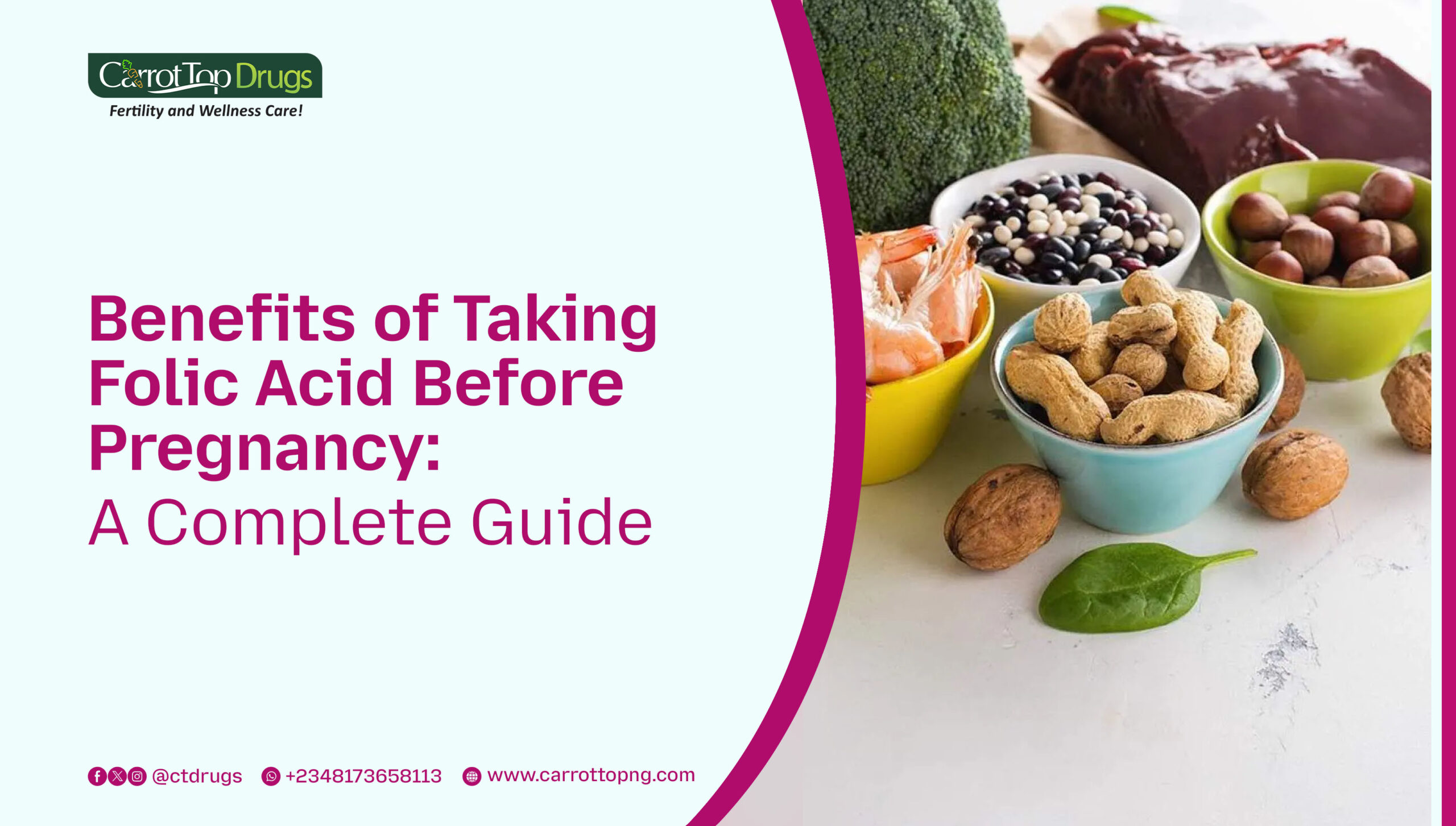
- Leafy greens: spinach, kale, collard greens.
- Citrus fruits: oranges, grapefruits, lemons.
- Beans and legumes: lentils, chickpeas, black beans.
- Avocados.
- Asparagus.
- Brussels sprouts.
- Fortified foods: breakfast cereals, bread, pasta.
- Supplements like Evergreen Folic Acid + B12
Even with a healthy diet, reaching the recommended level of folate can be difficult. That’s why supplements are strongly advised for women planning pregnancy.
Safety and Side Effects
Folic acid is safe for most women when taken at recommended doses. Since it is water-soluble, your body flushes out excess amounts through urine.
However, taking very high doses for a long time may mask a vitamin B12 deficiency. That’s why it’s best not to exceed 1,000 mcg daily unless your doctor advises otherwise.
Most women tolerate folic acid without issues. Side effects are rare but may include mild stomach upset or nausea.
When to Start Taking Folic Acid
The best time to start is before you conceive. Experts recommend beginning at least three months before pregnancy.
Here’s why: the neural tube forms in the first 28 days of pregnancy. Many women don’t know they are pregnant during this period. If you wait until you test positive, you may miss the critical window.
That’s why folic acid is recommended for all women of childbearing age, not just those actively trying to conceive. Starting early gives you peace of mind and the best protection for your baby.
Conclusion
Folic acid is one of the most important nutrients you can take before pregnancy. It protects your baby from neural tube defects, supports brain and spinal development, and boosts your own health.
Starting before conception ensures your body has enough folic acid during the earliest weeks, when it matters most. Along with a healthy diet, lifestyle choices, and medical care, it gives you the best chance for a healthy pregnancy and baby.
So, if you’re planning—or even just considering—a pregnancy, start your folic acid today. It’s a small step with life-changing benefits.
FAQs About Folic Acid and Pregnancy
1. Why is folic acid important before pregnancy?
Because the baby’s brain and spinal cord form early, before most women know they are pregnant.
2. How much folic acid should I take before pregnancy?
Most women should take 400–800 mcg daily. Higher doses are only for specific cases under medical advice.
3. Can I get enough folic acid from food alone?
It’s difficult to reach the recommended amount through diet alone. Supplements ensure you meet daily needs.
4. What happens if I don’t take folic acid before pregnancy?
You may increase the risk of neural tube defects and other complications. Starting supplementation reduces these risks.
5. Can folic acid improve fertility?
It may help by supporting egg quality and ovulation, though results vary. It’s more proven for preventing birth defects.
6. Should men take folic acid when trying for a baby?
Yes. Folic acid may support sperm health, though the main benefits are for women.
7. When should I stop taking folic acid?
You should continue during pregnancy and while breastfeeding, as your body still needs it.
8. Can too much folic acid be harmful?
Very high doses may mask vitamin B12 deficiency. Stick to recommended amounts unless advised otherwise.
9. Is folic acid the same as folate?
Folate is natural and found in foods. Folic acid is the synthetic form used in supplements and fortified foods.
10. Do I need folic acid if I’m not planning a pregnancy right now?
Yes, if you’re of childbearing age. Many pregnancies are unplanned, and early folic acid intake offers protection.