Introduction
That heavy, dragging feeling in your lower belly worries you. Your periods arrive like a flood, leaving you exhausted for days. Perhaps you dread another ultrasound that shows growth instead of shrinkage. You are not alone in this fight. Uterine fibroids affect millions of women worldwide. They bring pain, heavy bleeding, and fertility concerns. You want solutions beyond surgery and hormones. You want natural, effective options backed by real science. This guide explores the best supplements for uterine fibroids available today. We examine powerful ingredients like EGCG from green tea and essential vitamin D3. We analyze how they work individually and together. Our focus stays on evidence, not empty promises.
By the end, you will understand exactly how targeted nutrition can support your body. You will discover options that work with your biology, not against it.
What Is Uterine Fibroid?
A uterine fibroid is a benign growth in your womb. Doctors call it a leiomyoma or myoma. It forms from the muscle tissue of your uterus. These growths are almost never cancerous.
Fibroids can be tiny, like a pea or large, like a grapefruit. They may grow as a single lump or in clusters. Some stay inside the uterine wall. Others bulge into the cavity or push outward.
Your body creates these growths when cell division goes into overdrive. Fibroids are estrogen-sensitive, meaning they thrive on hormonal signals. This explains why they often shrink after menopause.
Statistics of Women With Uterine Fibroids
The numbers might surprise you. Uterine fibroids are incredibly common. By age 50, up to 70% of women have them. Many never know because symptoms remain silent.
For Black women, the statistics are even higher. Studies show up to 80% develop fibroids by age 50. Symptoms tend to appear earlier and become more severe.
Fibroids are the leading cause of hysterectomy worldwide. They account for hundreds of thousands of surgeries annually. This reality drives many women to seek alternatives.
How Does Fibroid Prevent Pregnancy?
Fibroids can block your path to motherhood in several ways. Understanding these mechanisms helps you take action.
Location matters tremendously. Submucosal fibroids grow into the uterine cavity. They act like rocks in fertile soil, preventing embryo implantation. The baby simply cannot find a safe place to attach.
Size creates physical barriers. Large fibroids distort the uterine shape. They may block fallopian tubes where the egg meets sperm. Sperm struggle to reach their destination.
Blood flow becomes compromised. Fibroids compete for resources, stealing nutrients from a potential pregnancy. The uterine lining may not develop properly.
Inflammation plays a hidden role. Fibroids create a hostile biochemical environment. This affects everything from implantation to early development.
Is There Any Impact of Supplements on Fibroids?
Yes, absolutely. Scientific research confirms supplements can influence fibroid growth. Your body responds to specific nutrients in powerful ways.
Think of supplements as targeted messages to your cells. They tell your body to slow growth, reduce inflammation, and restore balance. This is not magic. It is biochemistry at work.
Recent clinical trials show promising results. Women taking specific combinations experience reduced fibroid size. Symptoms like heavy bleeding improve significantly. Quality of life scores rise.
Supplements do not replace medical care. They work alongside it, giving your body better tools for healing. The best supplements for uterine fibroids target root causes, not just symptoms.
What Vitamins Are Good for Uterine Fibroids?
Science points to several key nutrients. Each plays a unique role in fibroid management.
Vitamin D stands at the top of the list. Research shows women with fibroids often have low vitamin D levels. This vitamin actually stops fibroid cells from multiplying. It tells them, “Stop growing.”
B vitamins support your liver’s detoxification work. Your liver must process excess estrogen. B6 specifically helps with hormone metabolism and reduces inflammation.
Green tea extract delivers powerful EGCG compounds. These molecules fight fibroid growth at the cellular level. They promote natural cell death in abnormal tissue.
D-chiro-inositol helps balance insulin and hormones. High insulin levels can worsen estrogen dominance. This mineral keeps everything in check.
What Are the Ingredients in Fibroflux?
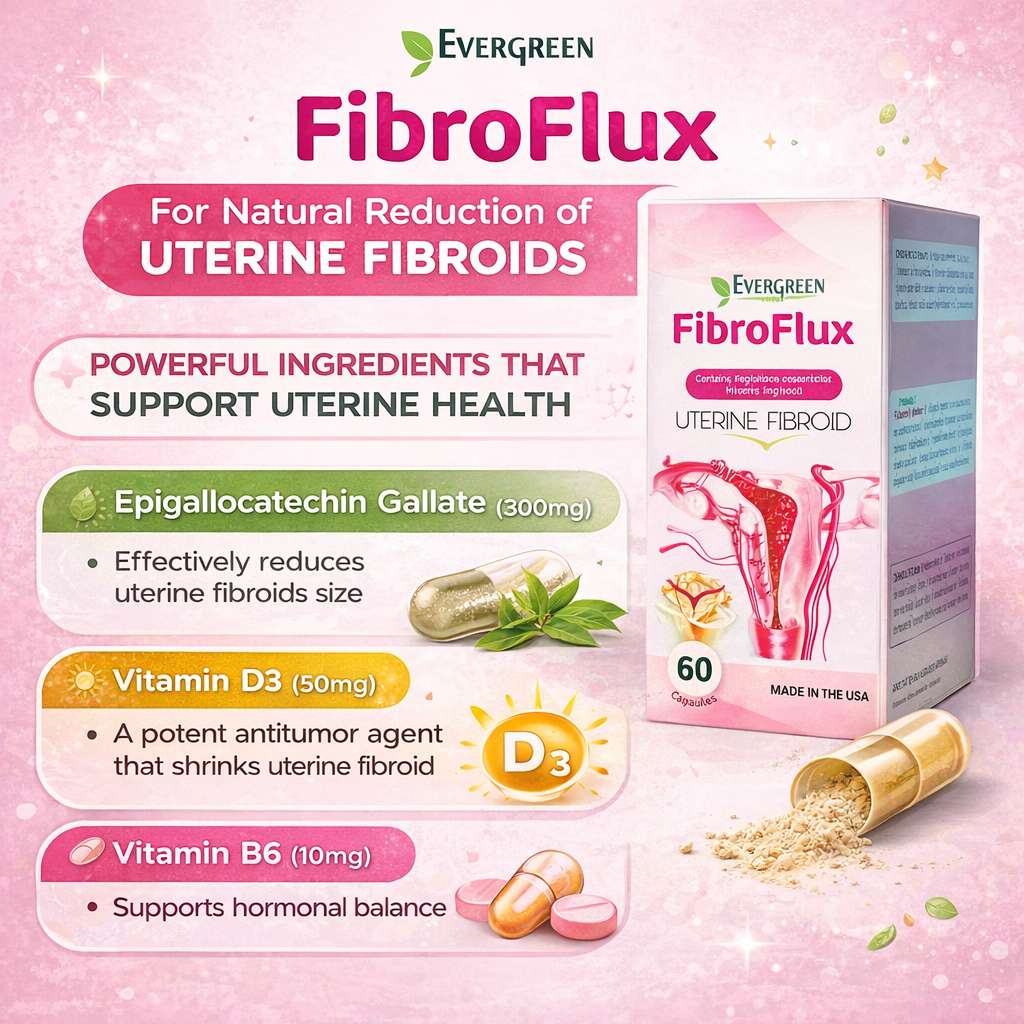
Fibroflux combines four clinically studied ingredients. Each targets fibroids from a different angle. Together, they create comprehensive support.
Epigallocatechin gallate (EGCG) comes from green tea. It is the star player in fibroid reduction.
Vitamin D3 acts as a cellular regulator. It controls how fibroid cells behave.
Vitamin B6 supports hormonal balance and reduces symptoms.
D-chiro-inositol improves insulin sensitivity and hormone metabolism.
This specific combination appears in multiple clinical trials. Researchers chose these ingredients for good reason. Let us examine each one in detail.
The Impact of Each Ingredient on Uterine Fibroids
Epigallocatechin Gallate (EGCG)
EGCG is the powerhouse in green tea. A major 2025 review published in Biomedicine & Pharmacotherapy confirms its effectiveness. This catechin inhibits tumor cell proliferation. It actively induces apoptosis, which means programmed cell death, in fibroid tissue.
The FRIEND study from Yale University investigates EGCG for fertility. Phase 3 trials are currently underway. Researchers hypothesize EGCG will reduce fibroid size and improve pregnancy outcomes. Early results look promising.
EGCG works through multiple pathways. It blocks the enzymes fibroids need to grow. This supplement reduces inflammation throughout the pelvic region. It also fights oxidative stress that damages healthy tissue.
Clinical studies show significant fibroid shrinkage with EGCG. A pilot study found size reductions of up to 37% in some fibroids. That is remarkable for a natural compound.
Vitamin D3
Vitamin D3 is essential for fibroid management. The evidence here is exceptionally strong.
A 2025 study published in the International Journal of Gynecology & Obstetrics delivers powerful findings. Women with vitamin D deficiency received low-dose supplementation. After six months, their fibroids actually shrank by an average of 8%. The untreated control group saw fibroids grow by 18%.
This is groundbreaking. Vitamin D does not just slow growth. It actively reduces existing fibroids.
Another clinical trial actively recruiting will study vitamin D3 for symptomatic fibroids. Researchers will give 50,000 IU doses to deficient women. They expect significant symptom improvement and size reduction.
Vitamin D works by binding to receptors on fibroid cells. This triggers a cascade of beneficial effects. It stops cell division. Vitamin D3 reduces fibrosis. It even blocks the blood supply fibroids need to grow.
Vitamin B6
Vitamin B6 plays a supportive but crucial role. It helps your body metabolize estrogen properly. Excess estrogen fuels fibroid growth. B6 ensures your liver processes and eliminates used hormones.
B6 also reduces inflammation. Chronic inflammation creates a perfect environment for fibroids. By calming this fire, B6 helps shrink the soil where fibroids thrive.
Multiple clinical trials include B6 in their protocols. Researchers recognize its importance in comprehensive fibroid care.
D-chiro-inositol
This compound addresses insulin resistance. High insulin levels worsen estrogen dominance. D-chiro-inositol improves how your cells respond to insulin.
Better insulin sensitivity means lower insulin levels. Lower insulin means less stimulation of ovarian hormone production. The result is more balanced estrogen and better fibroid control.
The Verona clinical trial includes D-chiro-inositol in its combination therapy. This double-blind study will evaluate effects on fibroid symptoms and quality of life.
How Does Fibroflux Help Women With Uterine Fibroids?
The magic of Fibroflux lies in combination therapy. Each ingredient supports the others. Together, they create powerful, synergistic effects.
Individual Effects Analysis
EGCG directly shrinks fibroids by promoting cell death. It is the active reducer.
Vitamin D3 prevents new growth while shrinking existing fibroids. It is the stabilizer.
Vitamin B6 ensures proper hormone clearance. It is the detoxifier.
D-chiro-inositol balances metabolic drivers. It is the regulator.
Collective Effects Analysis
When combined, these ingredients work on every level. A randomized controlled trial at the University of Verona studies this exact combination. The DEFIB trial evaluates three months of treatment with EGCG, vitamin D3, B6, and D-chiro-inositol.
Researchers measure multiple outcomes. They track fibroid size changes on ultrasound. Also, they assess symptom severity using validated questionnaires. They monitor quality of life improvements. They even measure whether women choose to avoid surgery.
The DELPHYS PLUS study uses the identical combination. This trial focuses on fibroid volume reduction. Primary outcomes measure diameter changes after three months. Secondary outcomes track whether patients decide against surgery.
Pilot study results are encouraging. The combination significantly reduces fibroid size. Women report shorter menstrual flow and less pain. Satisfaction scores are remarkably high. No adverse effects were reported.
This combination represents the best supplements for uterine fibroids based on current evidence. No other natural protocol has this level of clinical support.
Dosage
The clinical trials provide clear dosage guidance. Based on the Verona study protocol, the effective daily dosage includes :
- EGCG: 300 mg total (150 mg twice daily)
- Vitamin D3: 50 mcg total (25 mcg twice daily)
- Vitamin B6: 10 mg total (5 mg twice daily)
- D-chiro-inositol: 50 mg total (25 mg twice daily)
Treatment duration in studies is typically three months. Some trials extend to six months for maximum benefit.
Always consult your healthcare provider before starting supplements. They can adjust dosages based on your specific needs and health status.
Conclusion
Uterine fibroids do not have to control your life. Science now offers natural, effective options. The best supplements for uterine fibroids combine EGCG, vitamin D3, B6, and D-chiro-inositol.
Clinical research supports this approach. Multiple randomized trials are underway. Published studies confirm size reduction and symptom improvement.
You deserve relief that works with your body.
Consider discussing these findings with your doctor. Explore how targeted supplementation could support your health. Your journey toward healing can start today.
FAQs
What is the best supplement for uterine fibroids?
The best evidence supports combinations containing EGCG from green tea, vitamin D3, vitamin B6, and D-chiro-inositol. Multiple clinical trials study this specific combination.
Can vitamins really shrink fibroids?
Yes. A 2025 study showed vitamin D supplementation alone reduced fibroid size by 8% in six months . Combination therapy shows even greater promise.
How long does it take for supplements to work on fibroids?
Clinical studies measure results at three and six months. Some women notice symptom improvement within weeks. Size reduction typically takes three to six months.
Are there side effects from fibroid supplements?
Clinical trials report no significant adverse effects. The studied combination appears safe and well-tolerated. Always discuss supplements with your doctor.
What is EGCG and how does it help fibroids?
EGCG is the active compound in green tea extract. It inhibits fibroid cell proliferation and induces natural cell death in abnormal tissue.
Can supplements help with heavy bleeding from fibroids?
Yes. Studies show significant improvement in menstrual flow and symptom scores. Women report shorter periods and less pain.
Is vitamin D deficiency linked to fibroids?
Strongly. Women with fibroids often have low vitamin D levels. Supplementation addresses this deficiency while actively reducing fibroid size.
What is the FRIEND study?
The FRIEND study is a Yale University phase 3 clinical trial. It investigates EGCG for improving fertility in women with fibroids.
Should I take supplements if I plan pregnancy?
Yes, many women take these supplements while trying to conceive. The FRIEND study specifically includes women desiring pregnancy. Always consult your fertility specialist first.
Do fibroid supplements interact with medications?
Some supplements may interact with blood thinners or other medications. Share your supplement list with your doctor and pharmacist.