Introduction
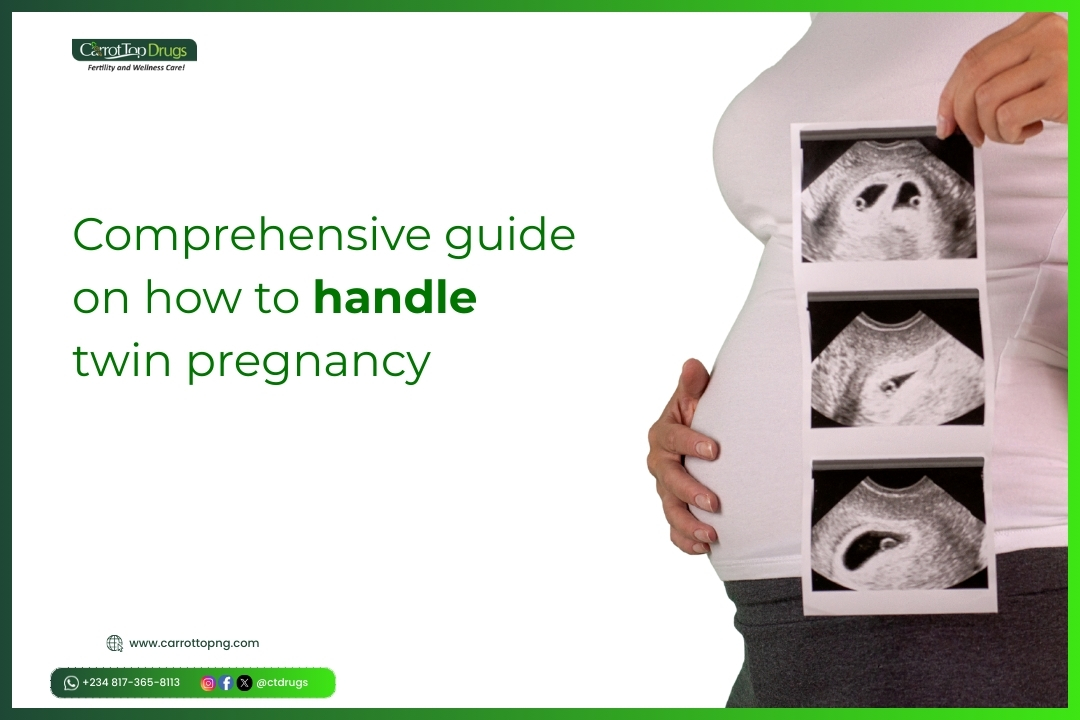
Twin pregnancy means you’re growing two babies at the same time – what an amazing superpower! Today, about 1 in every 30 moms has twins, which is way more common than when your grandmother was young. Twin births have increased by 76% since 1980 (CDC, 2022) thanks to fertility treatments and moms having babies later in life.
This guide will help you understand: 👶🏽👶🏼 The twin types (identical mirror images vs. fraternal siblings)
⚠️ Special health considerations for you and your babies
🏥 Extra care tips from obstetric specialists
Twin Types Made Simple
A. Identical Twins: Nature’s Copies
How They Form:
- Step 1: One sperm fertilizes one egg (just like single babies)
- Step 2: The egg splits within 3-8 days – like a cookie breaking in half
- Result: Two babies with:
- Same DNA (like clones)
- Same sex (always both boys or both girls)
What Doctors Watch For:
- Shared Placenta Problems (TTTS):
- One twin gets more food/blood (the “donor” twin gets less)
- Fix: Laser surgery in the womb to balance their sharing
- Cord Accidents:
- Umbilical cords can twist or knot (like tangled phone chargers)
Real Parent Tip: “Our identical twins had TTTS. Weekly scans at the hospital saved their lives!” – Mark, father of 5-year-old twins
B. Fraternal Twins: Womb Mates
How They Form:
- Mom’s body releases two eggs in one month (rare for most women)
- Each egg meets a different sperm
- Result: Two separate babies growing together
Cool Differences From Identicals:
| Feature | Fraternal Twins | Identical Twins |
| DNA | Like siblings | Exactly the same |
| Sex | Boy/Girl | Always the same |
| Looks | May differ | Nearly identical |
Special Risks:
- Early Birth: 50% deliver before 37 weeks (normal pregnancy is 40)
- Smaller Size: Often weigh 1 lb less than single babies
Did You Know? Fraternal twins run in families. If your mom had them, you might too!
Visual Guide: Twin Types
(Imagine this as a simple diagram)
Identical Twins: [1 egg] → [splits] → [two babies sharing DNA]
Fraternal Twins: [egg 1 + sperm 1] & [egg 2 + sperm 2] → [two unique babies]
Who Has Twins? The Surprising Factors
Twin Probability Cheat Sheet
| Risk Factor | How It Works | Chance of twins |
| Age 35+ | Older ovaries sometimes release extra eggs | 2x higher than under 35 |
| African descent | Genetic predisposition for double ovulation | 4x more likely than Asian moms |
| Fertility drugs | Clomid/Femara make ovaries super productive | Up to 30% twin rate |
| Family history | Twins gene can hide for generations | 1.5x higher if mom has twins |
Global Twin Hotspots:
Nigeria: 1 in 10 births (highest worldwide) with Igbo Ora having the highest population of twin pregnancy in the world.
USA: 1 in 30 births (rising due to IVF)
Japan: 1 in 70 births (lowest rate)
Why These Factors Matter
1. The “Grandma Effect” (Age 35+)
- After 35, your body makes more FSH hormone
- This sometimes triggers two eggs to drop
- Downside: Higher risk for twins AND birth complications
2. The Nigerian Mystery
Scientists think a gene called SMAD3 makes Yoruba women: ✓ Release two eggs more often ✓ Have stronger womb lining for twins
3. Fertility Treatment Reality
- IUI (sperm washing): 10% twin chance
- IVF: 20-30% if multiple embryos transfer
- New trend: More doctors now recommend single embryo transfers
Real Mom Story: “At 38, I took Clomid – suddenly saw TWO heartbeats! My Nigerian grandma just laughed and said ‘welcome to our family tradition.'” – Adanna, mom of fraternal girls
Did You Know?
Twins are less common in:
- First pregnancies
- Women under 5′ tall
- Strict vegetarians (needs more research)
Health Risks – Protecting Mom and Babies
A. Mom’s Unique Challenges
1. Extreme Morning Sickness
- Why worse? Double pregnancy hormones (hCG)
- Stats: 75% of twin moms report severe nausea vs 50% with singletons
- Helpful tips:
- ✓ Eat small meals every 2 hours ✓ Try vitamin B6 + doxylamine (Unisom) combo
- ✓ Ask about prescription Zofran if vomiting daily
2. Anemia Danger
- What happens: Blood volume increases 60% (vs 40% in single pregnancies)
- Warning signs:
- Constant fatigue (beyond normal pregnancy tiredness)
- Pale gums/nails
- Racing heartbeat
- Treatment:
- Iron pills (325mg 2x/day with orange juice for absorption)
- Iron-rich foods: spinach, lentils, red meat
3. Preterm Labor Risks
| Risk factor | Twin pregnancy | Singleton |
| Deliver <37 weeks | 60%chance | 10% |
| Deliver <32 weeks | 12% | 2% |
Prevention plan:
- Weekly progesterone shots after 16 weeks
- Pelvic rest (no sex/exercise if cervix shortens)
- Know the signs:
- 6+ contractions/hour
- Low back pressure
- Fluid leaks
Doctor’s Nutrition Tip: “Add 600 calories daily – try these easy options:
- 2 PB&J sandwiches + glass of milk
- Large smoothie with Greek yogurt and banana
- Handful of nuts + cheese stick as snacks” – Dr. Lee, Maternal-Fetal Medicine
B. Baby Risks and Real Hope
Common Complications Table
| Complication | Twin risk | Singleton risk | Why it happens |
| Extreme prematurity (<32 weeks) | 1 in 4 | 1 in 50 | Overstretched uterus triggers labor |
| Low birth weight (<2.2kg) | 50% | 8% | Limited womb space slows growth |
| Neonatal ICUstay needed | 33% | 5% | Lungs often underdeveloped |
| Twin-to-twin transfusion (identical twins) | 15% | N/A | Shared placenta imbalance |
Success Stories: “Our boys born at 31 weeks spent 6 weeks in NICU. Today at 3 years old, they’re hitting all milestones!” – Priya & Raj
Medical Advances Helping Twins:
- Steroid shots before birth to boost lung development
- Fetal surgery for TTTS at specialty centers
- “Womb rest” medications to delay premature labor
C. Your Twin Pregnancy Health Plan
Month-by-Month Care:
- Months 1-3:
- Start prenatal vitamins with DHA
- First ultrasound to confirm twin type
- Months 4-6:
- Anatomy scan (detailed check of both babies)
- Begin biweekly doctor visits
- Months 7-9:
- Weekly NST (non-stress tests)
- Hospital bag packed by 28 weeks
Must-Have Support Team:
- Maternal-fetal medicine (MFM) specialist
- Dietitian for meal planning
- Doula experienced with twins
Hope Spotlight: Modern NICUs now save 90% of twins born after 28 weeks. Most catch up developmentally by preschool age.
Your Twin Pregnancy Game Plan
A. Doctor Visits – What to Expect
First Trimester (Weeks 8-12)
- First Ultrasound:
- Checks if twins share a placenta (big health clue)
- Measures both babies’ growth
- Looks for early problems like empty sacs
Second Trimester (Weeks 16-20)
- Big Anatomy Scan:
- 45+ minute detailed check of EACH baby
- Counts all fingers/toes
- Checks organs like heart and brain
Third Trimester (Week 24+)
- Biweekly Checkups:
- Blood pressure tests (preeclampsia risk)
- Urine checks for protein
- Belly measurements track growth
Pro Tip: “Schedule morning appointments – you’ll have more energy and shorter wait times!” – Nurse Maya
B. 3 Crucial Tests for Twin Moms
- TTTS Ultrasounds
- For: Identical twins sharing a placenta
- How Often: Every 2 weeks starting at 16 weeks
- Looks For: One baby getting more blood than the other
- Early Glucose Test
- When: At 24 weeks (vs 28 for single pregnancies)
- Why: Twin moms get gestational diabetes 2x more often
- Prep: No sweets for 12 hours before test
- Cervical Length Scan
- Checks: If cervix is shortening too early
- Safe Length: Over 2.5 cm
- If Short: May need progesterone or bed rest
C. Eating for Three – Made Simple
Daily Food Goals
| Nutrient | Amount | Easy Foods |
| Protein | 100g | 3 eggs + chicken breast + 1 cup lentils |
| Water | 3L | Fill a 1L bottle 3x daily |
| Calories | 2800 | Add 2 extra snacks + banana |
Top 5 Twin Pregnancy Superfoods
- Greek yogurt – Calcium builds strong bones
- Spinach – Fights anemia with iron
- Salmon – Omega-3s for baby brain growth
- Sweet potatoes – Vitamin A for development
- Almonds – Healthy fats and vitamin E
Sample Meal Plan
- Breakfast: Oatmeal with walnuts + berries
- Snack: Cheese stick + whole grain crackers
- Lunch: Turkey wrap + carrot sticks
- Snack: Apple with peanut butter
- Dinner: Grilled salmon + quinoa + broccoli
- Dessert: Yogurt with honey
Supplements
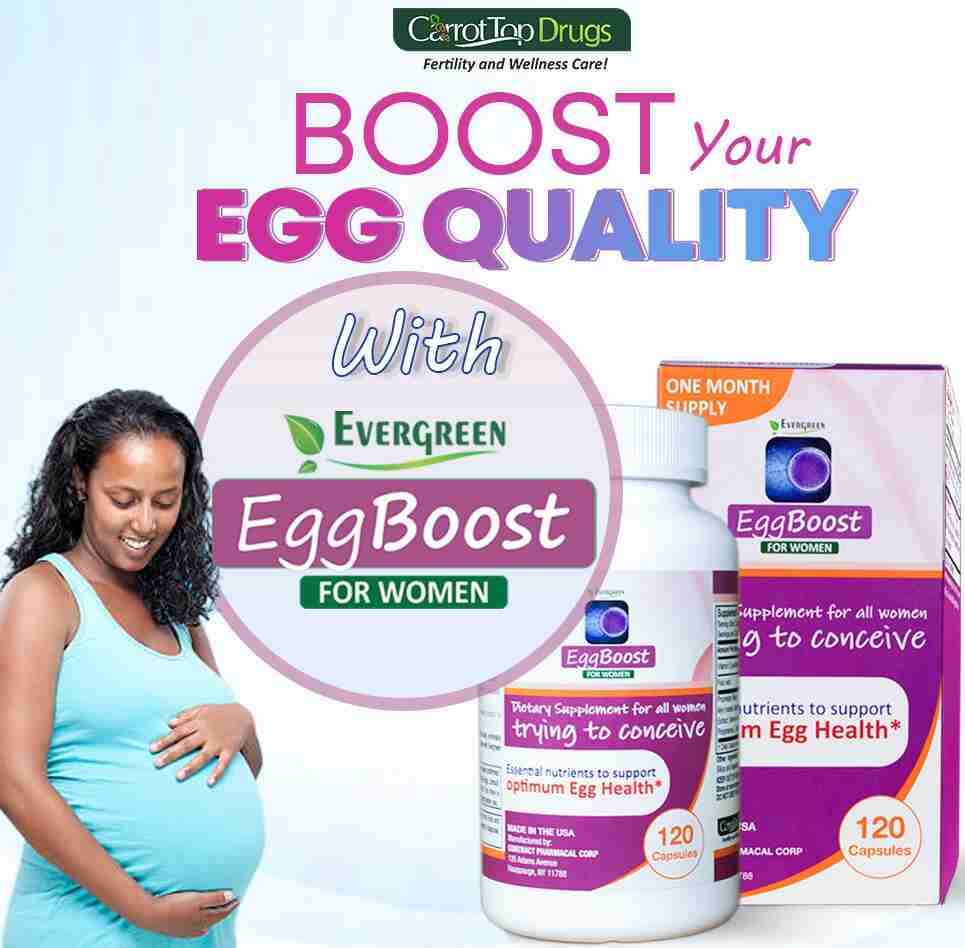
The intake of supplements like Evergreen Natal Care Plus and Evergreen Folic Acid provides the necessary nutrients that the mother and fetuses need.
Real Mom Advice: “I carried nuts everywhere – when nausea hit, small protein bites saved me!” – Jessica, mom of twins
Twin Delivery: What to Expect
Will You Deliver Vaginally or by C-Section?
The way your twins arrive depends on:
a. Baby A’s position (the twin closest to the birth canal)
b. Baby B’s position
c. Your health (blood pressure, signs of distress)
d. How far along you are (preterm labor changes plans)
Delivery Scenarios Explained
| Situation | Likely Delivery Method | Why? |
| Baby A head-down, Baby B head-down | Vaginal delivery possible | Both babies in ideal position |
| Baby A head-down, Baby B breech (buttocks) | Often C-section | Baby B may get stuck after Baby A is born |
| Baby A breech | Usually C-section | Safer than breech vaginal delivery |
| Preterm labor (before 34 weeks) | Emergency C-section | Tiny babies often need quick delivery |
| Placenta problems (previa, abruption) | Always C-section | Prevents dangerous bleeding |
What Vaginal Twin Delivery Looks Like
- Stage 1: Labor starts (just like single babies)
- Stage 2:
- Push out Baby A
- Doctors check Baby B’s position with ultrasound
- May need to turn Baby B (external version)
- Push out Baby B (usually within 30 mins of Baby A)
- Stage 3: Deliver placentas
Note: About 40% of twin moms deliver vaginally.
C-Section Facts for Twins
- Scheduled C-section: Common if Baby A is breech or you’ve had a past C-section
- Emergency C-section: Happens if:
- Baby B is in distress after Baby A is born
- Labor stalls
- Heavy bleeding starts
Recovery Tip: “Take the hospital’s stool softeners – C-section constipation is no joke with twin newborns!” – Lila, mom of 1-year-old twins
Preterm Labor Reality Check
- 50% of twins come before 37 weeks
- 20% arrive before 34 weeks
- Packing tip: Have bags ready by 28 weeks (include preemie-sized clothes)
NICU Prep:
- Tour the NICU before birth
- Ask about hospital’s “golden hour” policy (when you can hold babies)
Parent Stories
“I delivered Baby A vaginally at 3 AM, but Baby B flipped sideways – emergency C-section by 5 AM! Wildest night of my life.” – Jamal, father of twins
“Our scheduled C-section at 38 weeks was calm and joyful. The team sang ‘Happy Birthday’ as each twin was born!” – Sophie & Rita
Your Delivery Cheat Sheet
By 28 weeks:
- Discuss delivery options with your OB
- Pre-register at hospital
By 32 weeks:
- Pack two separate hospital bags
- Install both car seats
At 36 weeks:
- Finalize birth plan (but stay flexible!)
Twin Pregnancy FAQs – Simple Answers
Twin Basics
Q1: “Do twins share one amniotic sac?”
A: Rare (<1% of identical twins). Most have separate sacs – safer for babies.
Q2: “Can twins be born on different days?”
A: Yes! If labor starts near midnight, Baby B might arrive “tomorrow.”
Q3: “Do twins have the same fingerprints?”
A: No! Even identical twins develop unique fingerprints in the womb.
Health & Development
Q4: “Do twins talk later than single babies?”
A: Often by 2-3 months, but most catch up by age 3.
Q5: “Are twins always the same size?”
A: No – up to 20% weight difference is normal at birth.
Q6: “Can one twin have a food allergy and not the other?”
A: Yes! Genetics + womb environment create differences.
Feeding & Care
Q7: “Can you breastfeed twins?”
A: Absolutely! Try the football hold (one baby under each arm).
Q8: “Do twins need separate cribs?”
A: At first, they can share (AAP says it’s safe), but split them by 3 months.
Q9: “How many diapers per day?”
A: 16-24 total (yes, really!). Buy in bulk.
Labor & Delivery
Q10: “Do twins come earlier than single babies?”
A: Usually! Average twin birth is at 35 weeks (vs 40 for singles).
Q11: “Can you have a vaginal birth if Baby B is breech?”
A: Sometimes, but many OBs recommend C-section for safety.
Q12: “Do twins have two placentas?”
A: Fraternal twins always do. Identical twins may share one.
Fun Facts
Q13: “Can twins have different dads?”
A: Extremely rare but possible if two eggs are fertilized by different men.
Your Twin Journey Starts Here
Key Takeaways
✅ Extra Care Matters – Twin pregnancies require closer monitoring than single pregnancies. ✅ Scan Often – Regular ultrasounds (especially for identical twins) prevent complications.
✅ Fuel Your Body – You’re growing two humans—eat, hydrate, and rest like it’s your job.
Your 3-Step Action Plan
1. Build Your Expert Team
- Ask your OB: “Should I see a maternal-fetal medicine (MFM) specialist?”
- Why? MFMs handle high-risk pregnancies and twin deliveries daily.
- Bonus: If you’re having identical twins, request a TTTS specialist.
2. Find Your Twin Tribe
- Join these groups:
- Local Mothers of Twins Club (search Facebook)
- Reddit’s r/parentsofmultiples
- Why? Twin parents give the best unfiltered advice.
3. Prep for Early Arrivals
- By 28 weeks:
- Tour hospitals with Level 3 NICUs (just in case)
- Pre-register at your birth hospital
- Pack two going-home outfits (newborn and preemie sizes)
Conclusion:
Twin pregnancies need extra care but double the joy. Stay informed, build your support team, and prepare for an amazing journey!