Introduction
Fertility is one of the most important aspects of a woman’s reproductive health, but unfortunately, it is not a lifelong guarantee. As women age, their ability to conceive naturally declines due to various biological and hormonal changes. If you’ve ever wondered why fertility decreases with age, you’re in the right place. In this article, we’ll explore seven key ways aging affects fertility in women and what can be done about it.
Relevant Statistics on Aging and Female Fertility
Understanding the impact of aging on fertility is best backed by real-world data. Here are some key statistics that highlight how fertility declines with age:
1. Decline in Natural Conception Rates
- Women in their 20s have about a 25-30% chance of conceiving each month.
- By age 35, the chance drops to around 15-20% per month.
- By age 40, the probability falls to about 5% per month.
2. Ovarian Reserve and Egg Quality
- Women are born with 1-2 million eggs, but by puberty, only about 300,000 remain.
- By age 37, about 25,000 eggs are left, and by 50, fewer than 1,000 eggs remain.
- The risk of chromosomal abnormalities in eggs increases significantly with age:
3. Miscarriage and Pregnancy Complications
- Women under 30 have a miscarriage rate of about 10%.
- By age 35, the risk rises to 20%.
- By age 40, nearly 40% of pregnancies result in miscarriage.
- Women over 40 are at higher risk for complications like gestational diabetes, high blood pressure, and preterm birth.
4. Assisted Reproductive Technology (ART) Success Rates
In vitro fertilization (IVF) success rates decline with maternal age:
- Under 35: Live birth rate per IVF cycle is approximately 55%.
- Ages 35-37: Success rates drop to about 41%
- Ages 38-40: Further decline to around 26.8%.
- Ages 41-42: Success rates are approximately 13.4.
- Over 42: Live birth rates fall below 5%.
How Aging Impacts Female Fertility
The Biological Clock and Its Role in Fertility
The term “biological clock” is often used when discussing a woman’s reproductive years. This is because women are born with a limited number of eggs, and these eggs diminish in both quantity and quality over time. Unlike men, who produce new sperm throughout their lives, women have a fixed ovarian reserve that decreases with age.
Peak Fertility Years and When Decline Begins
A woman’s fertility is at its highest in her early 20s, gradually declining in her 30s, and significantly dropping after 35. By the time a woman reaches 40, her chances of conceiving naturally are much lower, and by menopause (around 50), fertility comes to a halt.
7 Ways Aging Affects Female Fertility
1. Decline in Egg Quantity
One of the major ways by which aging affects fertility in women is the decline in egg quantity. Women are born with about 1-2 million eggs, but this number steadily decreases over time. By puberty, only about 300,000 remain, and with each menstrual cycle, more eggs are lost. By the mid-30s, the ovarian reserve is significantly reduced, making conception more difficult.
2. Decrease in Egg Quality
Not only does the number of eggs decrease, but their quality also diminishes. Aging eggs are more likely to have chromosomal abnormalities, which can lead to difficulty in conception, a higher risk of miscarriage, and genetic conditions such as Down syndrome.
3. Irregular Menstrual Cycles
As women age, their menstrual cycles may become less predictable due to hormonal shifts. This irregularity is one of the ways aging affects fertility in women. Irregular ovulation can make it difficult to determine the fertile window, reducing the chances of conception. This is why older women may struggle more with infertility compared to younger women with regular cycles.
4. Increased Risk of Miscarriage
The risk of miscarriage increases with age, particularly after 35. This is largely due to the increased likelihood of chromosomal abnormalities in aging eggs. Studies show that women over 40 have a miscarriage rate of nearly 50%, compared to around 10-15% for women in their 20s.
5. Hormonal Imbalances
Hormones play a crucial role in reproduction, and their levels naturally fluctuate as a woman ages. A decline in estrogen and progesterone levels can affect ovulation, egg quality, and the ability of the uterus to support a pregnancy. Conditions like perimenopause can also cause major hormonal shifts that impact fertility.
6. Higher Risk of Reproductive Disorders
Aging increases the risk of reproductive health conditions like:
- Polycystic ovary syndrome (PCOS): Can cause irregular ovulation.
- Endometriosis: May lead to inflammation and scarring in the reproductive organs.
- Uterine fibroids: Can interfere with implantation.
These conditions can make conception more difficult and increase the likelihood of pregnancy complications.
7. Reduced Success with Assisted Reproductive Technologies (ART)
While treatments like in-vitro fertilization (IVF) have helped many women conceive later in life, success rates decline with age. Women over 40 often have lower-quality eggs, making it more challenging for fertilization and embryo implantation to occur successfully. Egg donation may be an option for older women struggling with fertility.
How to Improve Fertility with Age
Although fertility naturally declines with age, there are steps women can take to improve their chances of conceiving:
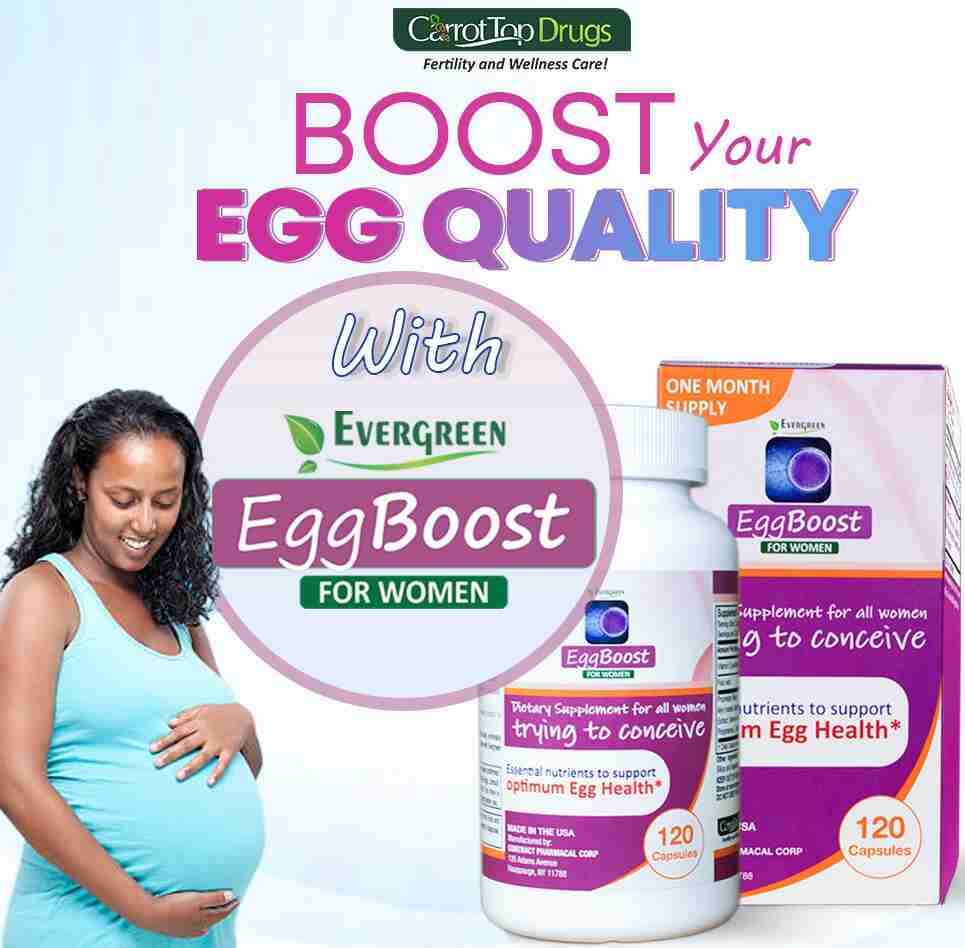
- Maintain a healthy lifestyle: Eating a balanced diet, staying active, and avoiding smoking or excessive alcohol consumption can support reproductive health. It also involves taking supplements like Evergreen EggBoost and Evergreen Formular for Women that ensure the egg reserve is in the best condition possible.
- Consider egg freezing: If you plan to have children later in life, freezing your eggs at a younger age can preserve fertility.
- Consult a fertility specialist: If you’re over 35 and struggling to conceive, seeking professional help early can provide more options and better outcomes.
Conclusion
Aging affects female fertility in multiple ways, from declining egg quantity and quality to increased risks of miscarriage and hormonal imbalances. However, modern medicine and healthy lifestyle choices can help women maximize their chances of conception. If you’re concerned about fertility, speaking with a specialist can provide valuable insights and solutions tailored to your needs.
FAQs
1. Can a woman in her 40s still get pregnant naturally?
Yes, but the chances are significantly lower compared to younger years. Some women conceive naturally in their 40s, but many require fertility treatments.
2. What is the best age to have a baby?
Biologically, the early 20s to early 30s are the best ages for pregnancy. However, many factors, including personal, financial, and health considerations, play a role.
3. Does a healthy lifestyle slow down fertility decline?
While a healthy lifestyle cannot stop aging, it can support reproductive health and delay fertility decline.
4. How effective is egg freezing for later pregnancy?
Egg freezing is most effective when done before 35, as younger eggs have better quality and higher chances of successful fertilization later.5. When should a woman see a fertility specialist?
Women under 35 should seek help after a year of trying to conceive, while women over 35 should seek assistance after six months.