Introduction
You’ve done everything right. The tests all came back normal. And yet, you’re still not pregnant. That single sentence captures one of the most disorienting experiences in reproductive medicine. It has a name: unexplained infertility. And if you’re living with that diagnosis, you’re far from alone. The World Health Organization reports that one in six people globally struggle with infertility. Of those, 15 to 30% receive the ‘unexplained’ label after every standard test comes back normal. That translates to an estimated 1.5 to 2 million couples in the US alone — and millions more worldwide. Managing unexplained infertility in women is not a dead end. It is, however, a process that requires the right information, the right support, and the right steps taken in the right order. This article gives you all of that.
What Is Unexplained Infertility?
Before we dive into management, let’s define the problem clearly. Unexplained infertility is not a vague guess. It’s a specific clinical diagnosis.
According to a 2024 review in Human Reproduction Open, unexplained infertility is diagnosed when ovulation is normal, at least one fallopian tube is open, and semen analysis falls within WHO criteria — yet pregnancy does not occur.
In short, all the standard tests pass. But pregnancy still hasn’t happened.
A 2024 systematic review in BJOG (Wiley) confirmed the three most commonly applied diagnosis criteria globally: semen analysis, tubal patency, and ovulation assessment — applied in 85%, 90%, and 79.5% of studies, respectively.
Why does it happen? Researchers believe standard tests simply miss things. Subtle egg quality issues, microscopic endometriosis, endometrial receptivity problems, and immune-related implantation failures can all remain invisible to current diagnostics. The condition is real — the tools to detect it are still catching up.
What Tests Are Done for Unexplained Infertility?
Managing unexplained infertility in women starts with a complete, rigorous workup. A diagnosis of ‘unexplained’ is only valid after all of the following tests have been done.
Standard First-Line Tests
- Ovulation assessment — mid-luteal serum progesterone or ovulation predictor kits
- Tubal patency — via hysterosalpingogram (HSG) or HyCoSy
- Semen analysis — using WHO 2021 reference values
- Ovarian reserve — antral follicle count (AFC) and serum AMH
- Uterine cavity assessment — transvaginal ultrasound or saline infusion sonohysterography
Additional Tests Worth Requesting
- Thyroid function — subclinical hypothyroidism is a known but often-missed cause
- Prolactin levels — elevated prolactin disrupts ovulation
- Endometrial receptivity array (ERA) — checks implantation window timing
- Laparoscopy — can detect endometriosis invisible on scans
The 2024 Australian evidence-based guideline — adapted from ESHRE — includes 40 evidence-based recommendations for diagnosis and management. It specifically expands testing criteria beyond older guidelines, a sign that the standard of care is evolving.
How Long Should You Try Before Seeking Help?
Timing matters when managing unexplained infertility in women. The clinical guidelines are clear.
- Under 35: See a specialist after 12 months of regular unprotected sex without conception
- Aged 35 or older: See a specialist after 6 months
- Over 40 or with known risk factors: Consider early evaluation immediately
A 2024 review in Human Reproduction Open highlights that female age is the single strongest predictor of treatment success. Success rates fall significantly after 35. Waiting too long narrows your options and your window.
Don’t wait and wonder. Early evaluation costs very little. Late evaluation can cost you time you can’t get back.
Can Unexplained Infertility Resolve on Its Own?
Sometimes, yes. And that’s an important part of managing unexplained infertility in women.
A systematic review in Biores Scientia found that up to 74% of couples with unexplained infertility can conceive naturally — and up to 80% achieve an ongoing pregnancy over time. Younger women with shorter infertility duration have the best chance of spontaneous conception.
This is the basis for what doctors call expectant management — monitored waiting. But it isn’t the right strategy for everyone.
Expectant management suits couples under 35 where the chance of natural conception within six months exceeds 30%. For women 35 and older, or those trying for over two years, active treatment is generally the better choice.
So the answer isn’t simply yes or no. It depends on your age, your history, and your prognosis.
Managing Unexplained Infertility in Women: Treatment Options
Here’s where most articles stop at lists. We won’t. Let’s walk through each option with real data.
Step 1: Timed Intercourse with Ovarian Stimulation
This is the least invasive first step. A low-dose fertility medication — typically letrozole or clomiphene — stimulates the ovaries. The couple then times intercourse with ovulation.
According to Healthline’s 2024 clinical review, 18.5% of couples become pregnant within two cycles using fertility medications with timed intercourse. It’s simple, relatively affordable, and a reasonable starting point for younger women.
Step 2: IUI with Ovarian Stimulation
IUI places washed sperm directly into the uterus around ovulation. It works best paired with ovarian stimulation, not alone.
A 2022 JAMA review confirms that IUI alone does not improve pregnancy rates in unexplained infertility — it must combine with ovarian stimulation. Success rates range from 4% to 13% per cycle, rising with medications like Clomid.
Both ASRM and ESHRE guidelines recommend 3 to 4 cycles of IUI with stimulation as first-line treatment before escalating to IVF. It strikes the best balance between effectiveness, cost, and invasiveness.
Step 3: IVF
For many women, IVF eventually becomes the most effective path. But it’s not always the first.
IVF success rates reach up to 55–60% per embryo transfer in younger women. Rates fall significantly after age 38, where immediate IVF becomes the more appropriate first-line choice.
NICE guidelines recommend IVF after two years of expectant management or failed IUI cycles. ASRM recommends moving to IVF after 3–4 failed IUI cycles.
What Lifestyle Changes Help with Unexplained Infertility?
Managing unexplained infertility in women isn’t just about procedures. Lifestyle is a powerful, evidence-backed lever.
Maintain a Healthy BMI
A systematic review in Biores Scientia identifies BMI as one of the key prognostic factors affecting treatment outcomes. Both underweight and overweight status disrupt hormonal balance and impair ovulation.
Stop Smoking
Smoking damages egg quality and disrupts hormonal signalling. Multiple studies confirm it reduces IVF success rates. If you smoke, stopping is one of the highest-impact actions you can take.
Limit Alcohol
Moderate to heavy alcohol use links to longer time to conception and reduced IVF success. Most fertility specialists recommend avoiding alcohol entirely when actively trying to conceive.
Manage Stress
Psychosocial stress features as a consistent negative predictor of treatment success — including in a 2024 meta-analysis in Biores Scientia. Mindfulness, counselling, and peer support groups reduce distress and may improve fertility outcomes.
Optimise Sleep and Exercise
Regular moderate exercise improves insulin sensitivity and hormonal balance. Excessive exercise can suppress ovulation. Aim for 30 minutes most days. Prioritise 7–8 hours of quality sleep per night.
The Role of Nutrition and Micronutrients in Managing Unexplained Infertility in Women
Here’s a piece most fertility articles skip entirely. Micronutrient status has a direct, measurable impact on female fertility — and deficiencies are surprisingly common.
A comprehensive 2025 review in Nursing Research and Practice (Wiley) found that deficiencies in folate, vitamin D, iron, and selenium are all associated with impaired ovarian function, disrupted menstrual cycles, and worse fertility treatment outcomes.
Folate
Folate is critical for oocyte quality, fertilization, and implantation. A 2025 review in PMC confirms that folate deficiency increases anovulation risk. Supplementation improves oocyte and embryo quality in IVF patients.
Vitamin D3
Vitamin D receptors exist throughout reproductive tissue. Women with vitamin D deficiency are less likely to conceive and carry to term according to a 2023 study. Vitamin D deficiency also links to PCOS, which further impairs fertility.
Zinc and Selenium
Zinc plays a key role in ovulation and the menstrual cycle. Lower zinc concentrations increase the average time to conceive. Selenium deficiency is linked to luteal phase deficiency — making the endometrium less receptive to implantation. A 2019 PMC review confirms that women with low selenium take longer to conceive.
Vitamins A, C, and B-Complex
Antioxidant levels including vitamins A and C are significantly lower in infertile women. A PMC review found antioxidant supplementation raised antioxidant levels in follicular fluid and reduced oxidative stress — with direct benefit for reproductive outcomes. B vitamins support DNA synthesis in developing eggs and regulate homocysteine levels.
Iron, Magnesium, Copper, and Iodine
Iron deficiency causes delayed periods and unexplained infertility. Magnesium supports hormone regulation. A 2024 review in Cureus confirms that deficiencies across these minerals link to reduced fertility and poorer IVF outcomes.
Evergreen Formula for Women: Targeted Nutritional Support
Getting all these nutrients from diet alone is challenging — especially when fertility is already compromised.
A 2025 umbrella review in Nutrients (MDPI) found that multiple micronutrient supplements increased live birth rates in women using medically assisted reproduction compared to placebo (OR 2.59, 95% CI 1.52–4.40). Antioxidant supplements also improved live birth rates in women trying to conceive spontaneously (OR 1.81, 95% CI 1.36–2.43).
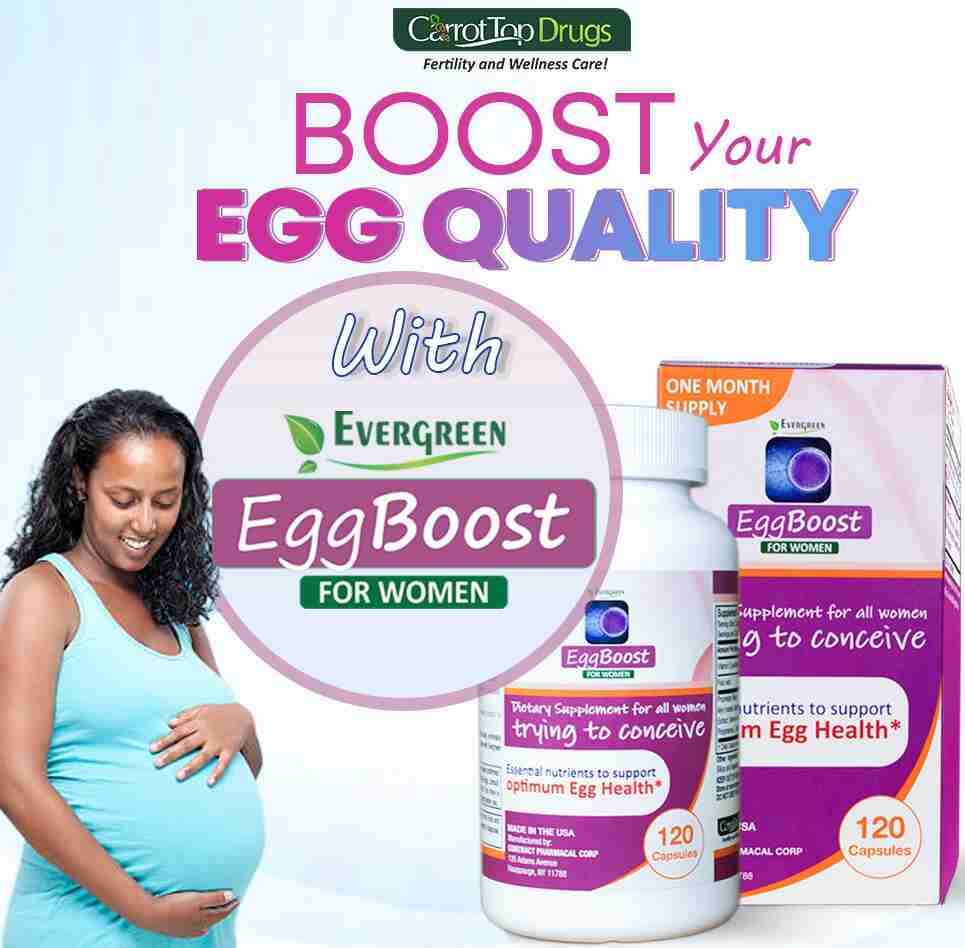
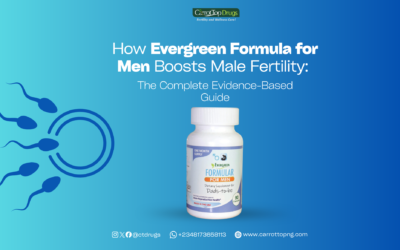
Evergreen Formula for Women is designed with this evidence in mind. It is a multiple micronutrient supplement specifically formulated for women managing unexplained infertility. Each serving delivers:
- Vitamins A, C, D3 — for antioxidant protection, egg quality, and implantation support
- B-complex (B1, B2, B3, B6, B12) — for DNA synthesis, hormone balance, and homocysteine regulation
- Folarw (active folate) — for oocyte quality, fertilization, and early implantation
- Iron — to address deficiency-related cycle disruption and unexplained infertility
- Zinc and Selenium — for ovulation regulation and endometrial receptivity
- Magnesium, Copper, and Iodine — for hormonal support and reproductive function
Together, these nutrients target the exact micronutrient gaps that research consistently links to unexplained infertility. Evergreen Formula doesn’t replace medical treatment. Instead, it works alongside IUI, IVF, or expectant management to support your body’s reproductive environment at the cellular level.
If you are managing unexplained infertility in women — whether naturally or through assisted reproduction — ensuring your nutritional foundation is solid is one of the most evidence-aligned steps you can take.
The Emotional Side of Managing Unexplained Infertility in Women
Research cited in the Biores Scientia systematic review identifies psychosocial stress as a consistent negative predictor of treatment success. The emotional toll of a diagnosis with no clear cause can be profound.
These strategies genuinely help:
- CBT and mindfulness — reduce distress and improve overall wellbeing during treatment
- Fertility support groups — peer support from others walking the same road reduces isolation
- Open communication with your partner — shared emotional processing reduces relationship strain
- Setting boundaries with social media — comparison amplifies grief
- Working with a specialist who listens — feeling heard matters as much as clinical quality
Managing unexplained infertility in women means caring for the whole person — not just the uterus.
What Is the Success Rate of Treating Unexplained Infertility?
Let’s put real numbers on this. Success rates vary by treatment and by age.
Timed intercourse with stimulation: 18.5% pregnancy rate within two cycles (Healthline, 2024)
IUI with ovarian stimulation: 4–13% per cycle; recommended for 3–4 cycles before escalating
IVF: up to 55–60% per embryo transfer in women under 38; rates decline with age
Cumulative success: A study from the NIH found that 92% of couples with unexplained infertility who pursued treatment ultimately had a child — a statistic worth holding onto.
Hope is not naive here. It’s evidence-based.
Frequently Asked Questions (FAQ)
Q1. What is the success rate of treating unexplained infertility?
Success rates depend on age and treatment type. Timed intercourse achieves 18.5% in two cycles. IUI reaches 4–13% per cycle. IVF can reach 55–60% per transfer in younger women. NIH data shows 92% of couples who pursue treatment eventually conceive.
Q2. How long should you try before seeking help for unexplained infertility?
Under 35: try for 12 months before seeking evaluation. Aged 35 or older: seek help after 6 months. Over 40 or with known risk factors: consider early evaluation immediately.
Q3. Can unexplained infertility resolve on its own?
Yes, sometimes. Up to 74% of couples with unexplained infertility can eventually conceive naturally. This depends heavily on age and infertility duration. Younger couples with a short history of trying have the best chance.
Q4. What tests are done for unexplained infertility?
Core tests: ovulation assessment, tubal patency (HSG or HyCoSy), semen analysis, ovarian reserve (AMH and AFC), and uterine cavity assessment. Additional tests: thyroid function, prolactin, endometrial receptivity array, and laparoscopy.
Q5. Is IVF the best option for unexplained infertility?
IVF is often the most effective option, but not always the first. Most guidelines recommend 3–4 cycles of IUI before IVF. For women over 38, however, immediate IVF may be the most appropriate first-line choice.
Q6. What lifestyle changes help with unexplained infertility?
Evidence-backed changes include maintaining a healthy BMI, stopping smoking, limiting alcohol, managing stress, exercising moderately, and optimising sleep. Nutritional supplementation with folate, vitamin D, zinc, and selenium also improves reproductive health markers.
Q7. Can micronutrient supplements help with unexplained infertility?
Research says yes. A 2025 umbrella review in Nutrients found that multiple micronutrient supplements increased live birth rates in women using medically assisted reproduction (OR 2.59). Supplements like Evergreen Formula for Women work best alongside medical treatment, not as a replacement.
Q8. How do I find the best fertility clinic for unexplained infertility?
Look for clinics that offer comprehensive testing, publish transparent live birth rate data by age group, have reproductive endocrinologists on staff, and provide psychological support alongside clinical care.
Q9. Are there support groups for unexplained infertility in Nigeria?
Yes. The Fertility Society of Nigeria (FSON) is a good first point of contact. Several hospital fertility units in Lagos and Abuja also run support groups. Active online communities via Facebook and WhatsApp connect women across Nigeria navigating the same journey.
Q10. What are affordable treatment options for unexplained infertility in Lagos?
Several accredited fertility centres in Lagos offer IUI at a fraction of IVF cost. Starting with ovulation induction and timed intercourse before advancing to IUI is the most cost-effective approach. Micronutrient supplementation like Evergreen Formula for Women is an accessible first step you can start today.
Conclusion
Managing unexplained infertility in women is genuinely possible. The diagnosis feels like a wall. But it’s actually a starting point.
You now know the tests to request. Also, you understand the treatment ladder — from timed intercourse to IVF. You know the lifestyle changes that move the needle. And you understand why micronutrient support is foundational, not optional.
The evidence is clear: 92% of couples who pursue treatment for unexplained infertility ultimately have a child. Your numbers are working in your favour — provided you act, seek guidance, and give your body the support it needs.
Evergreen Formula for Women exists to be part of that support. Not a miracle. Not a shortcut. A well-researched, nutrient-complete supplement built for women who are serious about giving their fertility every advantage.
Take the next step. Talk to a fertility specialist. Nourish your body. And hold onto hope — because the research says it’s warranted.