

Introduction
Trying to conceive means understanding your fertility is key. Semen analysis is a test that checks a man’s semen. It looks at different parts to see if he’s fertile.
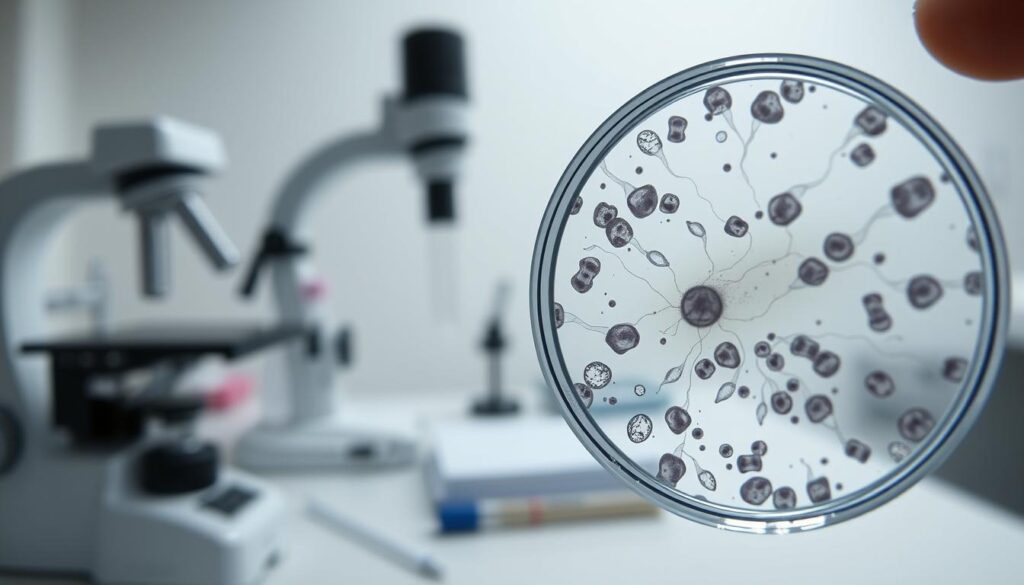
This test is important because it detects potential issues that may prevent you from getting pregnant. It shows how healthy your semen is. Doctors can then assess whether any issues are present.
Understanding your semen analysis results is a big step. It helps you deal with fertility problems and plan for a family.
What a Semen Analysis Reveals About Male Fertility
A semen fluid analysis is a key test that shows how well a man can father a child. It helps understand what makes it hard for a man to get someone pregnant.
The Role of Semen Fluid Analysis in Fertility Assessment
This test checks important parts of a man’s semen. It looks at sperm count, how well they move, their shape, and how much semen there is. This helps doctors see if a man can have kids.
This test does more than just check if a man can have kids. It also finds health problems that might stop him from getting someone pregnant. For example, if there’s not enough sperm or they don’t move well, it could mean there’s a health issue.
When Doctors Recommend This Test
Doctors suggest this test if a couple can’t get pregnant after a year. It’s often the first thing they do to check if the man can have kids. Men with past health problems might also need to get tested.
Understanding semen analysis results can be tricky. Here’s a table that explains what each part means:
| Parameter | Description | Significance |
| Sperm Count | The number of sperm in the semen sample. | Indicates the potential for fertilization. |
| Sperm Motility | The percentage of moving sperm. | Affects the ability of sperm to reach the egg. |
| Sperm Morphology | The shape and structure of sperm. | Influences the sperm’s ability to fertilize the egg. |
| Semen Volume | The amount of semen produced. | Impacts sperm concentration and delivery. |
Knowing what a semen analysis shows helps men deal with fertility issues. It’s a key step in figuring out fertility problems. It gives important information for more tests and treatments.
Key Parameters Measured in a Semen Analysis
A semen analysis is key for checking male fertility. It looks at several important factors. Knowing these helps spot fertility problems.
Sperm Count and Concentration
Sperm count is how many sperm are in a certain amount of semen. A good count is at least 15 million per milliliter. A low count makes it harder to get pregnant.
Sperm Motility and Movement Patterns
Sperm motility is how well sperm moves. It’s crucial for reaching the egg. They can move in different ways, like straight or not.
Sperm Morphology (Shape and Structure)
Sperm morphology checks the shape and structure of sperm. Normal sperm are oval-shaped with a long tail. Bad shapes can make it hard to get pregnant.
Semen Volume and Liquefaction
Semen volume is how much semen comes out during ejaculation. It should be between 1.5 and 5 milliliters. Liquefaction is when semen turns from gel to liquid, usually in 20-30 minutes.
pH and Other Chemical Factors
The pH of semen is also checked. It should be between 7.2 and 8.0. Wrong pH can hurt sperm’s ability to move and live. Other chemicals are also looked at.
Normal Semen Analysis Results Explained
Knowing what normal semen analysis results mean is key for men checking their fertility. Semen analysis checks semen’s quality to see if a man can father a child.
WHO Reference Values for Semen Parameters
The World Health Organization (WHO) sets standards for semen analysis. These standards help doctors understand semen test results. They are based on studies of men who can have children.
- Sperm concentration: at least 15 million sperm per milliliter
- Total sperm count: at least 39 million sperm per ejaculate
- Sperm motility: at least 32% of sperm should be moving
- Sperm morphology: at least 4% of sperm should have a normal shape
- Semen volume: at least 1.5 milliliters
Interpreting Your Results
When you get your semen analysis results, compare them to the WHO standards. If they match, it’s usually good news. But, being within the normal range doesn’t mean you can definitely have kids. And results outside the normal range don’t always mean you can’t.
It’s crucial to consult with a healthcare provider to fully understand your results and what to do next.
When Results Fall Outside Normal Ranges
If your results are not in the normal range, it might mean fertility problems. Issues like low sperm count, poor motility, or abnormal shape are common. Your doctor might suggest more tests or treatments based on your results.
Understanding your semen analysis results is a big step in checking your fertility. Knowing what’s normal and what your results mean helps you make smart choices about your reproductive health.
How to Prepare for Your Semen Analysis Test
Before your semen analysis, there are steps to take. Proper preparation is key for accurate results.
Timing Considerations
The timing of your semen analysis is important. It’s best to not ejaculate for 2 to 5 days before. This ensures more accurate results. But, your doctor might give different instructions.
Lifestyle Adjustments Before Testing
Some lifestyle changes can help your semen analysis. Here are some tips:
- Avoid excessive heat around your testicles, like hot tubs or saunas.
- Limit alcohol consumption and avoid illicit drugs.
- Maintain a healthy diet full of antioxidants and nutrients.
- Manage stress with relaxation techniques like meditation or yoga.
Sample Collection Guidelines
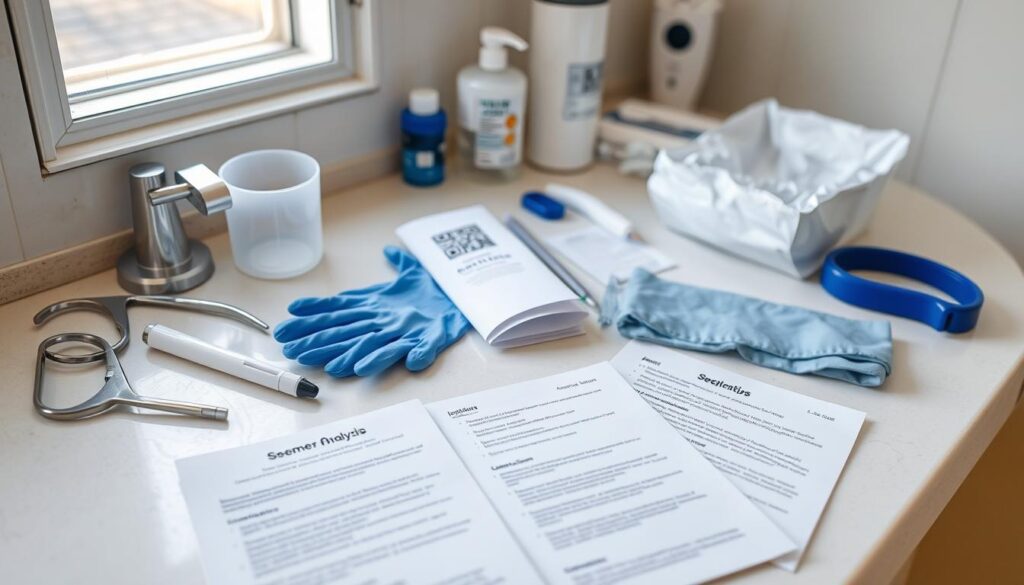
When it’s time to collect your semen sample, follow these steps:
- Use a sterile container from your clinic.
- Avoid using lubricants or condoms that might contaminate the sample.
- Keep the sample at body temperature when transporting it to the lab.
- Deliver the sample within 1 hour of collection.
By following these guidelines, you can help ensure accurate results from your semen analysis test.
The Semen Analysis Procedure: What to Expect
Learning about the semen analysis procedure can ease your worries. It’s a key test for checking male fertility. Knowing what to expect can make it less scary.
At-Home vs. In-Clinic Collection
First, you’ll decide where to collect your semen sample. You can do it at home or in a clinic. At-home collection is private but needs careful handling and quick lab delivery. Clinic collection is more controlled, reducing contamination risks.
Always follow your healthcare provider’s or lab’s guidelines. They’ll tell you about the right containers, storage, and delivery times.
The Laboratory Analysis Process
After you send your sample to the lab, it gets a detailed check. They look at sperm count, motility, shape, and volume. Lab techs use special tools and methods for this.
| Sperm Count | The number of sperm in the ejaculate | > 15 million/ml |
| Sperm Motility | The percentage of moving sperm | > 32% |
| Sperm Morphology | The percentage of normally shaped sperm | > 4% |
How Long Results Take
How long it takes to get your results varies. It’s usually a few days to a week. Your doctor will tell you when to expect them and explain what they mean.
Getting your results is a big step in understanding your fertility. Your doctor will go over the results with you. They’ll talk about what they mean for your fertility and suggest next steps if needed.
Can a Semen Analysis Detect Male Infertility?
A semen analysis gives insights into sperm health but can’t fully detect male infertility. It checks sperm count, motility, and shape. Yet, it’s only part of a full fertility check.
Limitations of Standard Semen Analysis
A standard semen analysis has its limits in finding male infertility. It spots issues like low sperm count or poor shape. But it misses other fertility problems.
For example, it doesn’t check sperm DNA or anti-sperm antibodies. These can also affect fertility.
Advanced Sperm Function Tests
When a semen analysis is unclear or shows problems, more tests are suggested. These tests give detailed info on sperm health. They include:
- DNA fragmentation testing
- Sperm penetration assays
- Anti-sperm antibody testing
These tests find issues not seen in a basic semen analysis. This helps in focusing treatment better.
When Additional Testing Is Recommended
More tests are needed if a semen analysis shows odd results or if a couple can’t conceive. Your doctor might want to do hormone tests, genetic tests, or a physical check. This helps find any hidden causes of infertility.
The American Society for Reproductive Medicine says, “A full fertility check includes medical history, physical exam, and tests. This way, all possible causes are looked at and treated.” This ensures no stone is left unturned.
Home Semen Analysis Kits vs. Laboratory Testing
Assessing male fertility comes down to two main choices: home semen analysis kits and lab tests. Each has its own pros and cons. It’s important to know these when deciding what to do.
Accuracy Comparison
Laboratory tests are usually more accurate than home kits. Labs can check many semen factors, like sperm count and shape. Home kits, though easy to use, mainly look at sperm count and how well they move.
Laboratory tests use top-notch equipment and experts. This lowers the risk of mistakes. Home kits, however, depend on the user’s skill and understanding of the results.
Cost Considerations
The cost is a big factor in choosing between home kits and lab tests. Home kits are cheaper, costing between $50 and $200. Lab tests, though, can be pricier, with costs varying based on the clinic and tests.
Some insurance might cover lab tests but not home kits. Always check with your insurance to see what’s covered.
When to Choose Each Option
Home kits are a good first step for a quick fertility check. They’re easy to use and private. But, if you get concerning results or have fertility issues, lab tests are better for a detailed look.
Laboratory testing is also best if you’re thinking about fertility treatments or if your doctor suggests a detailed semen analysis.
In summary, both home kits and lab tests have their roles in checking male fertility. Knowing their differences helps you make a smart choice. Think about what you need, your budget, and how accurate you want the results to be.
How Much Does a Semen Analysis Cost and Insurance Coverage
Many people wonder about the cost of a semen analysis and if insurance covers it. The price can change based on several things. These include where you get the test and the type of facility.
Average Costs at Fertility Clinics
The cost of a semen analysis at a fertility clinic can be between $100 and over $300. This depends on how detailed the test is and what services are included. Some clinics might offer deals that include more tests or consultations.
| Service | Average Cost | Inclusive Packages |
| Basic Semen Analysis | $100-$200 | Yes |
| Advanced Semen Analysis | $200-$350 | Yes |
| Consultation and Testing Package | $500-$1000 | N/A |
Insurance Coverage for Fertility Testing
Insurance coverage for semen analysis varies a lot. Some plans might cover the whole cost, while others might not cover anything. It’s important to check with your insurance to see what’s covered under your plan.
Tips for Checking Insurance Coverage:
- Review your insurance policy documents
- Contact your insurance provider directly
- Ask about any out-of-pocket costs
Financial Assistance Options
If you can’t afford a semen analysis, there are ways to get help. Some fertility clinics offer financing plans, grants, or fees based on your income.
Knowing the costs of semen analysis and looking into financial help can make testing more affordable. Always talk to your healthcare provider or a financial advisor to explore your options.
How to Improve Your Semen Analysis Results Naturally
You can make your semen quality better with simple steps. This includes changing your diet, lifestyle, and using the right supplements. These actions help improve your semen analysis results.
Dietary Changes That Support Sperm Health
Eating foods rich in antioxidants, vitamins, and minerals is key. Good foods for sperm health are:
- Fruits and vegetables high in antioxidants
- Nuts and seeds rich in healthy fats and zinc
- Whole grains for fiber and essential nutrients
- Lean proteins for overall health
Lifestyle Modifications for Better Results
Changing your lifestyle can also help. Here are some tips:
- Maintaining a healthy weight to support overall reproductive health
- Exercising regularly to improve circulation and reduce stress
- Avoiding excessive heat around the testes, such as saunas or hot tubs
- Reducing stress through meditation or yoga
Supplements That May Help
Some supplements can also support sperm health. Key options include:
Antioxidants
Antioxidants like vitamin C and E protect sperm from damage.
Vitamins and Minerals
Vitamins D and B12, along with minerals like zinc and selenium, are important for sperm production and health.
| Supplement | Benefit |
| Vitamin C | Antioxidant properties |
| Zinc | Essential for sperm production |
| Selenium | Antioxidant properties, supports sperm motility |
By making these natural changes, you can improve your semen analysis results and boost your fertility. Our Evergreen Formular for Men, Evergreen Action for Men and Evergreen Motility contains these nutrients.
Conclusion
Understanding your semen analysis results is key to knowing your male fertility. By knowing what the test measures, you can make smart choices about your reproductive health.
A semen analysis gives you insights into sperm count, motility, and morphology. If your results show any issues, you can try to improve your semen quality. This might include changing your diet, lifestyle, or using supplements that help sperm health.
Being proactive about your fertility is important. Work closely with your healthcare provider and make smart lifestyle choices. This way, you can increase your chances of a successful pregnancy. Your semen analysis results are just the beginning. With the right help, you can move forward in your fertility journey with confidence.
FAQ
What does a semen analysis test for in male fertility?
A semen fluid analysis checks semen’s quality. It looks at sperm count, how well they move, their shape, semen volume, and pH levels. This helps figure out if a man is fertile.
How do I prepare for a semen analysis test?
To get ready for a semen fluid analysis, don’t ejaculate for 2-5 days before. Stay away from very hot or cold temperatures. Follow any special instructions from your doctor or fertility clinic.
What are normal semen analysis results?
Normal semen fluid analysis results follow World Health Organization (WHO) guidelines. They look for at least 15 million sperm per milliliter, 32% motility, and 4% normal morphology.
Can a semen analysis detect infertility in men?
A semen fluid analysis can spot potential fertility issues. But, it’s not a surefire test for infertility. More tests might be needed to find the cause of fertility problems.
How much does a semen analysis cost at a fertility clinic?
The price of a semen analysis at a fertility clinic varies. It depends on the clinic, where it is, and your insurance. On average, it costs between $100 and $300.
What is the difference between home semen analysis kits and lab tests?
Home kits check sperm count and motility. Lab tests do a deeper dive, looking at morphology and other semen factors.
How can I improve my semen analysis results naturally?
To naturally boost your semen analysis, eat foods high in antioxidants. Live a healthy lifestyle, avoid too much heat, and think about taking vitamins and minerals.
What is the semen analysis procedure, and what can I expect?
The semen fluid analysis process involves collecting a semen sample. This can be done at home or in a clinic. The sample is then analyzed in a lab. You’ll get the results in a few days to a week.
How do I interpret my semen analysis results?
Understanding semen analysis results means knowing what each parameter means. Compare them to WHO standards. Your doctor or fertility specialist can explain your results and what to do next.
Are there any lifestyle adjustments I should make before a semen analysis?
Yes, avoid extreme temperatures and try to reduce stress before a semen fluid analysis. Also, eat well and live a healthy lifestyle to get accurate results.